Wang Sha, Duan Hua, Li Bohan, Wang Yiyi, Guo Zhengchen, Zhu Xinyu
Minimally Invasive Gynecologic Center, Beijing Obstetrics and Gynecology Hospital, Capital Medical University, Beijing, 100006, People's Republic of China.
Int J Gen Med. 2022 Feb 16;15:1703-1713. doi: 10.2147/IJGM.S333836. eCollection 2022.
Intrauterine adhesions (IUAs) are a benign uterine disorder that results in intrauterine adhesions and scarring. This study was conducted to assess the effects of freeze-dried amnion grafts on the concentrations of adhesion-related cytokines in uterine exudates following hysteroscopic adhesiolysis of IUAs.
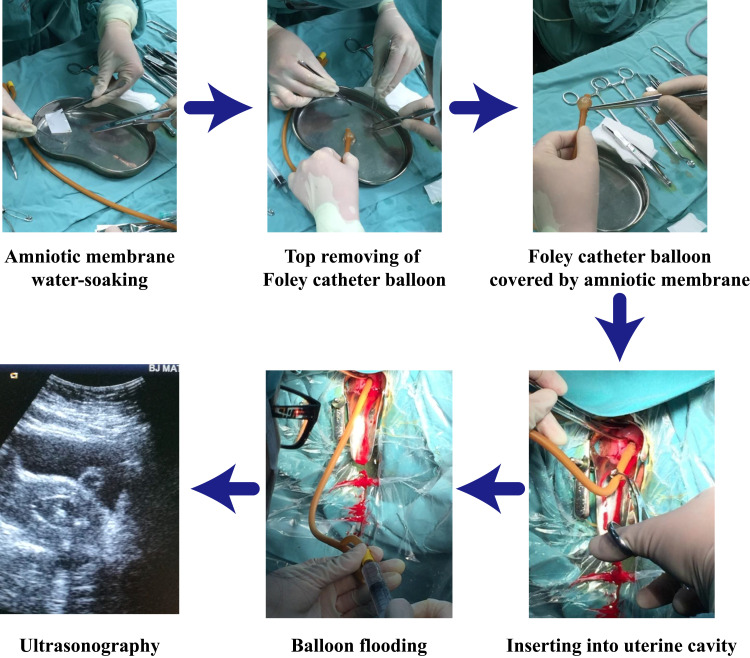
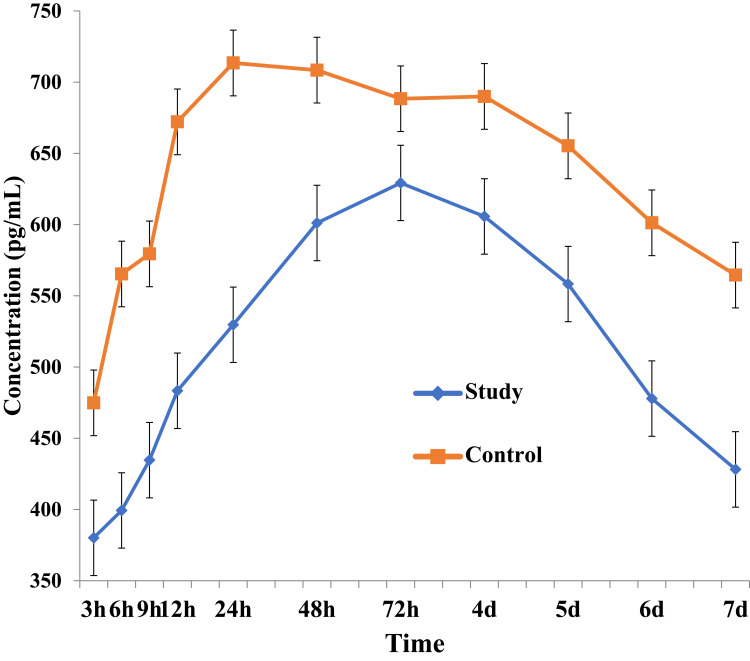
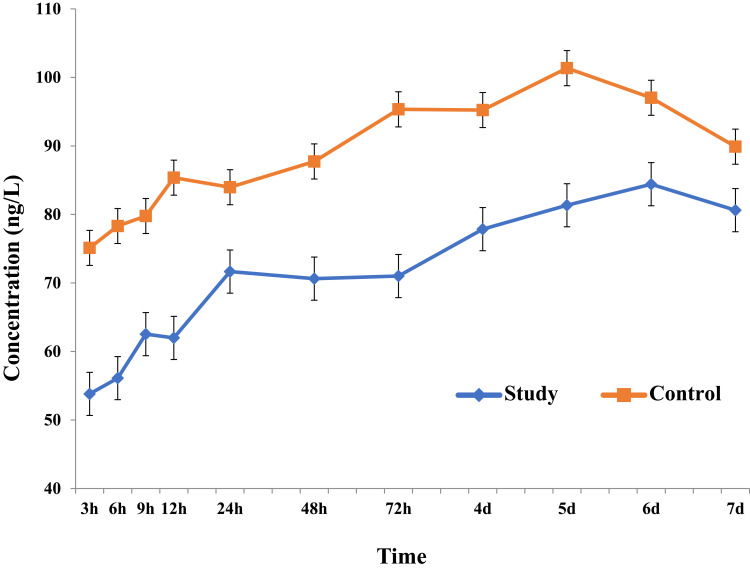
This study was a prospective randomized controlled trial. Thirty patients who underwent hysteroscopic adhesiolysis for severe IUAs were enrolled. They were randomly divided into a study group (with freeze-dried amnion graft treatment after surgery, N = 15) and a control group (without a graft, N = 15). After complete separation of adhesions, a Foley balloon containing a freeze-dried amnion graft was inserted into the uterine cavity in the study group, while a Foley balloon with no graft was placed in the control group. Enzyme-linked immunosorbent assays were performed to test adhesion-related cytokine concentrations in uterine exudates, including IL-1β, TNF-α, and VEGF, at different time intervals after surgery. Second-look hysteroscopy was conducted three months after the surgery. On the basis of the American Fertility Society (AFS) scoring system, the level of adhesions was evaluated during hysteroscopy.
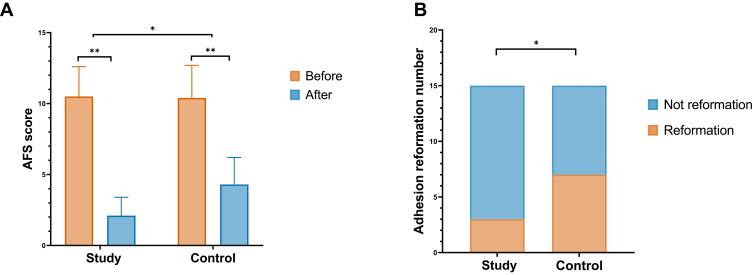
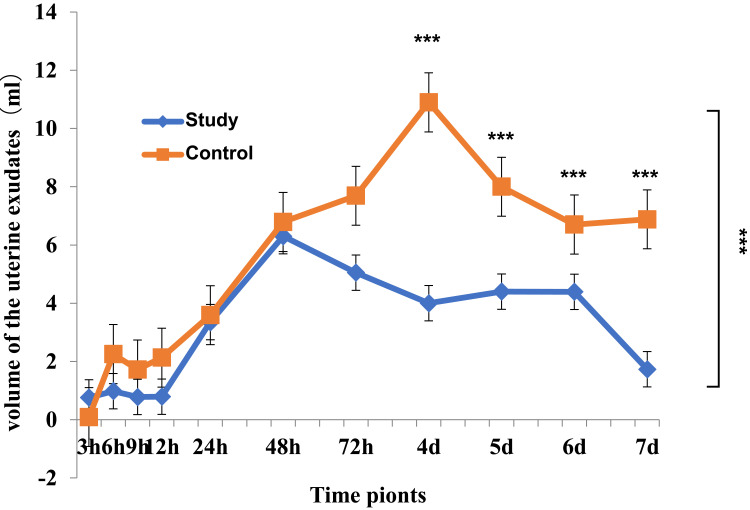
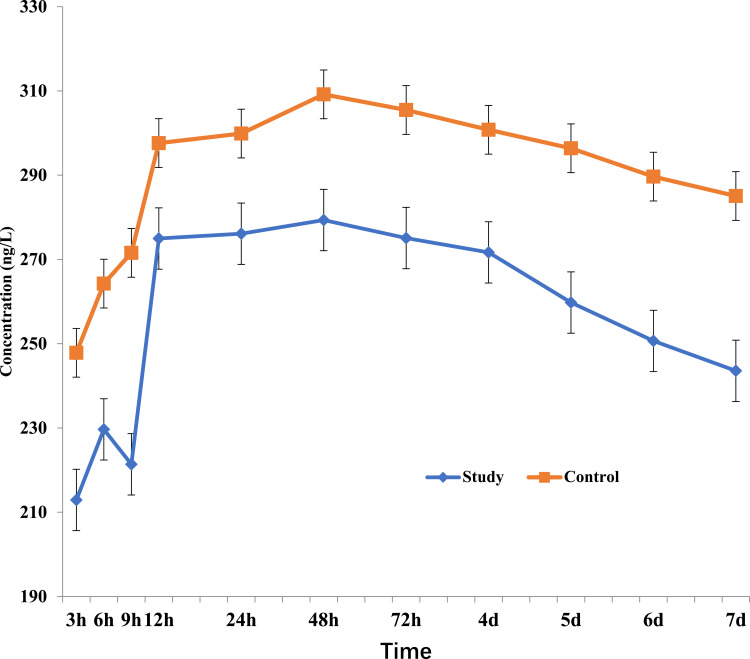
The postoperative volume of the uterine exudates in the study group was significantly lower than that of the control group ( < 0.05). The adhesion-related cytokine concentrations of TNF-α, VEGF, and IL-1β significantly increased after surgery in both groups. Their concentrations were significantly lower in the study group than in the control group ( < 0.05). Moreover, IL-1β exhibited a long-lasting effect in the study group. AFS scores and readhesion rates were significantly lower in the study group than in the control group after hysteroscopic adhesiolysis of severe IUAs.
The application of freeze-dried amnion grafts is beneficial to the postoperative recovery of patients with severe IUAs and may reduce the readhesion rate after hysteroscopic adhesiolysis by lowering adhesion-related cytokines, including TNF-α, VEGF, and IL-1β.
宫腔粘连(IUAs)是一种良性子宫疾病,可导致宫腔粘连和瘢痕形成。本研究旨在评估冻干羊膜移植对宫腔镜下宫腔粘连松解术后子宫渗出液中粘连相关细胞因子浓度的影响。
本研究为前瞻性随机对照试验。纳入30例因重度宫腔粘连接受宫腔镜粘连松解术的患者。将他们随机分为研究组(术后接受冻干羊膜移植治疗,N = 15)和对照组(未接受移植,N = 15)。粘连完全分离后,研究组将含有冻干羊膜移植片的Foley球囊插入宫腔,而对照组放置不含移植片的Foley球囊。在术后不同时间间隔进行酶联免疫吸附测定,以检测子宫渗出液中粘连相关细胞因子的浓度,包括白细胞介素-1β(IL-1β)、肿瘤坏死因子-α(TNF-α)和血管内皮生长因子(VEGF)。术后三个月进行二次宫腔镜检查。根据美国生育协会(AFS)评分系统,在宫腔镜检查期间评估粘连程度。
研究组术后子宫渗出液量显著低于对照组(P < 0.05)。两组术后TNF-α、VEGF和IL-1β的粘连相关细胞因子浓度均显著升高。研究组中这些细胞因子的浓度显著低于对照组(P < 0.05)。此外,IL-1β在研究组中表现出持久的作用。重度宫腔粘连宫腔镜粘连松解术后,研究组的AFS评分和再粘连率显著低于对照组。
冻干羊膜移植的应用有利于重度宫腔粘连患者的术后恢复,并可能通过降低包括TNF-α、VEGF和IL-1β在内的粘连相关细胞因子水平,降低宫腔镜粘连松解术后的再粘连率。