Finegan Christina, Boehlein Susan K, Leach Kristen A, Madrid Gabriela, Hannah L Curtis, Koch Karen E, Tracy William F, Resende Marcio F R
Plant Molecular and Cellular Biology Program, University of Florida, Gainesville, FL, United States.
Horticultural Sciences Department, University of Florida, Gainesville, FL, United States.
Front Plant Sci. 2022 Feb 8;12:800326. doi: 10.3389/fpls.2021.800326. eCollection 2021.
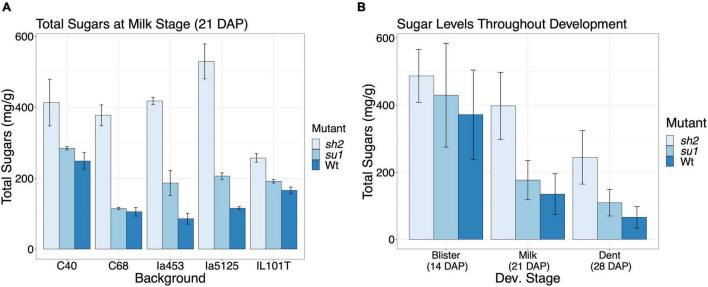
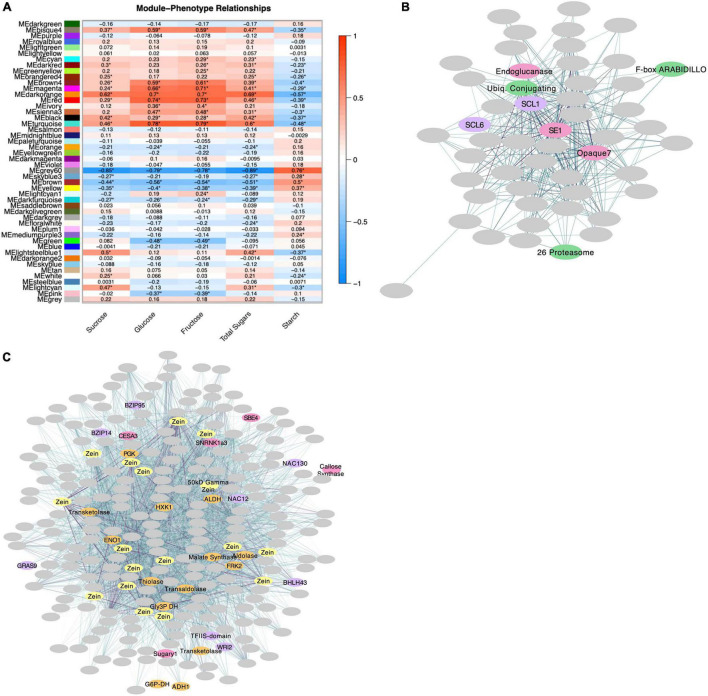
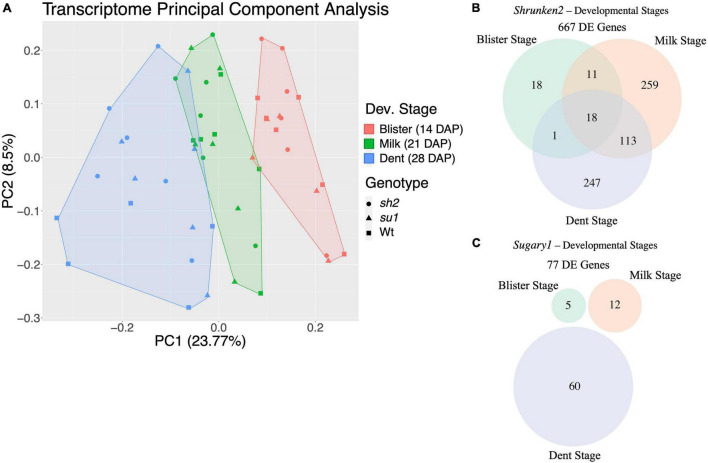
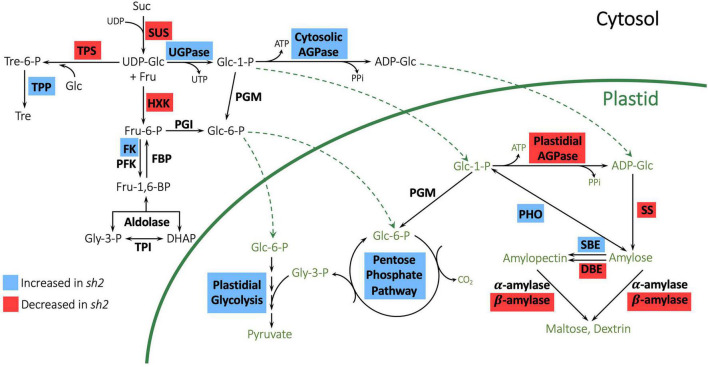
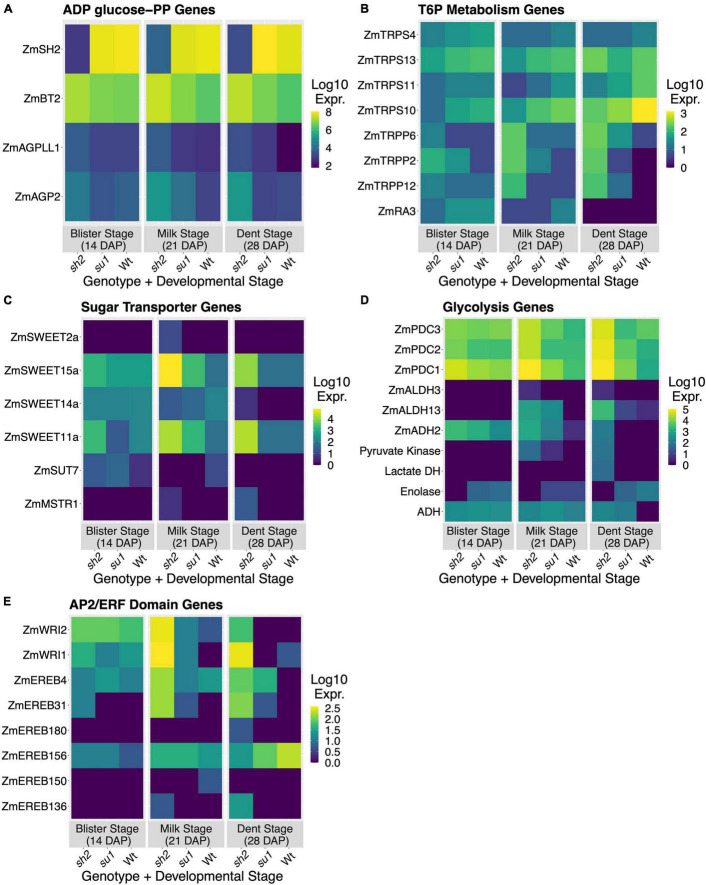
In maize, starch mutants have facilitated characterization of key genes involved in endosperm starch biosynthesis such as () and (). While many starch biosynthesis enzymes have been characterized, the mechanisms of certain genes (including ) are yet undefined, and very little is understood about the regulation of starch biosynthesis. As a model, we utilize commercially important sweet corn mutations, and , to genetically perturb starch production in the endosperm. To characterize the transcriptomic response to starch mutations and identify potential regulators of this pathway, differential expression and coexpression network analysis was performed on near-isogenic lines (NILs) (wildtype, , and ) in six genetic backgrounds. Lines were grown in field conditions and kernels were sampled in consecutive developmental stages (blister stage at 14 days after pollination (DAP), milk stage at 21 DAP, and dent stage at 28 DAP). Kernels were dissected to separate embryo and pericarp from the endosperm tissue and 3' RNA-seq libraries were prepared. Mutation of the gene led to minimal changes in the endosperm transcriptome. Responses to loss of function include increased expression of sugar (SWEET) transporters and of genes for ABA signaling. Key regulators of starch biosynthesis and grain filling were identified. Notably, this includes Class II trehalose 6-phosphate synthases, , and transcription factor-like (AP2/ERF) transcription factors. Additionally, our results provide insight into the mechanism of , suggesting a potential role in regulating GA signaling via GRAS transcription factor .
在玉米中,淀粉突变体有助于对参与胚乳淀粉生物合成的关键基因进行表征,例如()和()。虽然许多淀粉生物合成酶已被表征,但某些基因(包括)的机制仍不明确,人们对淀粉生物合成的调控了解甚少。作为一个模型,我们利用具有商业重要性的甜玉米突变体和,从基因层面干扰胚乳中的淀粉生成。为了表征对淀粉突变的转录组反应并识别该途径的潜在调节因子,我们对六种遗传背景下的近等基因系(NILs)(野生型、和)进行了差异表达和共表达网络分析。这些品系在田间条件下生长,并在连续的发育阶段(授粉后14天的泡状期、授粉后21天的乳熟期和授粉后28天的蜡熟期)采集籽粒样本。将籽粒解剖,将胚和果皮与胚乳组织分离,并制备3' RNA-seq文库。基因的突变导致胚乳转录组的变化最小。对功能丧失的反应包括糖(SWEET)转运蛋白和脱落酸信号相关基因的表达增加。鉴定出了淀粉生物合成和籽粒灌浆的关键调节因子。值得注意的是,这包括II类海藻糖6-磷酸合酶、和转录因子样(AP2/ERF)转录因子。此外,我们的结果为的机制提供了见解,表明其可能通过GRAS转录因子在调节赤霉素信号传导中发挥作用。