Department of Anesthesiology, The Second Hospital, Cheeloo College of Medicine, Shandong University, Jinan, Shandong 250012, China.
Department of Nephrology, The Second Hospital, Cheeloo College of Medicine, Shandong University, Jinan, Shandong 250012, China.
Comput Math Methods Med. 2022 Feb 15;2022:9275406. doi: 10.1155/2022/9275406. eCollection 2022.
Renal dysfunction after kidney transplantation may be influenced by many reasons. This study was designed to evaluate whether the administration of dexmedetomidine (Dex) could ameliorate renal function and prognosis after kidney transplantation.
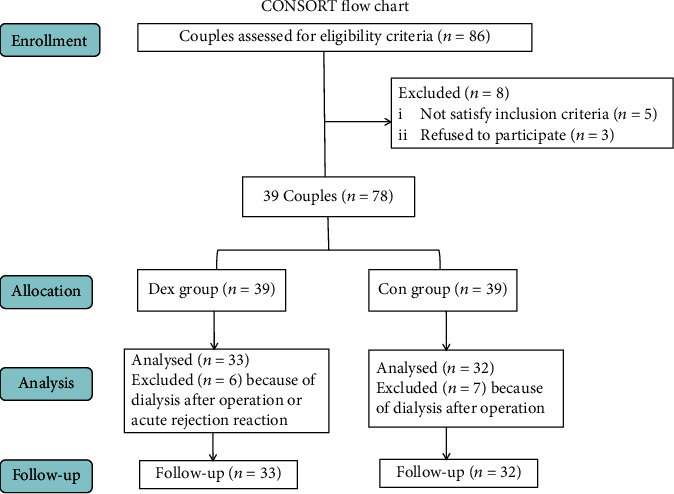
A total of 65 patients were divided into Dex group ( = 33) and Con group (Con, = 32). Dex group intravenously received an initial loading dose of 0.6 g/kg Dex for 15 min before anaesthesia induction, followed by a rate of 0.4 g/kg/h until 30 min after kidney reperfusion. By contrast, Con group received saline. The concentration of urinary kidney injury molecule-1 (KIM-1), serum creatinine (Cr), blood urea, urine output, 2 microglobulin (2-MG), Cystatin C (CysC), and estimated glomerular filtration rate (eGFR) was recorded and compared between two groups during the course of the hospitalization or follow-up. Mean arterial pressure (MAP) and heart rate (HR), vasoactive drugs, and anaesthetics were recorded during the operation. Pain degree was evaluated using a visual analogue scale (VAS) after operation. Delayed graft function (DGF), graft loss, length of hospital stay, and mortality were compared between groups.
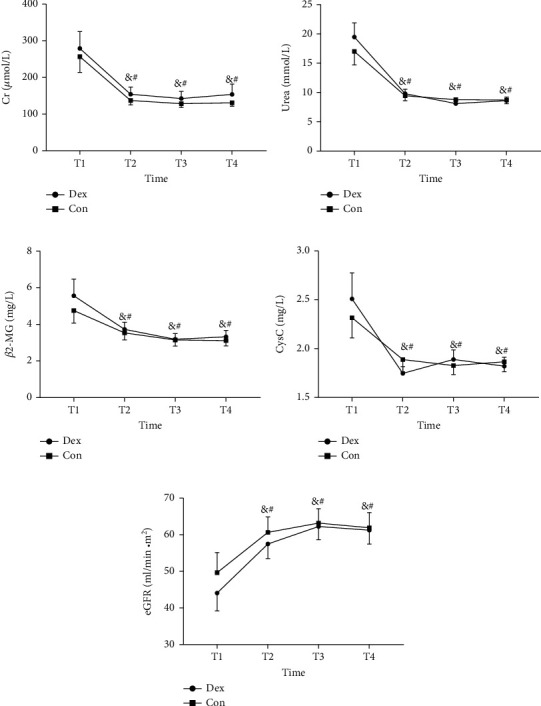
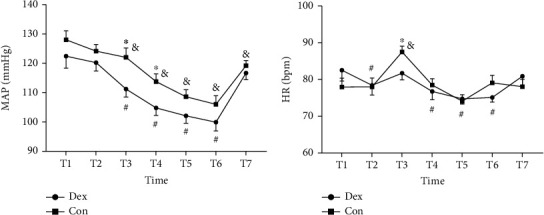
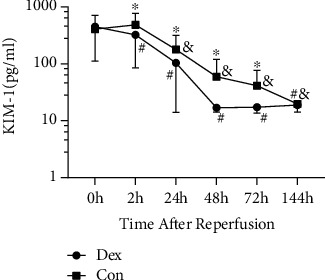
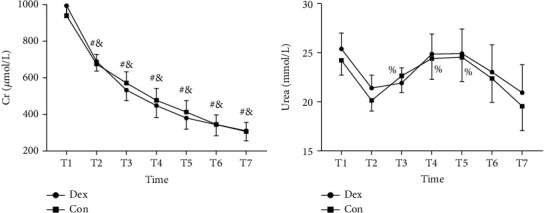
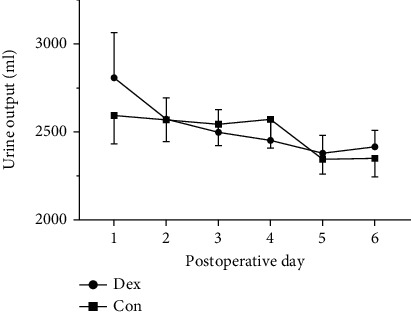
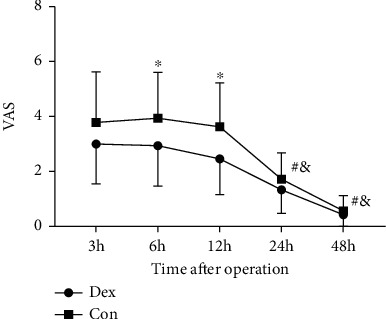
The concentration of KIM-1 in Dex group was lower than Con group at 2 h ( = 0.018), 24 h ( = 0.013), 48 h ( < 0.01), and 72 h ( < 0.01) after reperfusion. MAP of Dex group after tracheal intubation ( = 0.012) and incision ( = 0.018) and HR after intubation ( = 0.021) were lower than that of Con group. The dosage of sufentanil during operation in Dex group was less than Con group ( = 0.039). Patients that used atropine in Dex group were more than Con group ( = 0.027). Patients who received Dex presented with lower VAS scores at 6 h ( = 0.01) and 12 h ( = 0.002) after operation. Concentration of serum Cr and blood urea had no significant differences between groups before operation and on postoperative day 1 to 6. Urine output was recorded for 6 days after operation and had no differences between groups. Also, no differences were identified between two groups in urea, Cr, 2-MG, CysC, and eGFR in the first 3 months after operation. Incidence of DGF after operation was detected no difference between groups, while length of hospital stay in Dex group was less than Con group ( = 0.012).
Dex can decrease kidney injury marker level, attenuate perioperative stress, relieve the dosage of sufentanil and postoperative pain, and reduce length of hospital stay. However, Dex is not associated with changes in prognosis in the first 3 months after transplantation.
肾移植后肾功能障碍可能受多种因素影响。本研究旨在评估右美托咪定(Dex)是否能改善肾移植后的肾功能和预后。
65 例患者分为 Dex 组(n = 33)和 Con 组(n = 32)。Dex 组在麻醉诱导前 15 分钟静脉给予首剂 0.6 μg/kg Dex,随后以 0.4 μg/kg/h 的速度输注至肾再灌注后 30 分钟。相比之下,Con 组给予生理盐水。在住院或随访过程中记录两组患者的尿肾损伤分子-1(KIM-1)、血清肌酐(Cr)、血尿素、尿量、β2 微球蛋白(2-MG)、胱抑素 C(CysC)和估算肾小球滤过率(eGFR)浓度,并进行比较。记录术中平均动脉压(MAP)和心率(HR)、血管活性药物和麻醉药物。术后采用视觉模拟评分(VAS)评估疼痛程度。比较两组患者的延迟移植物功能障碍(DGF)、移植物丢失、住院时间和死亡率。
Dex 组再灌注后 2 小时( = 0.018)、24 小时( = 0.013)、48 小时( < 0.01)和 72 小时( < 0.01)时 KIM-1 浓度均低于 Con 组。Dex 组气管插管后( = 0.012)和切口时( = 0.018)的 MAP 和插管后( = 0.021)的 HR 均低于 Con 组。Dex 组术中舒芬太尼用量少于 Con 组( = 0.039)。Dex 组使用阿托品的患者多于 Con 组( = 0.027)。Dex 组术后 6 小时( = 0.01)和 12 小时( = 0.002)VAS 评分较低。两组患者术前及术后第 1 至 6 天血清 Cr 和血尿素浓度无差异。术后记录尿量 6 天,两组间无差异。术后 3 个月内两组间尿素、Cr、2-MG、CysC 和 eGFR 差异无统计学意义。术后 DGF 发生率两组间无差异,Dex 组住院时间短于 Con 组( = 0.012)。
Dex 可降低肾损伤标志物水平,减轻围手术期应激,减轻舒芬太尼用量和术后疼痛,缩短住院时间。但 Dex 与移植后 3 个月内的预后变化无关。