Tharappel Anil Mathew, Li Zhong, Li Hongmin
Department of Pharmacology and Toxicology, College of Pharmacy, The University of Arizona, Tucson, AZ, United States.
BIO5 Institute, The University of Arizona, Tucson, AZ, United States.
Front Mol Biosci. 2022 Feb 8;9:821146. doi: 10.3389/fmolb.2022.821146. eCollection 2022.
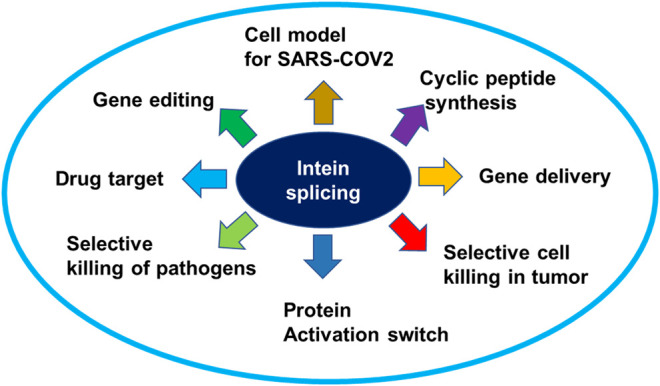
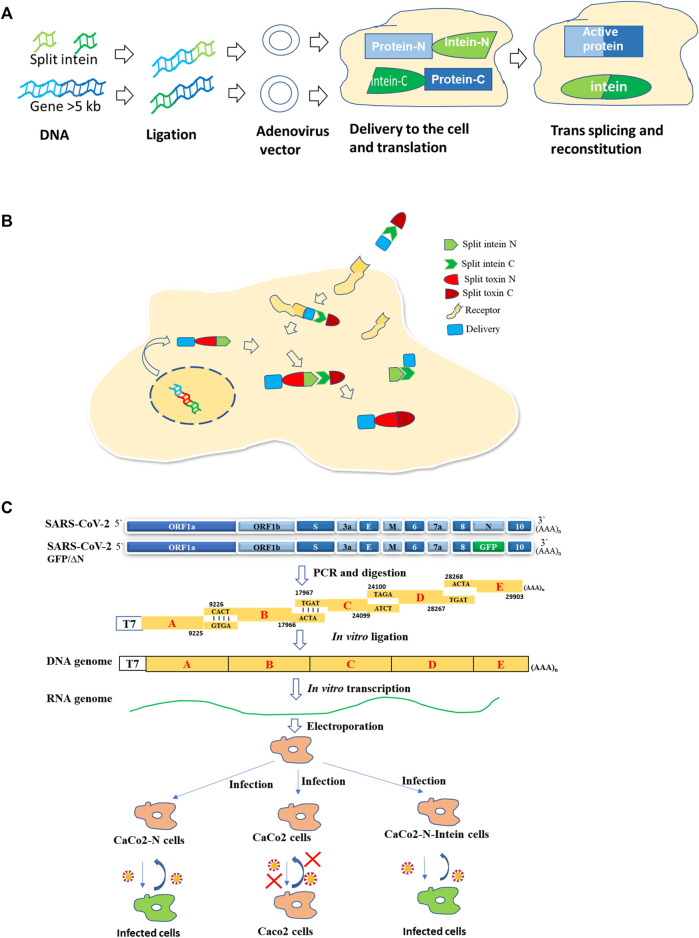
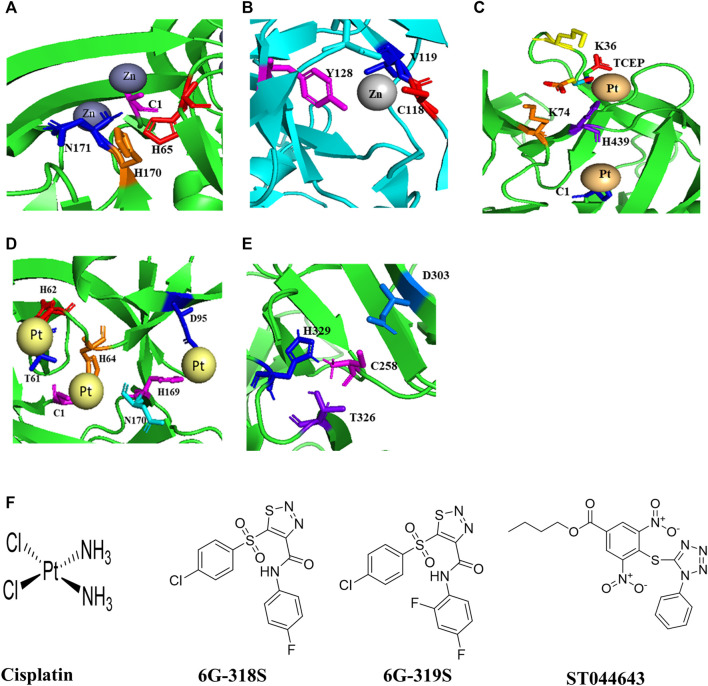
Multidrug-resistant pathogens are of significant concern in recent years. Hence new antifungal and anti-bacterial drug targets are urgently needed before the situation goes beyond control. Inteins are polypeptides that self-splice from exteins without the need for cofactors or external energy, resulting in joining of extein fragments. Inteins are present in many organisms, including human pathogens such as , , , and . Because intein elements are not present in human genes, they are attractive drug targets to develop antifungals and antibiotics. Thus far, a few inhibitors of intein splicing have been reported. Metal-ions such as Zn and Cu, and platinum-containing compound cisplatin inhibit intein splicing in and by binding to the active site cysteines. A small-molecule inhibitor 6G-318S and its derivative 6G-319S are found to inhibit intein splicing in and with a MIC in nanomolar concentrations. Inteins have also been used in many other applications. Intein can be used in activating a protein inside a cell using small molecules. Moreover, split intein can be used to deliver large genes in experimental gene therapy and to kill selected species in a mixed population of microbes by taking advantage of the toxin-antitoxin system. Furthermore, split inteins are used in synthesizing cyclic peptides and in developing cell culture model to study infectious viruses including SARS-CoV-2 in the biosafety level (BSL) 2 facility. This mini-review discusses the recent research developments of inteins in drug discovery and therapeutic research.
近年来,多重耐药病原体备受关注。因此,在局势失控之前,迫切需要新的抗真菌和抗菌药物靶点。内含肽是一种无需辅因子或外部能量就能从外显肽上自我剪接的多肽,从而导致外显肽片段连接在一起。内含肽存在于许多生物体中,包括人类病原体,如[此处列举的病原体名称缺失]。由于人类基因中不存在内含肽元件,它们是开发抗真菌药和抗生素的有吸引力的药物靶点。到目前为止,已经报道了一些内含肽剪接抑制剂。锌和铜等金属离子以及含铂化合物顺铂通过与活性位点半胱氨酸结合,抑制[此处相关生物体名称缺失]中的内含肽剪接。发现一种小分子抑制剂6G - 318S及其衍生物6G - 319S能够抑制[此处相关生物体名称缺失]中的内含肽剪接,其最低抑菌浓度为纳摩尔级。内含肽还被用于许多其他应用。内含肽可用于利用小分子激活细胞内的蛋白质。此外,分裂内含肽可用于在实验性基因治疗中传递大基因,并通过利用毒素 - 抗毒素系统杀死混合微生物群体中的特定物种。此外,分裂内含肽还用于合成环肽以及开发细胞培养模型,以在生物安全水平(BSL)2设施中研究包括SARS-CoV-2在内的传染性病毒。这篇综述讨论了内含肽在药物发现和治疗研究方面的最新研究进展。