From the Department of Intensive Care Medicine (Zwaag, Naaktgeboren, Pickkers, Kox), Radboud Center for Infectious Diseases (RCI) (Zwaag, Pickkers, Kox), and Department of Laboratory Medicine (van Herwaarden), Radboud university medical center, Nijmegen, the Netherlands.
Psychosom Med. 2022 May 1;84(4):457-467. doi: 10.1097/PSY.0000000000001065. Epub 2022 Feb 23.
We previously showed that a training intervention comprising a combination of meditation, exposure to cold, and breathing exercises enables voluntary activation of the sympathetic nervous system, reflected by profoundly increased plasma epinephrine levels, and subsequent attenuation of the lipopolysaccharide (LPS)-induced inflammatory response. Several elements of the intervention may contribute to these effects, namely, two different breathing exercises (either with or without prolonged breath retention) and exposure to cold. We determined the contribution of these different elements to the observed effects.
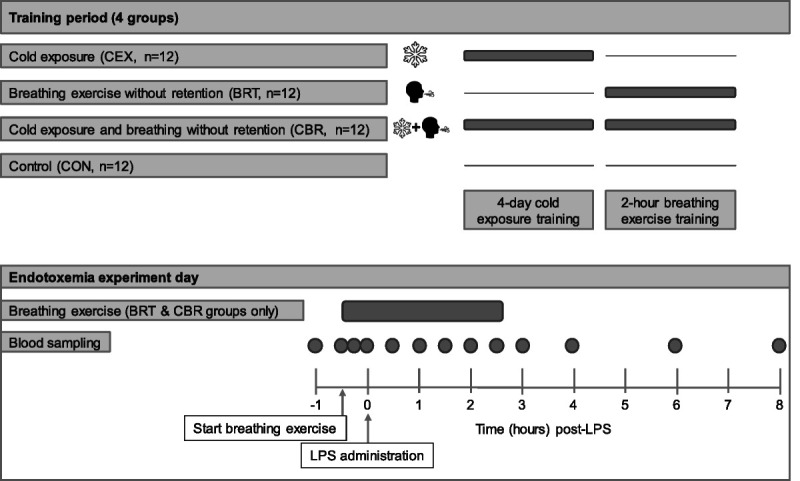
Forty healthy male volunteers were randomized to either a short or an extensive training in both breathing exercises by either the creator of the training intervention or an independent trainer. The primary outcome was plasma epinephrine levels. In a subsequent study, 48 healthy male volunteers were randomized to cold exposure training, training in the established optimal breathing exercise, a combination of both, or no training. These 48 participants were subsequently intravenously challenged with 2 ng/kg LPS. The primary outcome was plasma cytokine levels.
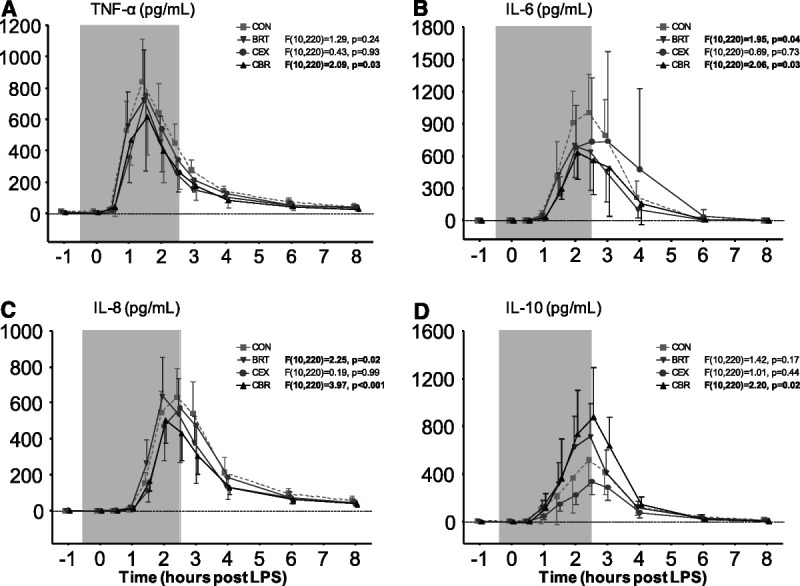
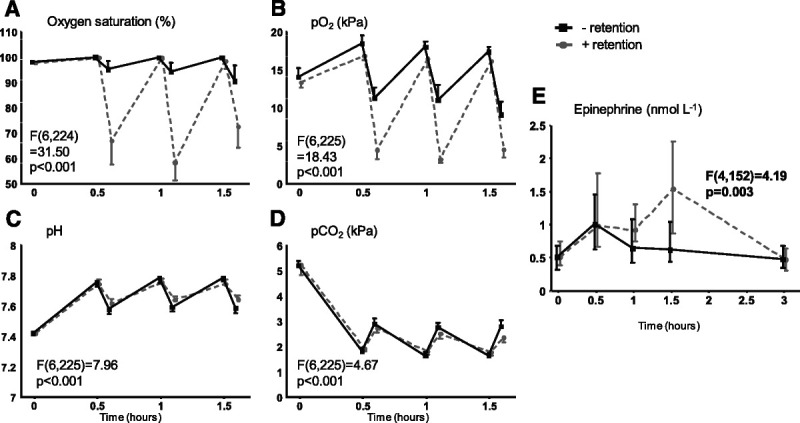
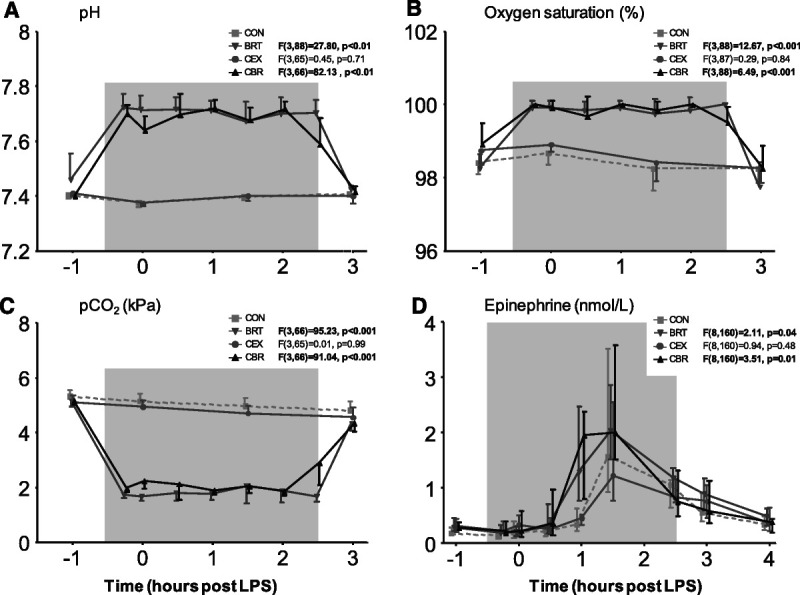
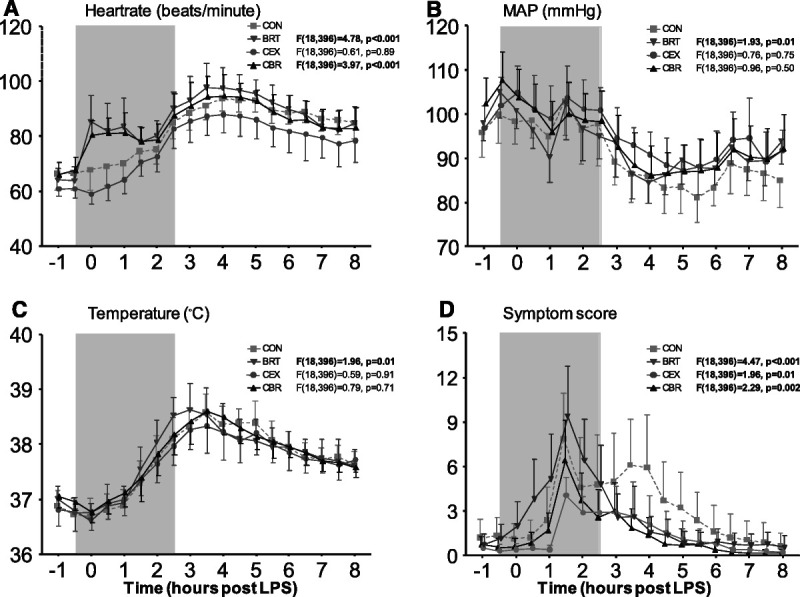
Both breathing exercises were associated with an increase in plasma epinephrine levels, which did not vary as a function of length of training or the trainer (F(4,152) = 0.53, p = .71, and F(4,152) = 0.92, p = .46, respectively). In the second study, the breathing exercise also resulted in increased plasma epinephrine levels. Cold exposure training alone did not relevantly modulate the LPS-induced inflammatory response (F(8,37) = 0.60, p = .77), whereas the breathing exercise led to significantly enhanced anti-inflammatory and attenuated proinflammatory cytokine levels (F(8,37) = 3.80, p = .002). Cold exposure training significantly enhanced the immunomodulatory effects of the breathing exercise (F(8,37) = 2.57, p = .02).
The combination of cold exposure training and a breathing exercise most potently attenuates the in vivo inflammatory response in healthy young males. Our study demonstrates that the immunomodulatory effects of the intervention can be reproduced in a standardized manner, thereby paving the way for clinical trials.Trial Registration:ClinicalTrials.gov identifiers: NCT02417155 and NCT03240497.
我们之前的研究表明,一种包含冥想、暴露于寒冷和呼吸练习的训练干预措施能够使交感神经系统自愿激活,这表现为血浆肾上腺素水平显著升高,随后减轻脂多糖(LPS)诱导的炎症反应。干预措施的几个要素可能对这些效果有贡献,即两种不同的呼吸练习(有或没有长时间的呼吸保持)和暴露于寒冷。我们确定了这些不同要素对观察到的效果的贡献。
40 名健康男性志愿者随机分为短期或广泛的呼吸练习训练,由干预措施的创建者或独立培训师进行。主要结局是血浆肾上腺素水平。在随后的研究中,48 名健康男性志愿者随机分为寒冷暴露训练、已建立的最佳呼吸练习训练、两者结合或不训练。这些 48 名参与者随后静脉内接受 2ng/kg LPS 挑战。主要结局是血浆细胞因子水平。
两种呼吸练习都与血浆肾上腺素水平的升高相关,而这种升高与训练的长度或培训师无关(F(4,152) = 0.53,p =.71 和 F(4,152) = 0.92,p =.46)。在第二项研究中,呼吸练习也导致了血浆肾上腺素水平的升高。单独的寒冷暴露训练并没有显著调节 LPS 诱导的炎症反应(F(8,37) = 0.60,p =.77),而呼吸练习导致了显著增强的抗炎和减弱的促炎细胞因子水平(F(8,37) = 3.80,p =.002)。寒冷暴露训练显著增强了呼吸练习的免疫调节作用(F(8,37) = 2.57,p =.02)。
寒冷暴露训练和呼吸练习的结合最有效地减弱了健康年轻男性体内的炎症反应。我们的研究表明,干预措施的免疫调节作用可以以标准化的方式再现,从而为临床试验铺平了道路。
ClinicalTrials.gov 标识符:NCT02417155 和 NCT03240497。