Schloer Sebastian, Goretzko Jonas, Rescher Ursula
Institute-Associated Research Group "Regulatory Mechanisms of Inflammation", Institute of Medical Biochemistry, Center for Molecular Biology of Inflammation, and "Cells in Motion" Interfaculty Centre, University of Muenster, Von-Esmarch-Str. 56, D-48149 Muenster, Germany.
Leibniz Institute for Experimental Virology, D-20251 Hamburg, Germany.
Pharmaceuticals (Basel). 2022 Feb 10;15(2):212. doi: 10.3390/ph15020212.
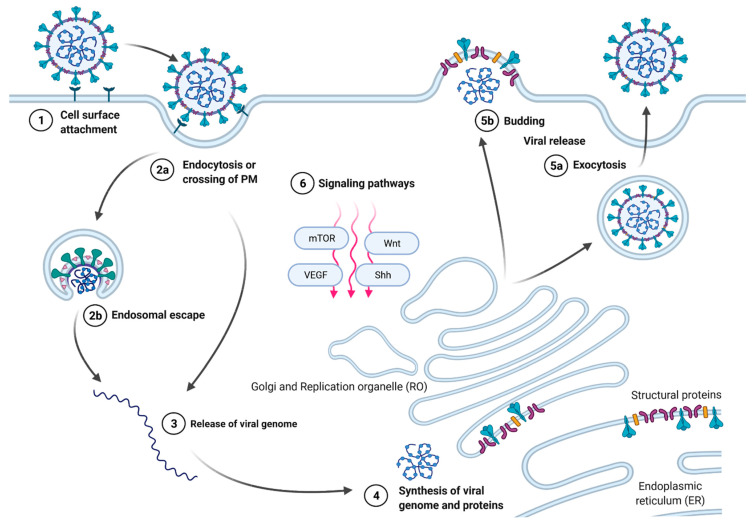
Because of their epidemic and pandemic potential, emerging viruses are a major threat to global healthcare systems. While vaccination is in general a straightforward approach to prevent viral infections, immunization can also cause escape mutants that hide from immune cell and antibody detection. Thus, other approaches than immunization are critical for the management and control of viral infections. Viruses are prone to mutations leading to the rapid emergence of resistant strains upon treatment with direct antivirals. In contrast to the direct interference with pathogen components, host-directed therapies aim to target host factors that are essential for the pathogenic replication cycle or to improve the host defense mechanisms, thus circumventing resistance. These relatively new approaches are often based on the repurposing of drugs which are already licensed for the treatment of other unrelated diseases. Here, we summarize what is known about the mechanisms and modes of action for a potential use of antifungals as repurposed host-directed anti-infectives for the therapeutic intervention to control viral infections.
由于新兴病毒具有引发流行病和大流行的潜力,它们对全球医疗保健系统构成重大威胁。虽然接种疫苗通常是预防病毒感染的直接方法,但免疫接种也可能导致逃避突变体,从而躲避免疫细胞和抗体的检测。因此,除免疫接种外的其他方法对于病毒感染的管理和控制至关重要。病毒易于发生突变,在用直接抗病毒药物治疗后会迅速出现耐药菌株。与直接干扰病原体成分不同,宿主导向疗法旨在靶向对致病复制周期至关重要的宿主因子或改善宿主防御机制,从而规避耐药性。这些相对较新的方法通常基于已获许可用于治疗其他不相关疾病的药物的重新利用。在此,我们总结了关于抗真菌药物作为重新利用的宿主导向抗感染药物用于治疗干预以控制病毒感染的潜在机制和作用方式的已知信息。