Department of Dietetics, Institute of Human Nutrition Sciences, Warsaw University of Life Sciences (SGGW-WULS), 159C Nowoursynowska Street, 02-776 Warsaw, Poland.
Department of Food Market and Consumer Research, Institute of Human Nutrition Sciences, Warsaw University of Life Sciences (SGGW-WULS), 159C Nowoursynowska Street, 02-776 Warsaw, Poland.
Nutrients. 2022 Feb 16;14(4):828. doi: 10.3390/nu14040828.
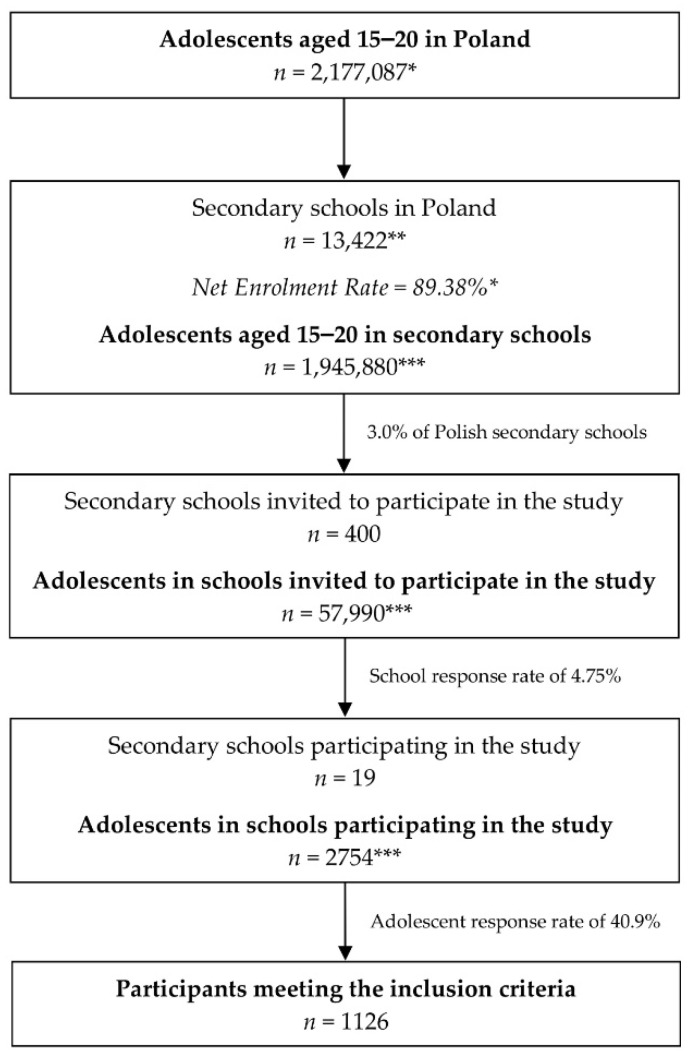
Stress caused by the Coronavirus Disease 2019 (COVID-19) pandemic may lead to emotional eating which may have a negative impact on the weight status. This study aimed to analyze the association between emotional eating and body mass, as well as changes in body mass during the COVID-19 pandemic, within the Polish Adolescents' COVID-19 Experience (PLACE-19) Study. A total of 1126 Polish adolescents, aged 15-20, were included. A random quota sampling was performed within a national sample, and emotional eating was assessed using Emotional Eater Questionnaire (EEQ). Based on the declared height and weight before and during the pandemic, the respondents were categorized according to their body mass (malnourished, normal weight, overweight, obese) and changes in body mass during the COVID-19 pandemic (lost weight, no body mass change, gained weight). Higher EEQ scores were achieved by female respondents compared with males ( < 0.0001), respondents who stated that they gained weight during the pandemic compared with those who stated either weight loss or no body mass change ( < 0.0001), and overweight and obese respondents compared with those who had normal weight and who were malnourished ( < 0.0001). A higher share of emotional eaters and very emotional eaters was found among female respondents, respondents stating weight gain during the pandemic, and overweight and obese respondents, compared with the other ones ( < 0.0001). Based on the findings, it may be concluded that among Polish adolescents gender, body mass, and body mass change during the COVID-19 pandemic are the major determinants of emotional eating behaviors and that female individuals, obese individuals, and those gaining weight are especially vulnerable to emotional eating behaviors. The results of the study suggest that the issue of emotional eating should be addressed in general public health policy and appropriate education should be provided to vulnerable groups such as female and obese adolescents.
由 2019 年冠状病毒病(COVID-19)大流行引起的压力可能导致情绪化进食,这可能对体重状况产生负面影响。本研究旨在分析波兰青少年 COVID-19 体验研究(PLACE-19)中情绪性进食与体重之间的关系,以及 COVID-19 大流行期间体重的变化。共纳入 1126 名 15-20 岁的波兰青少年。采用全国样本随机配额抽样,使用情绪性进食问卷(EEQ)评估情绪性进食。根据大流行前和大流行期间报告的身高和体重,根据体重(营养不良、正常体重、超重、肥胖)和 COVID-19 大流行期间体重的变化(体重减轻、体重不变、体重增加)对受访者进行分类。与男性相比,女性的 EEQ 得分更高(<0.0001),与报告体重减轻或体重不变的人相比,报告在大流行期间体重增加的人得分更高(<0.0001),与体重正常和营养不良的人相比,超重和肥胖的人得分更高(<0.0001)。与其他受访者相比,女性、报告在大流行期间体重增加的受访者和超重及肥胖的受访者中,情绪性进食者和非常情绪性进食者的比例更高(<0.0001)。基于这些发现,可以得出结论,在波兰青少年中,性别、体重和 COVID-19 大流行期间的体重变化是情绪性进食行为的主要决定因素,女性、肥胖者和体重增加者尤其容易出现情绪性进食行为。研究结果表明,情绪性进食问题应在一般公共卫生政策中得到解决,并应为女性和肥胖青少年等弱势群体提供适当的教育。