Department of Medical and Biological Sciences, The Catholic University of Korea, Bucheon 14662, Korea.
Department of Obstetrics and Gynecology, Korea University College of Medicine, Seoul 02841, Korea.
Int J Mol Sci. 2022 Feb 16;23(4):2170. doi: 10.3390/ijms23042170.
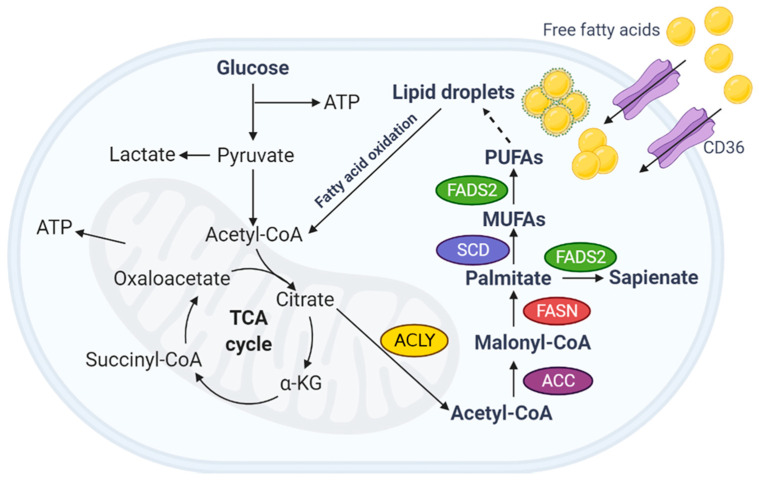
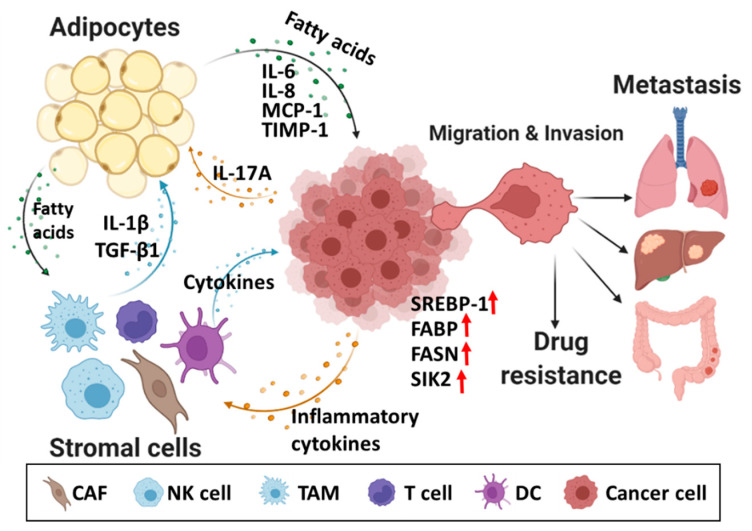
Ovarian cancer is the most malignant gynecological tumor. Previous studies have reported that metabolic alterations resulting from deregulated lipid metabolism promote ovarian cancer aggressiveness. Lipid metabolism involves the oxidation of fatty acids, which leads to energy generation or new lipid metabolite synthesis. The upregulation of fatty acid synthesis and related signaling promote tumor cell proliferation and migration, and, consequently, lead to poor prognosis. Fatty acid-mediated lipid metabolism in the tumor microenvironment (TME) modulates tumor cell immunity by regulating immune cells, including T cells, B cells, macrophages, and natural killer cells, which play essential roles in ovarian cancer cell survival. Here, the types and sources of fatty acids and their interactions with the TME of ovarian cancer have been reviewed. Additionally, this review focuses on the role of fatty acid metabolism in tumor immunity and suggests that fatty acid and related lipid metabolic pathways are potential therapeutic targets for ovarian cancer.
卵巢癌是最恶性的妇科肿瘤。先前的研究报道称,脂质代谢失调导致的代谢改变促进了卵巢癌的侵袭性。脂质代谢涉及脂肪酸的氧化,这导致能量产生或新的脂质代谢物合成。脂肪酸合成的上调和相关信号的上调促进肿瘤细胞的增殖和迁移,从而导致预后不良。脂肪酸介导的肿瘤微环境(TME)中的脂质代谢通过调节免疫细胞,包括 T 细胞、B 细胞、巨噬细胞和自然杀伤细胞,来调节肿瘤细胞的免疫,这些细胞在卵巢癌细胞的存活中发挥着重要作用。在这里,综述了脂肪酸的类型和来源及其与卵巢癌 TME 的相互作用。此外,本综述还重点讨论了脂肪酸代谢在肿瘤免疫中的作用,并提出脂肪酸和相关脂质代谢途径是卵巢癌潜在的治疗靶点。