Department of Immunology Genetics and Pathology, Uppsala University, Uppsala 751 08, Sweden.
Armed Forces Medical Examiner System's Armed Forces DNA Identification Laboratory (AFMES-AFDIL), Dover Air Force Base, Dover, DE 19902, USA.
Int J Mol Sci. 2022 Feb 17;23(4):2244. doi: 10.3390/ijms23042244.
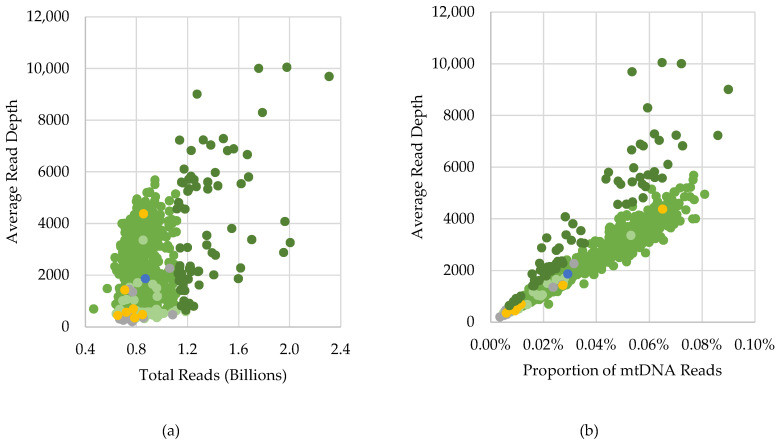
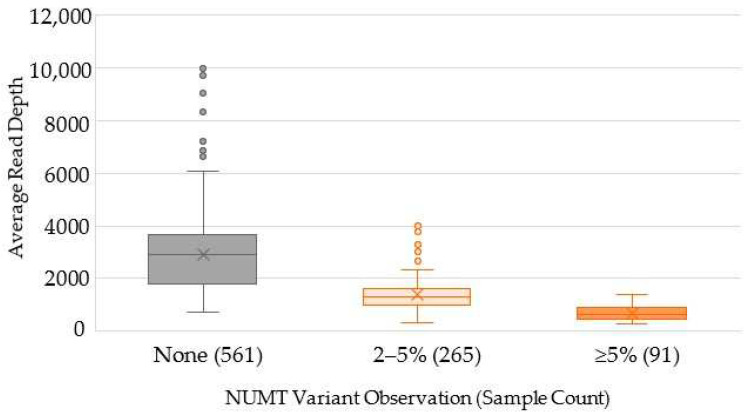
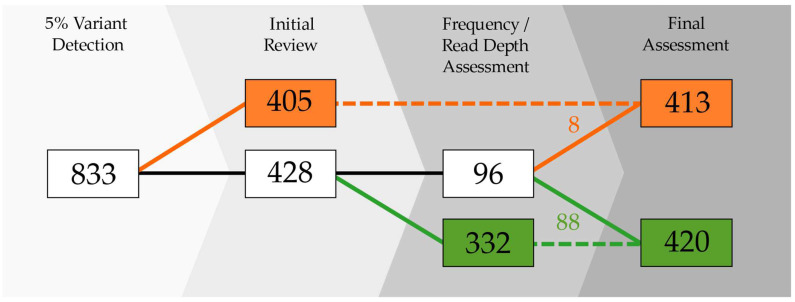
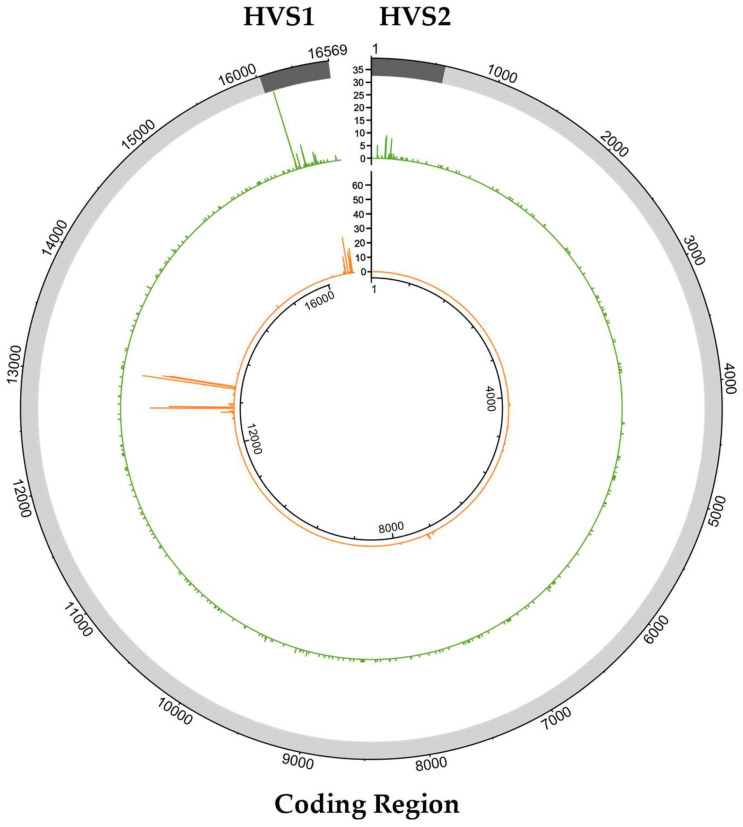
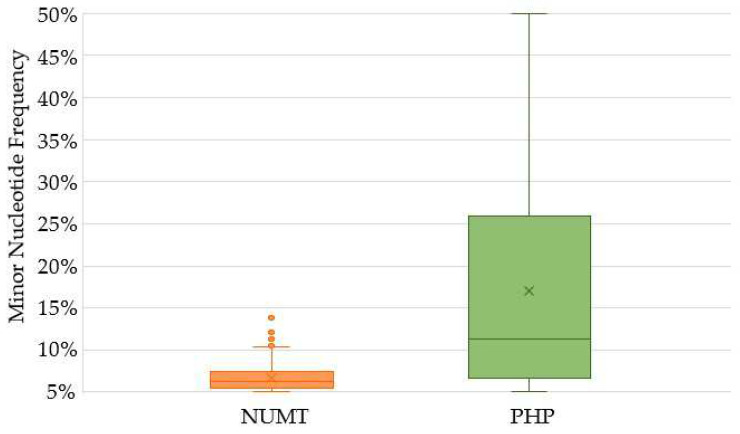
Whole-genome sequencing (WGS) data present a readily available resource for mitochondrial genome (mitogenome) haplotypes that can be utilized for genetics research including population studies. However, the reconstruction of the mitogenome is complicated by nuclear mitochondrial DNA (mtDNA) segments (NUMTs) that co-align with the mtDNA sequences and mimic authentic heteroplasmy. Two minimum variant detection thresholds, 5% and 10%, were assessed for the ability to produce authentic mitogenome haplotypes from a previously generated WGS dataset. Variants associated with NUMTs were detected in the mtDNA alignments for 91 of 917 (~8%) Swedish samples when the 5% frequency threshold was applied. The 413 observed NUMT variants were predominantly detected in two regions (nps 12,612-13,105 and 16,390-16,527), which were consistent with previously documented NUMTs. The number of NUMT variants was reduced by ~97% (400) using a 10% frequency threshold. Furthermore, the 5% frequency data were inconsistent with a platinum-quality mitogenome dataset with respect to observed heteroplasmy. These analyses illustrate that a 10% variant detection threshold may be necessary to ensure the generation of reliable mitogenome haplotypes from WGS data resources.
全基因组测序(WGS)数据为线粒体基因组(mitogenome)单倍型提供了现成的资源,可用于包括群体研究在内的遗传学研究。然而,核线粒体 DNA(mtDNA)片段(NUMTs)与 mtDNA 序列共排列并模拟真实异质性,这使得 mitogenome 的重建变得复杂。我们评估了 5%和 10%两个最小变异检测阈值,以确定它们是否能够从先前生成的 WGS 数据集产生真实的 mitogenome 单倍型。当应用 5%的频率阈值时,在 917 个(~8%)瑞典样本的 mtDNA 比对中检测到与 NUMTs 相关的变异。观察到的 413 个 NUMT 变异主要存在于两个区域(nps 12,612-13,105 和 16,390-16,527),与先前记录的 NUMTs 一致。使用 10%的频率阈值,NUMT 变异的数量减少了约 97%(400)。此外,5%的频率数据与观察到的异质性的铂金质量 mitogenome 数据集不一致。这些分析表明,为了确保从 WGS 数据资源生成可靠的 mitogenome 单倍型,可能需要 10%的变异检测阈值。