State Key Laboratory of Plant Genomics, Institute of Genetics and Developmental Biology, The Innovative Academy of Seed Design, Chinese Academy of Sciences, Beijing 100101, China.
University of Chinese Academy of Sciences, Beijing 100049, China.
Int J Mol Sci. 2022 Feb 18;23(4):2272. doi: 10.3390/ijms23042272.
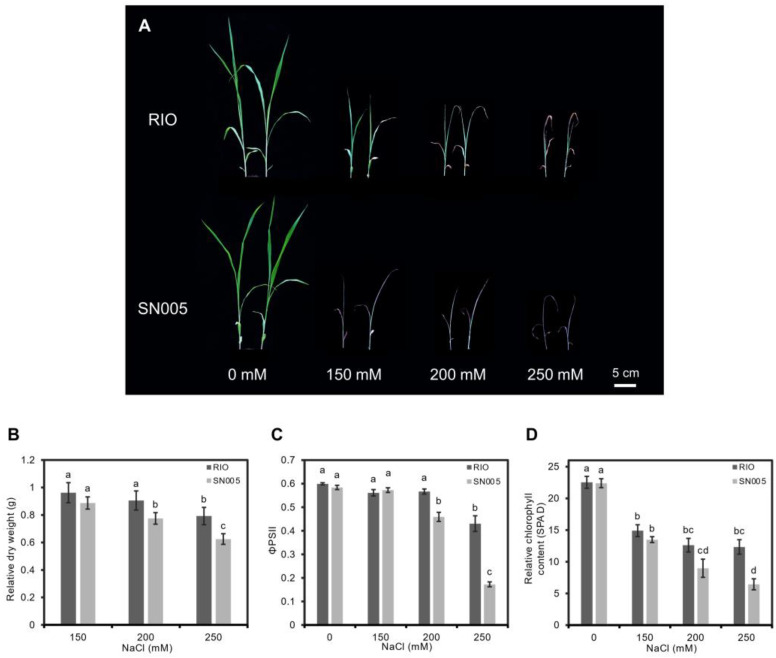
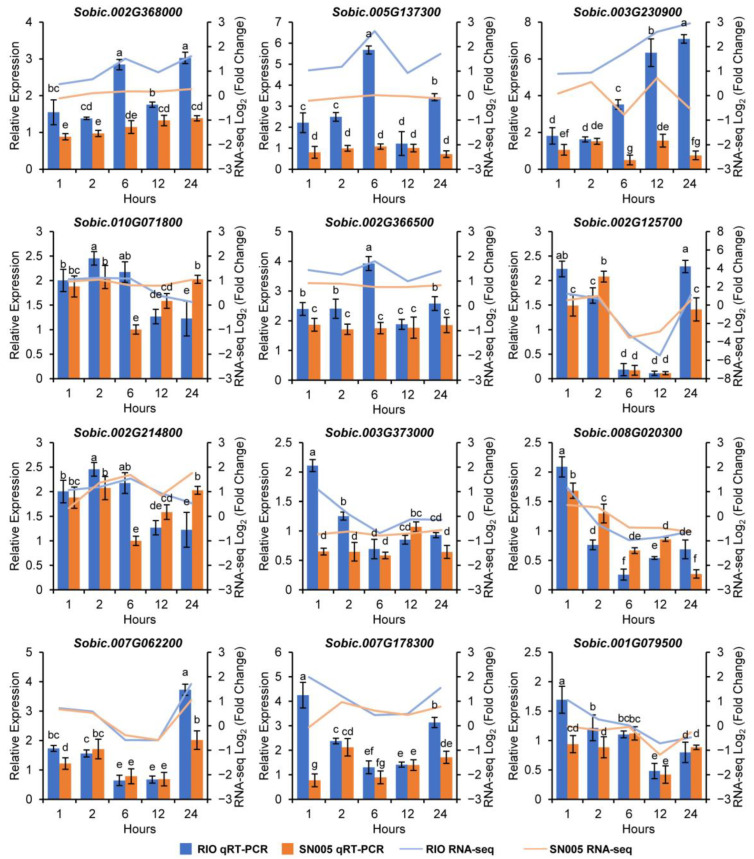
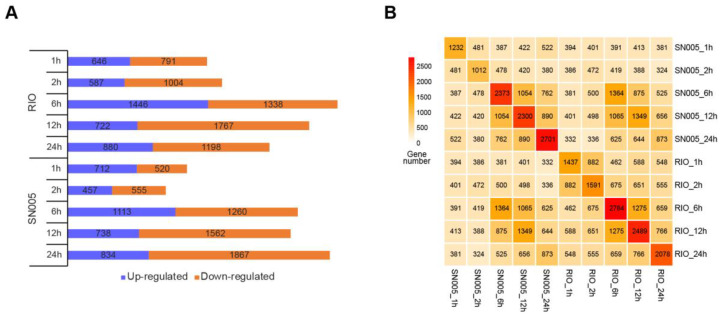
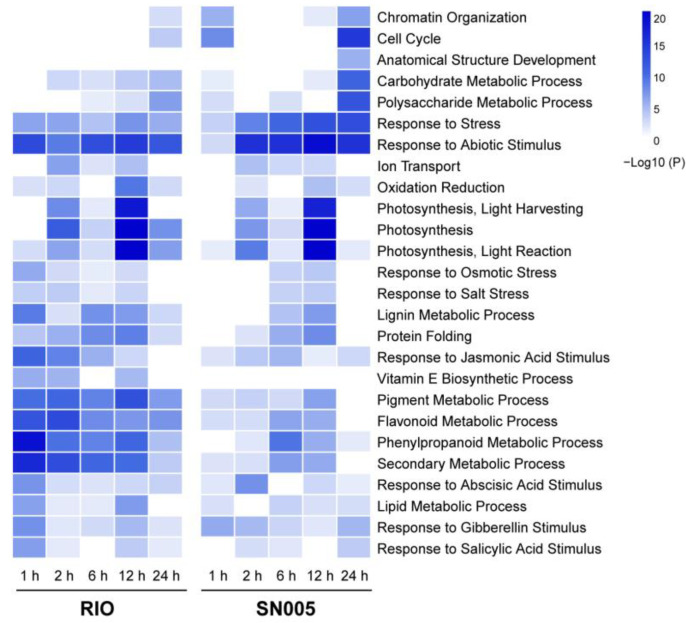
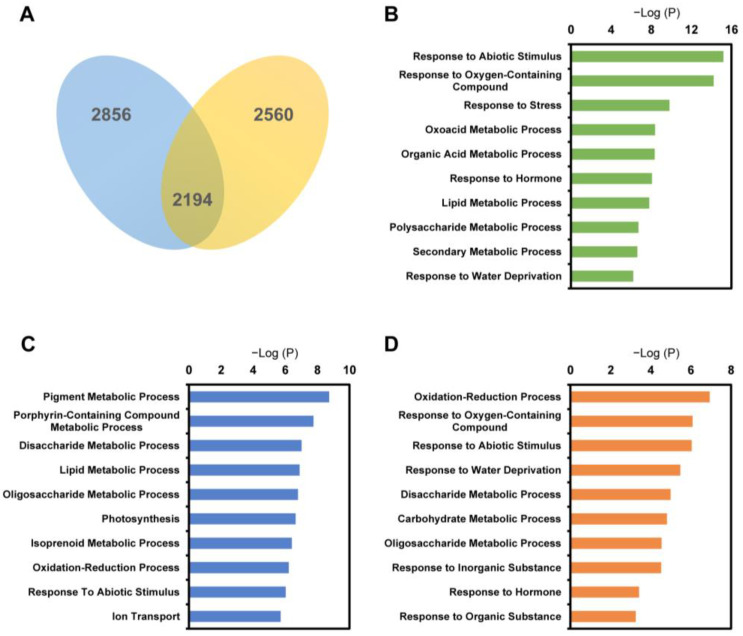
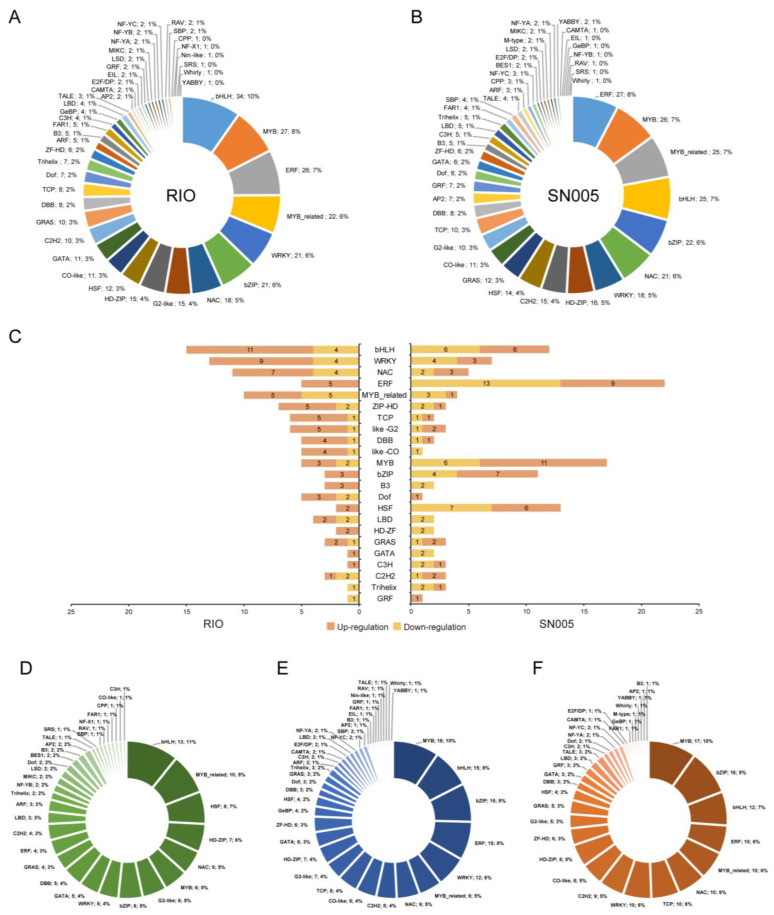
Sweet sorghum is a C4 crop that can be grown for silage forage, fiber, syrup and fuel production. It is generally considered a salt-tolerant plant. However, the salt tolerance ability varies among genotypes, and the mechanism is not well known. To further uncover the salt tolerance mechanism, we performed comparative transcriptome analysis with RNA samples in two sweet sorghum genotypes showing different salt tolerance abilities (salt-tolerant line RIO and salt-sensitive line SN005) upon salt treatment. These response processes mainly focused on secondary metabolism, hormone signaling and stress response. The expression pattern cluster analysis showed that RIO-specific response genes were significantly enriched in the categories related to secondary metabolic pathways. GO enrichment analysis indicated that RIO responded earlier than SN005 in the 2 h after treatment. In addition, we identified more transcription factors (TFs) in RIO than SN005 that were specifically expressed differently in the first 2 h of salt treatment, and the pattern of TF change was obviously different. These results indicate that an early response in secondary metabolism might be essential for salt tolerance in sweet sorghum. In conclusion, we found that an early response, especially in secondary metabolism and hormone signaling, might be essential for salt tolerance in sweet sorghum.
甜高粱是一种 C4 作物,可用于青贮饲料、纤维、糖浆和燃料生产。它通常被认为是一种耐盐植物。然而,不同基因型的耐盐能力存在差异,其机制尚不清楚。为了进一步揭示甜高粱的耐盐机制,我们利用两种耐盐性不同的甜高粱基因型(耐盐系 RIO 和敏感系 SN005)在盐处理后的 RNA 样品进行了比较转录组分析。这些响应过程主要集中在次生代谢、激素信号和应激响应上。表达模式聚类分析表明,RIO 特异性响应基因在与次生代谢途径相关的类别中显著富集。GO 富集分析表明,RIO 在处理后 2 小时内比 SN005更早做出响应。此外,我们发现 RIO 中的转录因子(TF)比 SN005 多,在盐处理的前 2 小时内特异性表达不同,TF 变化的模式明显不同。这些结果表明,次生代谢的早期响应可能是甜高粱耐盐的关键。总之,我们发现,早期响应,尤其是次生代谢和激素信号,可能是甜高粱耐盐的关键。