Laboratory of Geophysics, Department of Physics, Faculty of Mathematics and Natural Sciences, Universitas Gadjah Mada, Yogyakarta, Indonesia.
Department of Earth Science, Natural Resources and Sustainable Development (NRHU), Uppsala University, Villavägen 16, Uppsala, Sweden.
Sci Rep. 2022 Feb 25;12(1):3202. doi: 10.1038/s41598-022-06765-9.
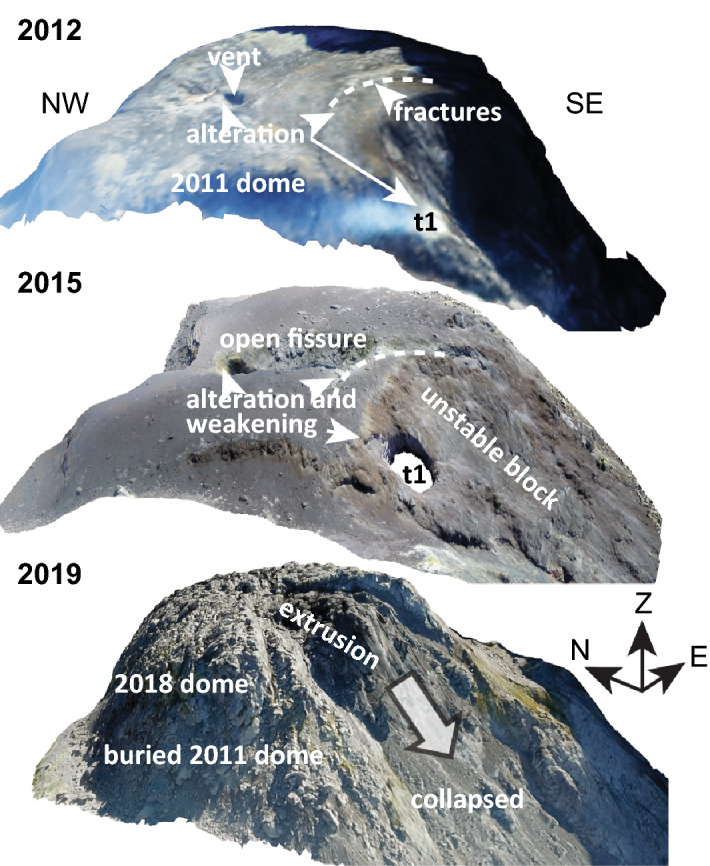
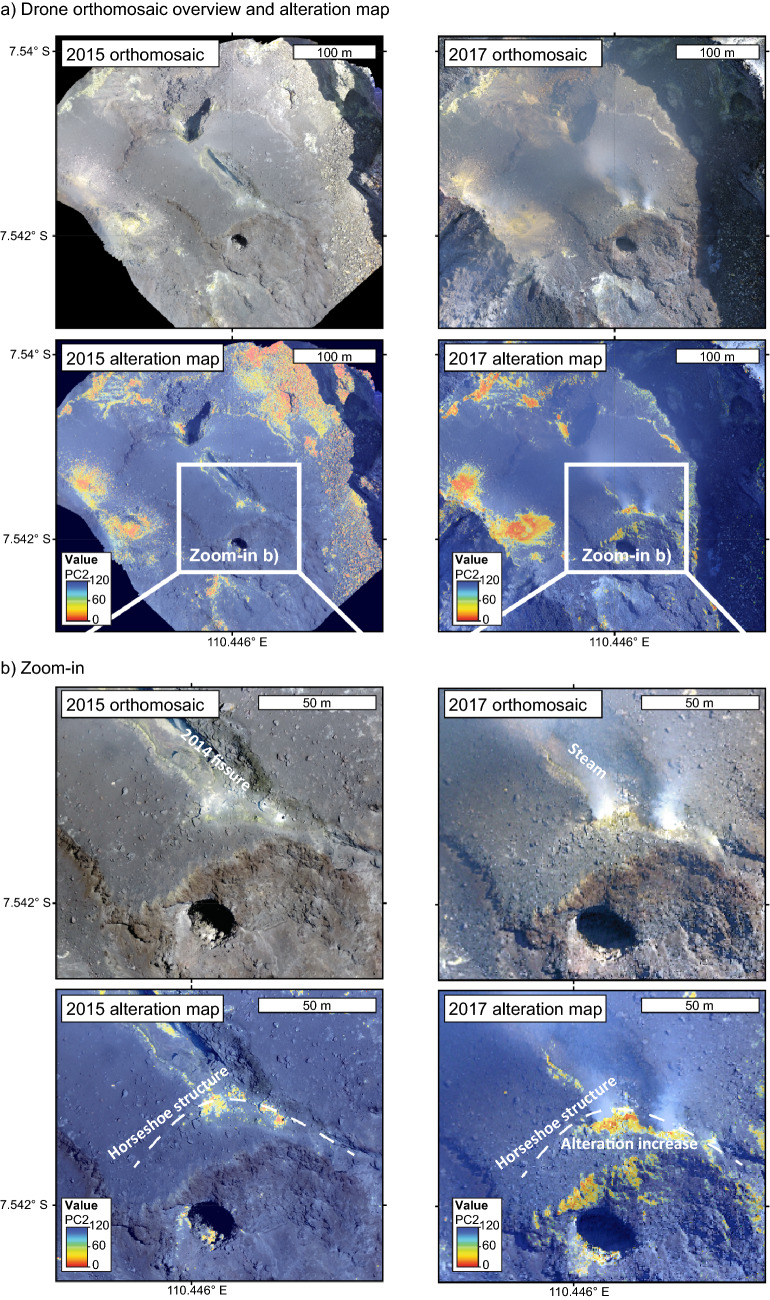
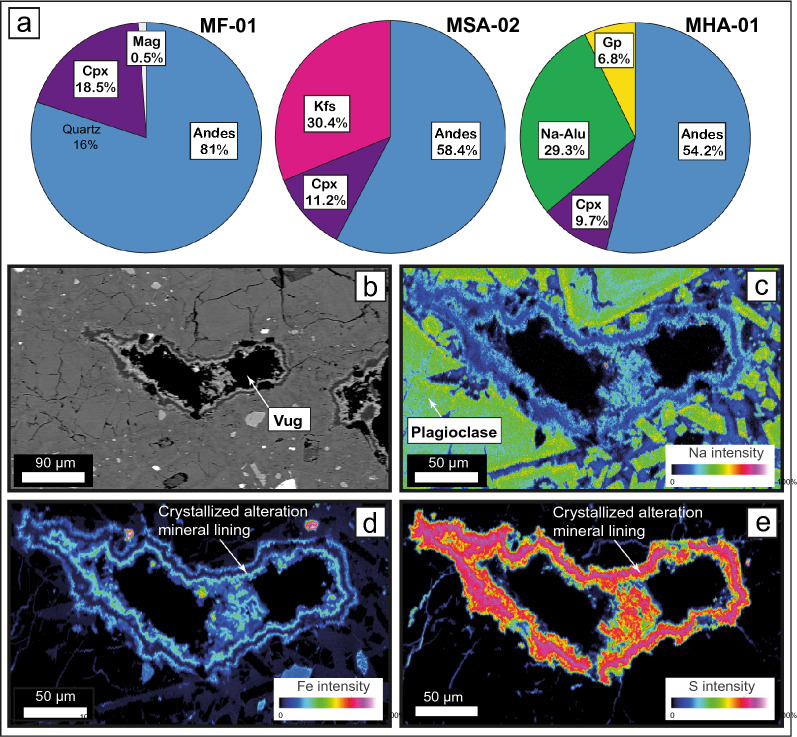
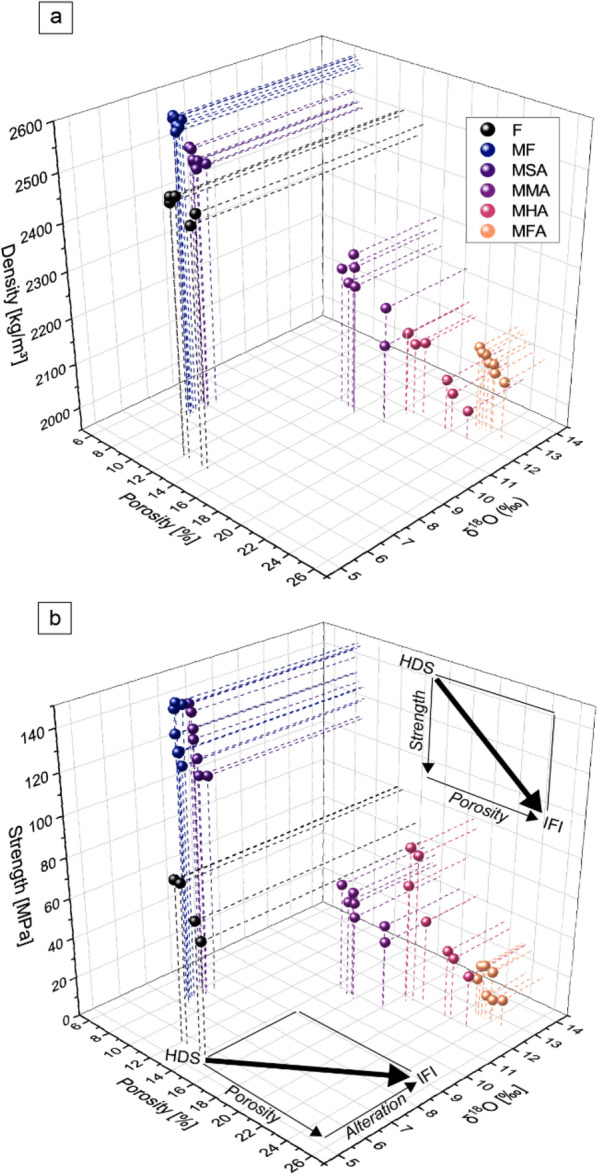
Catastrophic lava dome collapse is considered an unpredictable volcanic hazard because the physical properties, stress conditions, and internal structure of lava domes are not well understood and can change rapidly through time. To explain the locations of dome instabilities at Merapi volcano, Indonesia, we combined geochemical and mineralogical analyses, rock physical property measurements, drone-based photogrammetry, and geoinformatics. We show that a horseshoe-shaped alteration zone that formed in 2014 was subsequently buried by renewed lava extrusion in 2018. Drone data, as well as geomechanical, mineralogical, and oxygen isotope data suggest that this zone is characterized by high-porosity hydrothermally altered materials that are mechanically weak. We additionally show that the new lava dome is currently collapsing along this now-hidden weak alteration zone, highlighting that a detailed understanding of dome architecture, made possible using the monitoring techniques employed here, is essential for assessing hazards associated with dome and edifice failure at volcanoes worldwide.
灾难性的熔岩穹顶崩塌被认为是一种不可预测的火山灾害,因为熔岩穹顶的物理性质、应力状态和内部结构还没有被很好地理解,并且会随着时间的推移迅速变化。为了解释印度尼西亚默拉皮火山的穹顶不稳定性的位置,我们结合了地球化学和矿物学分析、岩石物理性质测量、基于无人机的摄影测量以及地理信息学。我们表明,2014 年形成的马蹄形蚀变带随后被 2018 年新的熔岩喷发所覆盖。无人机数据以及地质力学、矿物学和氧同位素数据表明,该区域的特点是具有高热液蚀变的高孔隙度材料,机械强度较弱。我们还表明,新的熔岩穹顶目前正在沿着这条现已隐藏的弱蚀变带崩塌,这突出表明,使用这里采用的监测技术对穹顶结构进行详细了解,对于评估与全球火山的穹顶和火山灰崩塌相关的灾害是至关重要的。