Instituto de Investigaciones Químicas (IIQ)-Centro de Investigaciones Científicas Isla de la Cartuja (cicCartuja), Universidad de Sevilla-CSIC, Spain.
FEBS Open Bio. 2022 Apr;12(4):758-774. doi: 10.1002/2211-5463.13387. Epub 2022 Mar 8.
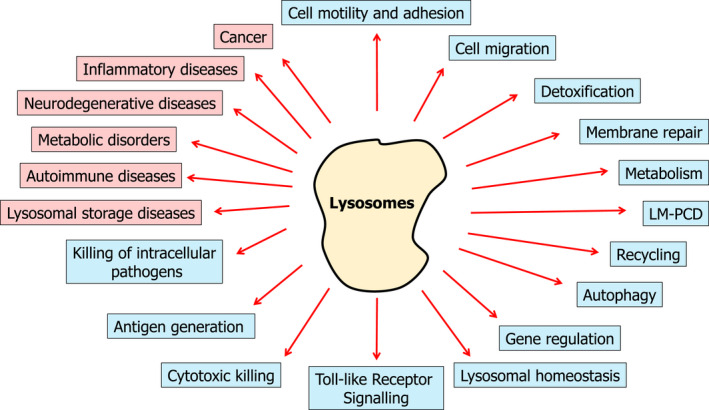
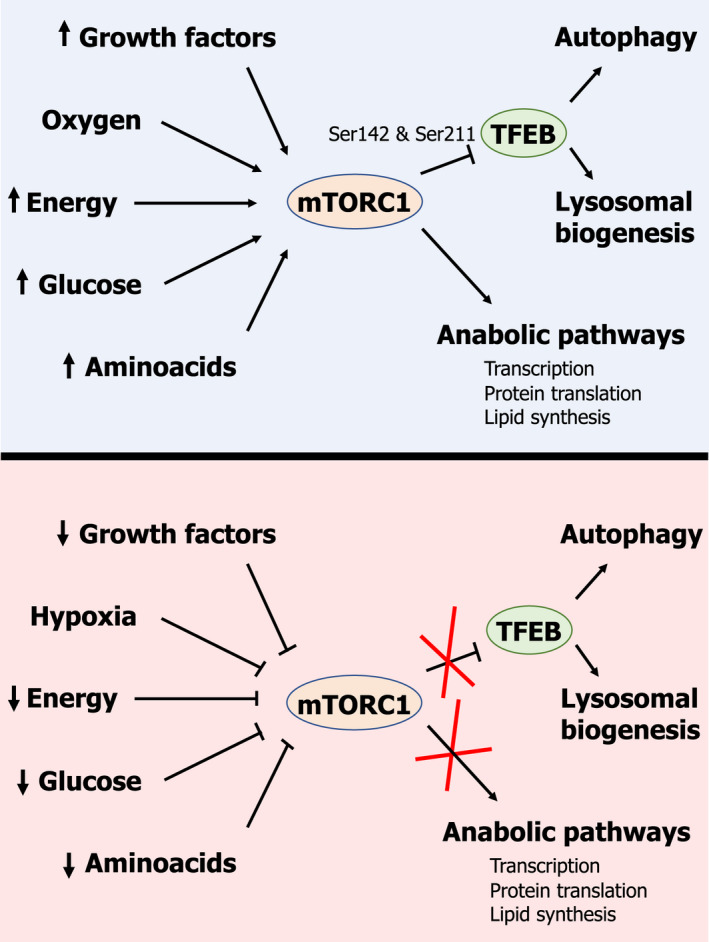
More than 50 years have passed since Nobel laureate Cristian de Duve described for the first time the presence of tiny subcellular compartments filled with hydrolytic enzymes: the lysosome. For a long time, lysosomes were deemed simple waste bags exerting a plethora of hydrolytic activities involved in the recycling of biopolymers, and lysosomal genes were considered to just be simple housekeeping genes, transcribed in a constitutive fashion. However, lysosomes are emerging as multifunctional signalling hubs involved in multiple aspects of cell biology, both under homeostatic and pathological conditions. Lysosomes are involved in the regulation of cell metabolism through the mTOR/TFEB axis. They are also key players in the regulation and onset of the immune response. Furthermore, it is becoming clear that lysosomal hydrolases can regulate several biological processes outside of the lysosome. They are also implicated in a complex communication network among subcellular compartments that involves intimate organelle-to-organelle contacts. Furthermore, lysosomal dysfunction is nowadays accepted as the causative event behind several human pathologies: low frequency inherited diseases, cancer, or neurodegenerative, metabolic, inflammatory, and autoimmune diseases. Recent advances in our knowledge of the complex biology of lysosomes have established them as promising therapeutic targets for the treatment of different pathologies. Although recent discoveries have started to highlight that lysosomes are controlled by a complex web of regulatory networks, which in some cases seem to be cell- and stimuli-dependent, to harness the full potential of lysosomes as therapeutic targets, we need a deeper understanding of the little-known signalling pathways regulating this subcellular compartment and its functions.
自诺贝尔奖得主克里斯蒂安·德·迪夫(Cristian de Duve)首次描述充满水解酶的微小细胞区室存在以来,已经过去了 50 多年:溶酶体。很长一段时间以来,溶酶体被认为是简单的废物袋,具有多种水解活性,参与生物聚合物的回收,而溶酶体基因被认为只是简单的管家基因,以组成性方式转录。然而,溶酶体正在成为参与细胞生物学多个方面的多功能信号枢纽,无论是在稳态还是病理条件下。溶酶体通过 mTOR/TFEB 轴参与细胞代谢的调节。它们也是调节免疫反应和起始的关键因素。此外,越来越清楚的是,溶酶体水解酶可以调节溶酶体以外的几个生物学过程。它们还与涉及细胞器之间密切接触的细胞内隔室的复杂通讯网络有关。此外,溶酶体功能障碍现在被认为是几种人类病理学背后的致病事件:低频遗传性疾病、癌症或神经退行性、代谢、炎症和自身免疫性疾病。我们对溶酶体复杂生物学的最新认识已经确立了它们作为治疗不同疾病的有前途的治疗靶点。尽管最近的发现开始强调溶酶体受复杂的调控网络控制,在某些情况下似乎依赖于细胞和刺激,但为了充分发挥溶酶体作为治疗靶点的潜力,我们需要更深入地了解调节这个细胞内隔室及其功能的鲜为人知的信号通路。