Jung Namhee, Kong TaeHo, Yu Yeonsil, Park Hwanhee, Lee Eunjoo, Yoo SaeMi, Baek SongYi, Lee Seunghee, Kang Kyung-Sun
Stem Cell and Regenerative Bioengineering Institute, Global R&D Center, Kangstem Biotech Co., Ltd., Seoul, Korea.
Adult Stem Cell Research Center, Research Institute for Veterinary Science, College of Veterinary Medicine, Seoul National University, Seoul, Korea.
Int J Stem Cells. 2022 Aug 30;15(3):311-323. doi: 10.15283/ijsc21173. Epub 2022 Feb 28.
Human mesenchymal stem cells (MSCs) are emerging as a treatment for atopic dermatitis (AD), a chronic inflammatory skin disorder that affects a large number of people across the world. Treatment of AD using human umbilical cord blood-derived MSCs (hUCB-MSCs) has recently been studied. However, the mechanism underlying their effect needs to be studied continuously. Thus, the objective of this study was to investigate the immunomodulatory effect of epidermal growth factor (EGF) secreted by hUCB-MSCs on AD.
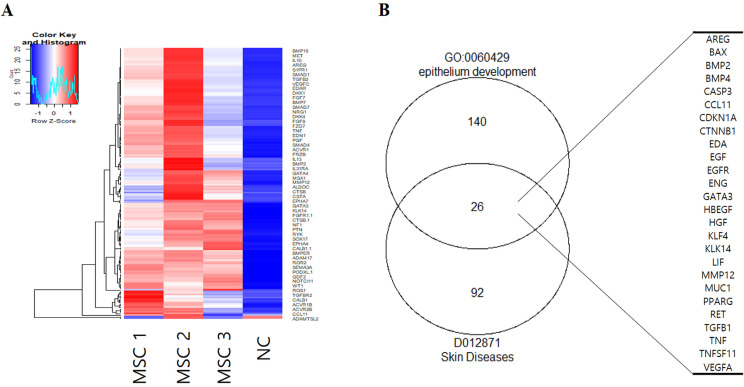
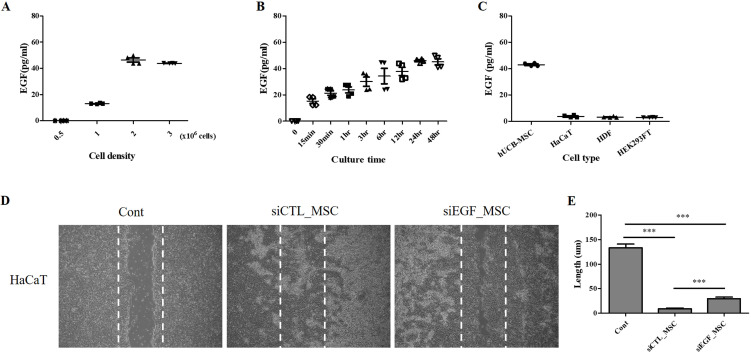
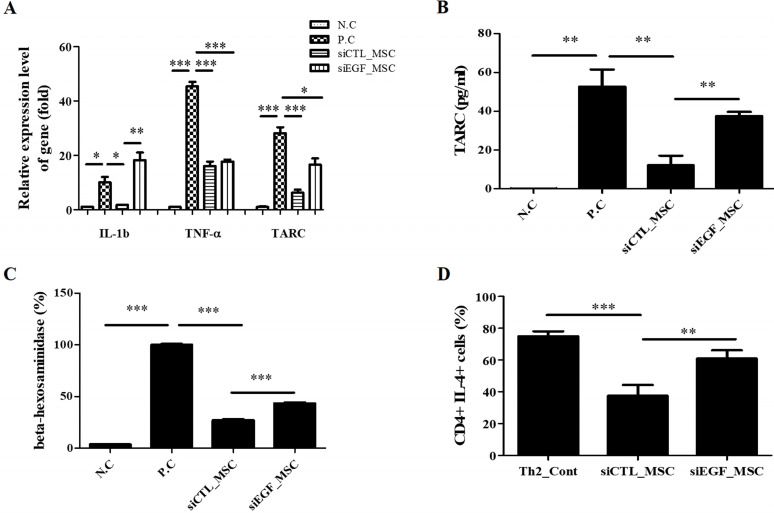
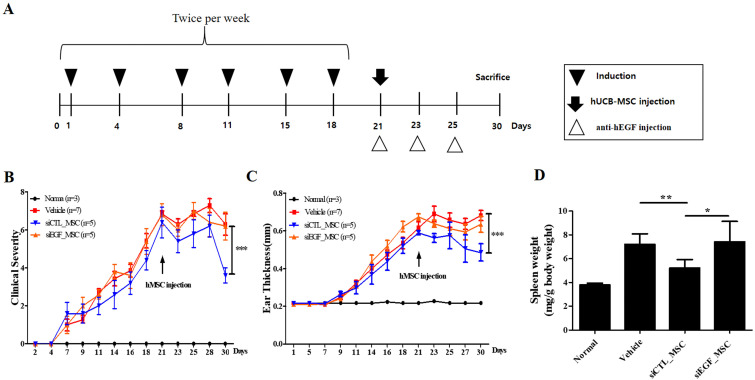
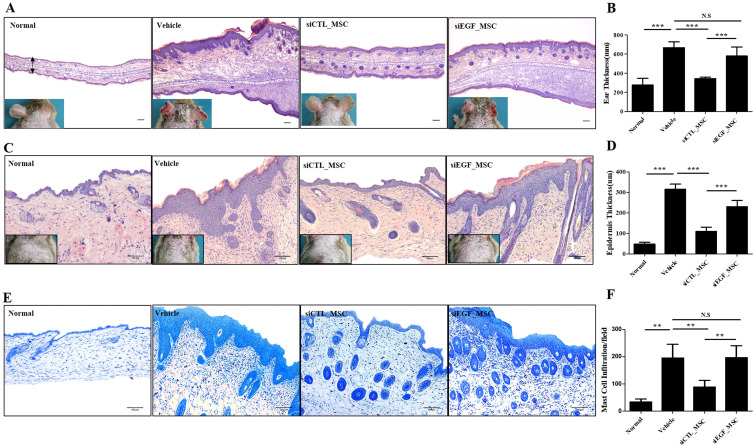
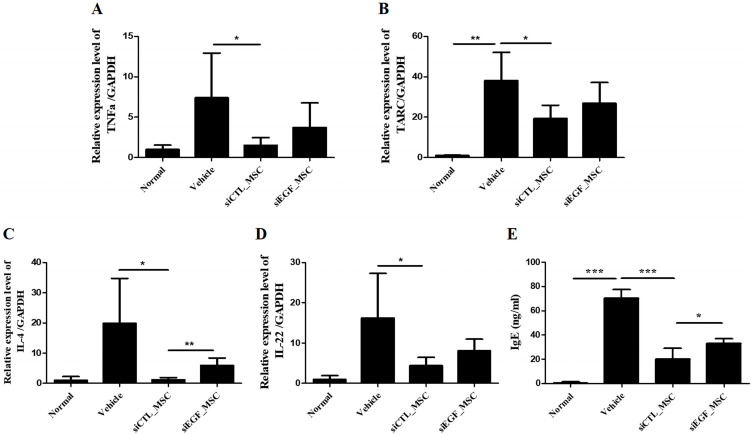
To explore the mechanism involved in the therapeutic effect of MSCs for AD, a secretome array was performed using culture medium of hUCB-MSCs. Among the list of genes common for epithelium development and skin diseases, we focused on the function of EGF. To elucidate the effect of EGF secreted by hUCB-MSCs, EGF was downregulated in hUCB-MSCs using EGF-targeting small interfering RNA. These cells were then co-cultured with keratinocytes, Th2 cells, and mast cells. Depletion of EGF disrupted immunomodulatory effects of hUCB-MSCs on these AD-related inflammatory cells. In a Dermatophagoides farinae-induced AD mouse model, subcutaneous injection of hUCB-MSCs ameliorated gross scoring, histopathologic damage, and mast cell infiltration. It also significantly reduced levels of inflammatory cytokines including interleukin (IL)-4, tumor necrosis factor (TNF)-α, thymus and activation-regulated chemokine (TARC), and IL-22, as well as IgE levels. These therapeutic effects were significantly attenuated at all evaluation points in mice injected with EGF-depleted hUCB-MSCs.
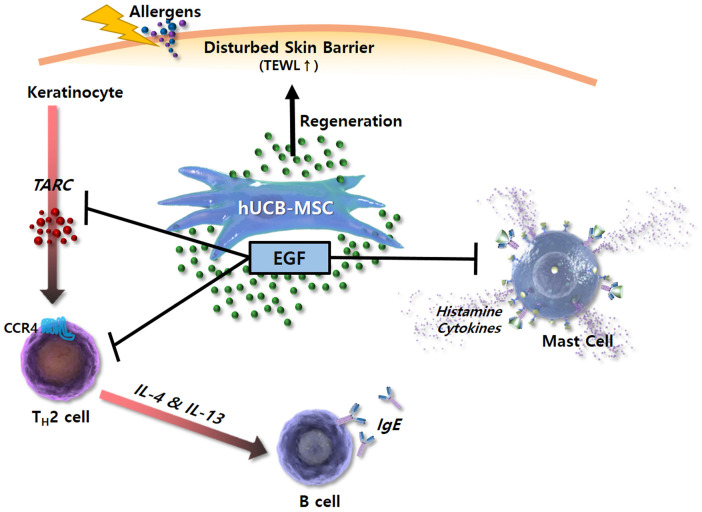
EGF secreted by hUCB-MSCs can improve AD by regulating inflammatory responses of keratinocytes, Th2 cells, and mast cells.
人间充质干细胞(MSCs)正逐渐成为治疗特应性皮炎(AD)的一种方法,AD是一种影响全球大量人群的慢性炎症性皮肤病。近来人们对使用人脐带血来源的MSCs(hUCB-MSCs)治疗AD进行了研究。然而,其作用机制仍需持续研究。因此,本研究的目的是探究hUCB-MSCs分泌的表皮生长因子(EGF)对AD的免疫调节作用。
为探究MSCs对AD治疗作用的相关机制,利用hUCB-MSCs的培养基进行了分泌蛋白组芯片分析。在与上皮发育和皮肤病相关的常见基因列表中,我们重点关注了EGF的功能。为阐明hUCB-MSCs分泌的EGF的作用,使用靶向EGF的小干扰RNA下调hUCB-MSCs中的EGF。然后将这些细胞与角质形成细胞、Th2细胞和肥大细胞共培养。EGF的缺失破坏了hUCB-MSCs对这些与AD相关的炎症细胞的免疫调节作用。在粉尘螨诱导的AD小鼠模型中,皮下注射hUCB-MSCs改善了总体评分、组织病理学损伤和肥大细胞浸润。它还显著降低了包括白细胞介素(IL)-4、肿瘤坏死因子(TNF)-α、胸腺和活化调节趋化因子(TARC)以及IL-22在内的炎性细胞因子水平,以及IgE水平。在注射了EGF缺失的hUCB-MSCs的小鼠的所有评估点,这些治疗效果均显著减弱。
hUCB-MSCs分泌的EGF可通过调节角质形成细胞、Th2细胞和肥大细胞的炎症反应来改善AD。