Wu Shanshan, Hu Sang, Fan Wenjuan, Zhang Xiaojing, Wang Haili, Li Chaojie, Deng Jinbo
National Health Commission Key Laboratory of Birth Defects Prevention, Henan Key Laboratory of Population Defects Prevention, Henan Institute of Reproduction Health Science and Technology, 26 Jingwu Road, Zhengzhou 450002, China.
Third Affiliated Hospital of Zhengzhou University, Zhengzhou, Henan Province, China.
J Toxicol Pathol. 2022 Jan;35(1):75-82. doi: 10.1293/tox.2021-0002. Epub 2021 Dec 4.
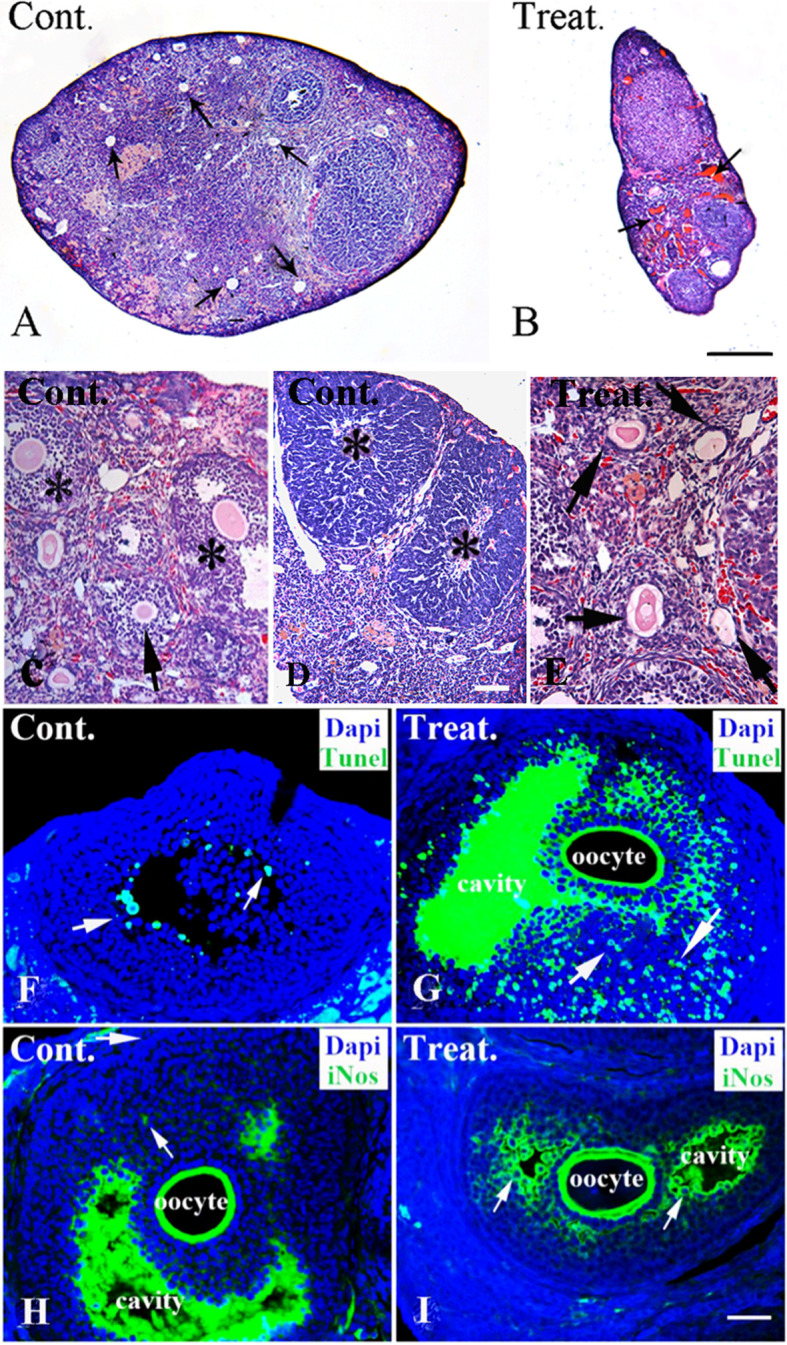
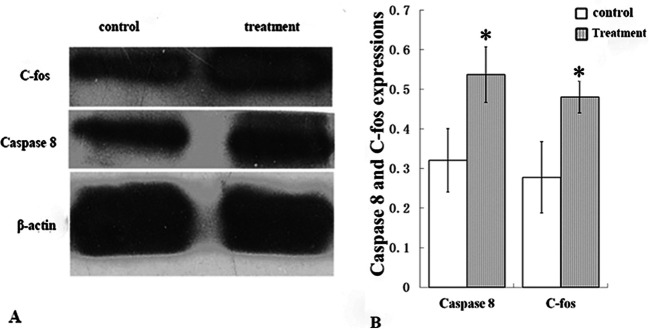
In the present study, we investigated the potential of nitrite exposure to induce infertility in mice. Adult female C57BL/6J mice were randomly divided into control and nitrite exposure groups. Subsequently, the rate of mouse infertility was calculated, and pathological changes in ovarian tissues were examined using hematoxylin and eosin staining. In addition, TUNEL staining, immunofluorescent labeling, and western blotting were performed to assess cell apoptosis and oxidative stress response in ovarian tissues from various groups. We observed that nitrite exposure could induce infertility (p<0.05) in mice. High-dose nitrite exposure caused infertility in a time-dependent manner, and two-round exposure induced higher infertility than that one-round exposure (p<0.01). In addition, a higher number of atretic follicles were detected in the ovaries of nitrite-exposed groups than in the control group. Furthermore, TUNEL-positive cells were observed in granulosa cells of atretic follicles, and overexpression of caspase 8, c-Fos, and inducible nitric oxide synthase (iNOS) was detected in ovaries after nitrite exposure (p<0.01), suggesting that cell apoptosis and oxidative stress response were induced following nitrite exposure. Collectively, these findings suggest that nitrite exposure can induce mouse infertility in a time-dependent manner. Oxidative stress response and cell apoptosis are involved in mediating nitrite-induced infertility.
在本研究中,我们调查了亚硝酸盐暴露诱导小鼠不育的可能性。将成年雌性C57BL/6J小鼠随机分为对照组和亚硝酸盐暴露组。随后,计算小鼠不育率,并使用苏木精和伊红染色检查卵巢组织的病理变化。此外,进行TUNEL染色、免疫荧光标记和蛋白质印迹,以评估各组卵巢组织中的细胞凋亡和氧化应激反应。我们观察到亚硝酸盐暴露可诱导小鼠不育(p<0.05)。高剂量亚硝酸盐暴露以时间依赖性方式导致不育,两轮暴露诱导的不育率高于一轮暴露(p<0.01)。此外,在亚硝酸盐暴露组的卵巢中检测到的闭锁卵泡数量高于对照组。此外,在闭锁卵泡的颗粒细胞中观察到TUNEL阳性细胞,并且在亚硝酸盐暴露后的卵巢中检测到caspase 8、c-Fos和诱导型一氧化氮合酶(iNOS)的过表达(p<0.01),表明亚硝酸盐暴露后诱导了细胞凋亡和氧化应激反应。总的来说,这些发现表明亚硝酸盐暴露可时间依赖性地诱导小鼠不育。氧化应激反应和细胞凋亡参与介导亚硝酸盐诱导的不育。