Jessen Kristjan R, Mirsky Rhona
Department of Cell and Developmental Biology, University College London, London, United Kingdom.
Front Cell Neurosci. 2022 Feb 9;15:820216. doi: 10.3389/fncel.2021.820216. eCollection 2021.
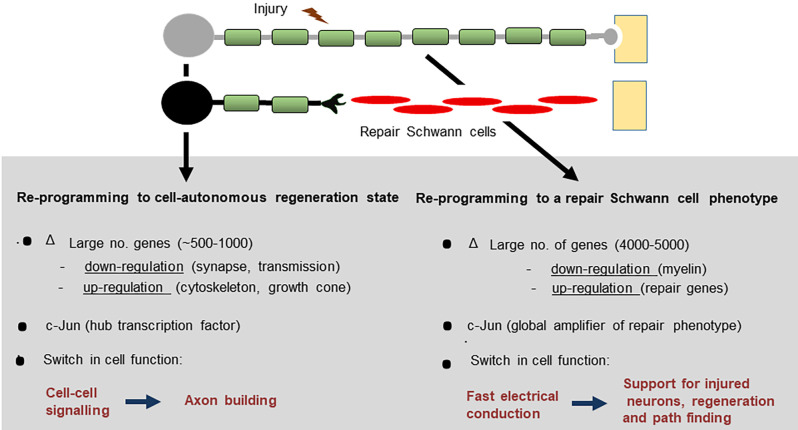
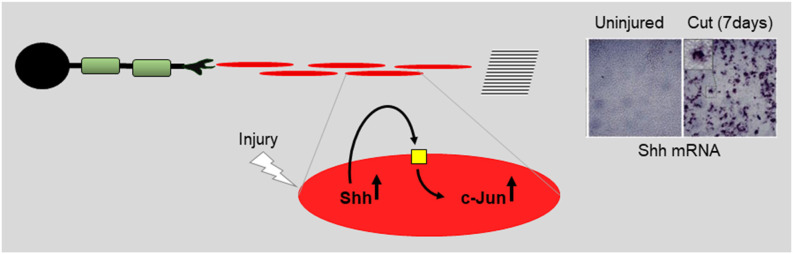
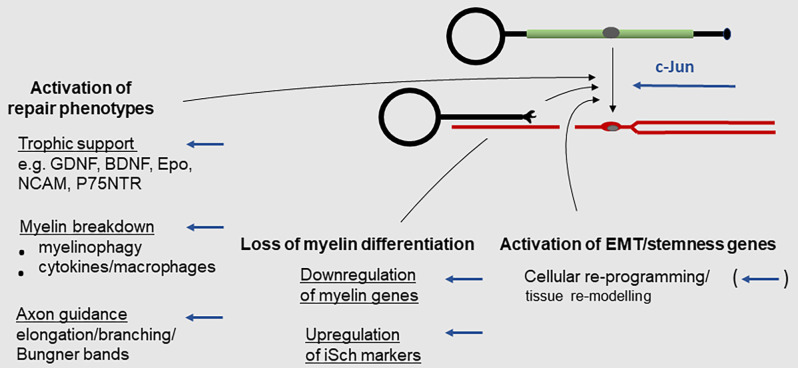
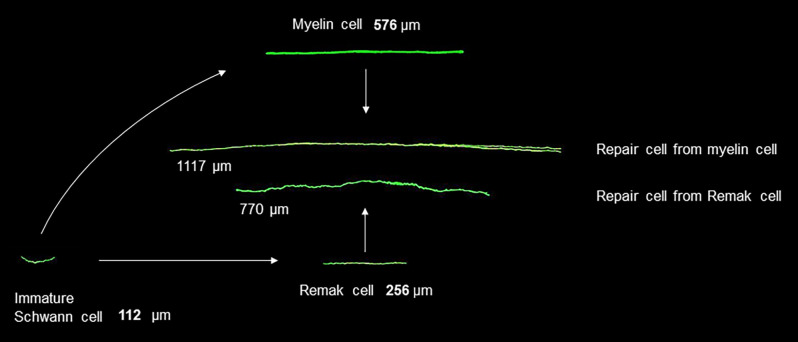
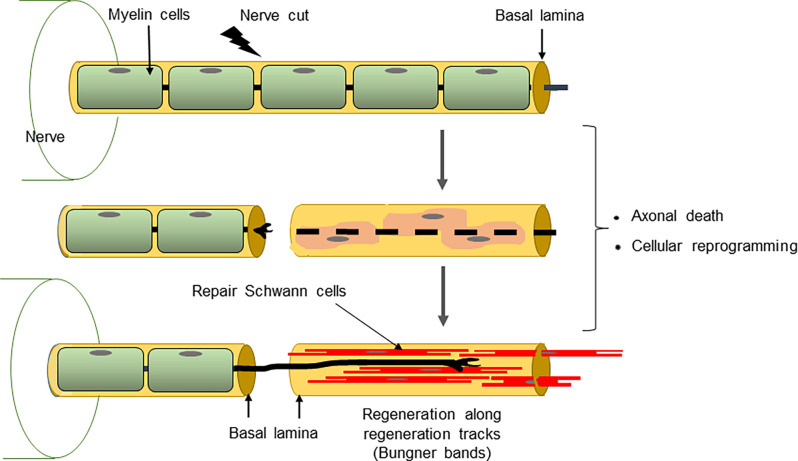
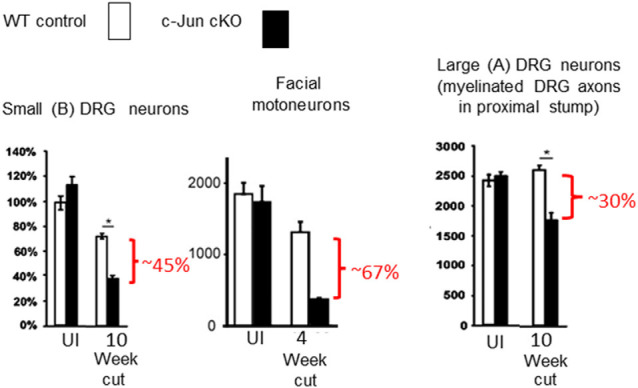
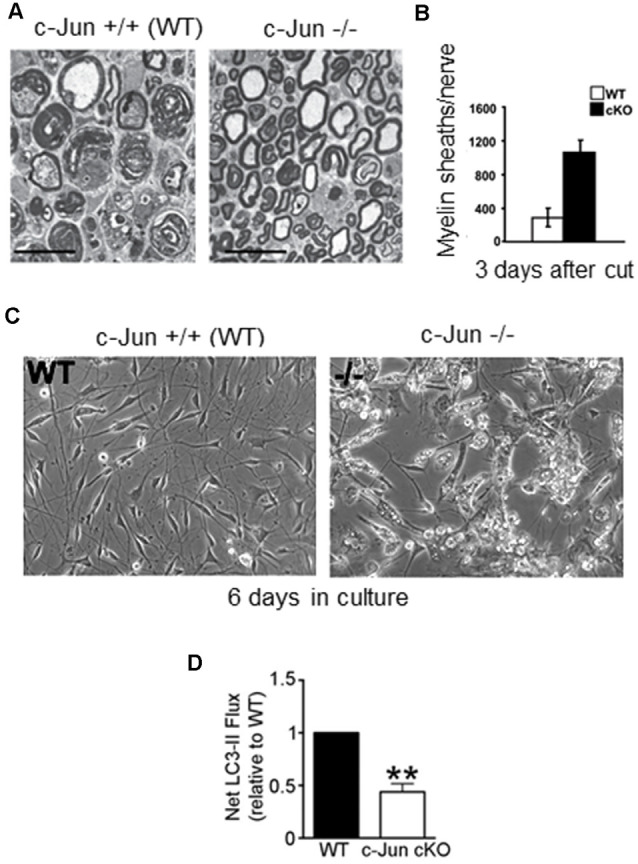
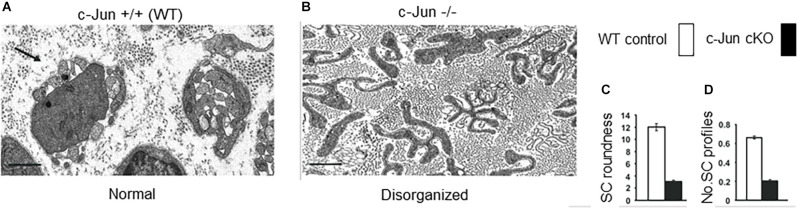
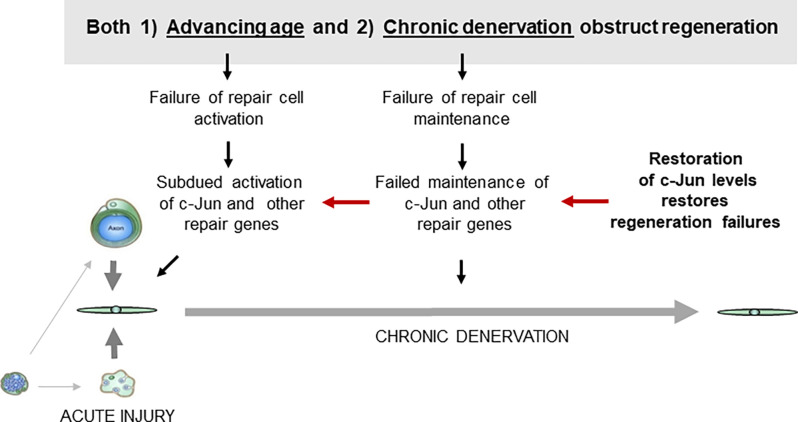
After nerve injury, both Schwann cells and neurons switch to pro-regenerative states. For Schwann cells, this involves reprogramming of myelin and Remak cells to repair Schwann cells that provide the signals and mechanisms needed for the survival of injured neurons, myelin clearance, axonal regeneration and target reinnervation. Because functional repair cells are essential for regeneration, it is unfortunate that their phenotype is not robust. Repair cell activation falters as animals get older and the repair phenotype fades during chronic denervation. These malfunctions are important reasons for the poor outcomes after nerve damage in humans. This review will discuss injury-induced Schwann cell reprogramming and the concept of the repair Schwann cell, and consider the molecular control of these cells with emphasis on c-Jun. This transcription factor is required for the generation of functional repair cells, and failure of c-Jun expression is implicated in repair cell failures in older animals and during chronic denervation. Elevating c-Jun expression in repair cells promotes regeneration, showing in principle that targeting repair cells is an effective way of improving nerve repair. In this context, we will outline the emerging evidence that repair cells are sustained by autocrine signaling loops, attractive targets for interventions aimed at promoting regeneration.
神经损伤后,施万细胞和神经元都会转变为促再生状态。对于施万细胞而言,这包括将髓鞘细胞和雷马克细胞重编程为修复性施万细胞,这些细胞提供受损神经元存活、髓鞘清除、轴突再生和靶标再支配所需的信号和机制。由于功能性修复细胞对再生至关重要,遗憾的是其表型并不稳定。随着动物年龄增长,修复细胞的激活会出现障碍,并且在慢性去神经支配过程中修复表型会逐渐消失。这些功能故障是人类神经损伤后预后不良的重要原因。本综述将讨论损伤诱导的施万细胞重编程以及修复性施万细胞的概念,并着重探讨以c-Jun为重点的这些细胞的分子调控。这种转录因子是产生功能性修复细胞所必需的,c-Jun表达缺失与老年动物和慢性去神经支配过程中修复细胞功能障碍有关。提高修复细胞中c-Jun的表达可促进再生,原则上表明靶向修复细胞是改善神经修复的有效方法。在此背景下,我们将概述新出现的证据,即修复细胞由自分泌信号回路维持,这是旨在促进再生干预的有吸引力的靶点。