Bao Chunhui, Wu Luyi, Shi Yin, Shi Zheng, Jin Xiaoming, Shen Jiacheng, Li Jing, Hu Zhihai, Chen Jianhua, Zeng Xiaoqing, Zhang Wei, Ma Zhe, Weng Zhijun, Li Jinmei, Liu Huirong, Wu Huangan
Yueyang Hospital of Integrated Traditional Chinese and Western Medicine, Shanghai University of Traditional Chinese Medicine, Shanghai, China.
Key Laboratory of Acupuncture and Immunological Effects, Shanghai University of Traditional Chinese Medicine, Shanghai, China.
Therap Adv Gastroenterol. 2022 Feb 23;15:17562848221075131. doi: 10.1177/17562848221075131. eCollection 2022.
Moxibustion is increasingly used for treatment of irritable bowel syndrome (IBS). This study investigated the long-term effects of moxibustion for IBS with diarrhea (IBS-D).
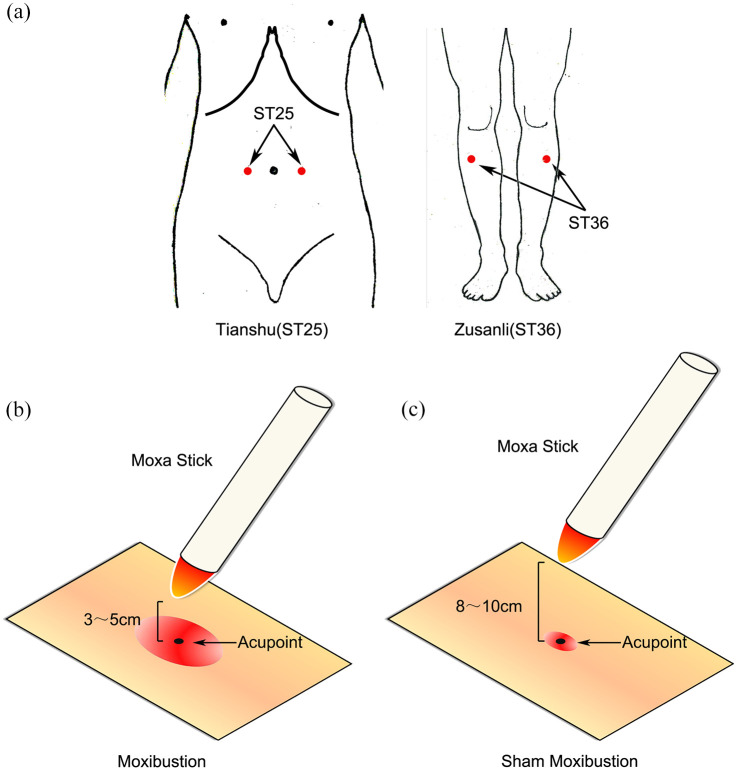
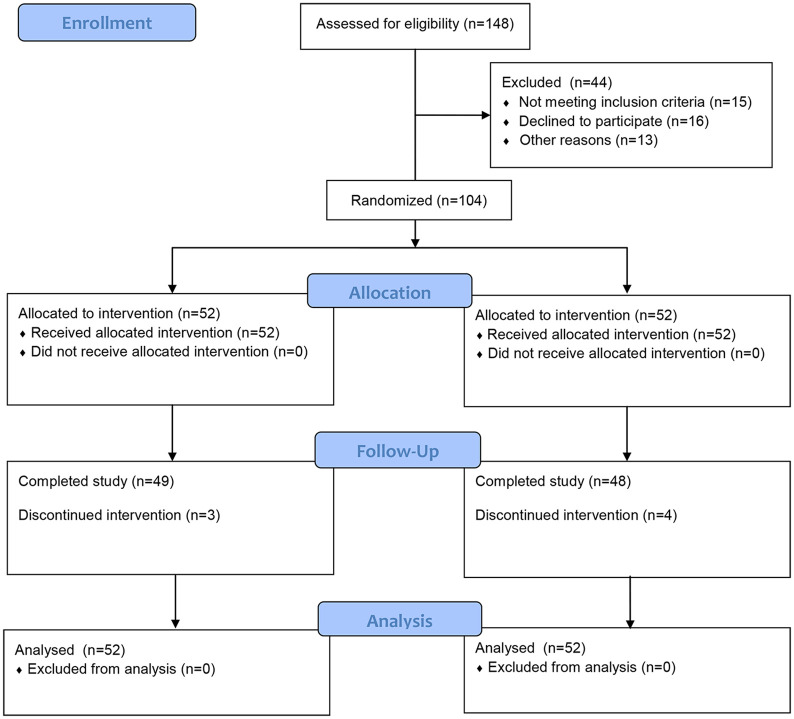
Patients with IBS-D were assigned to receive moxibustion or sham moxibustion (52 each, 3× per week, 6 weeks) and were followed up to 24 weeks. The acupoints were bilateral ST25 and ST36, body surface temperatures at acupoints were 43°C ± 1°C and 37°C ± 1°C for the moxibustion and sham groups, respectively. Primary outcome was changes in IBS Adequate Relief (IBS-AR) from baseline to 6 weeks. Secondary outcomes included the following: IBS symptom severity scale (IBS-SSS), Bristol stool form scale (BSS), IBS quality of life (IBS-QOL), and Hospital Anxiety and Depression Scale (HADS).
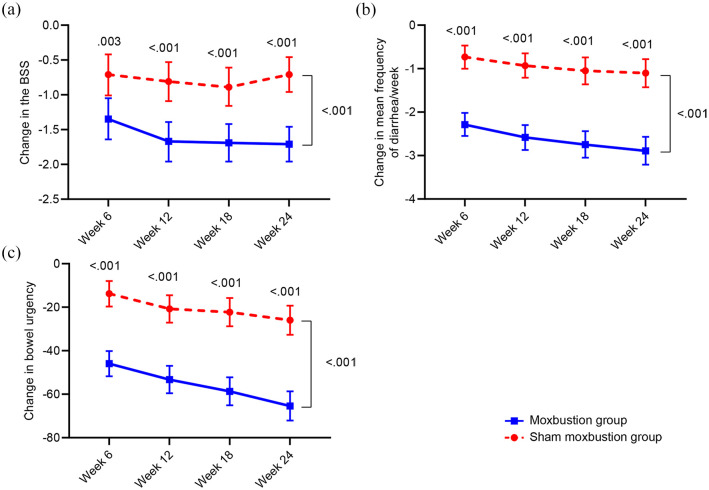
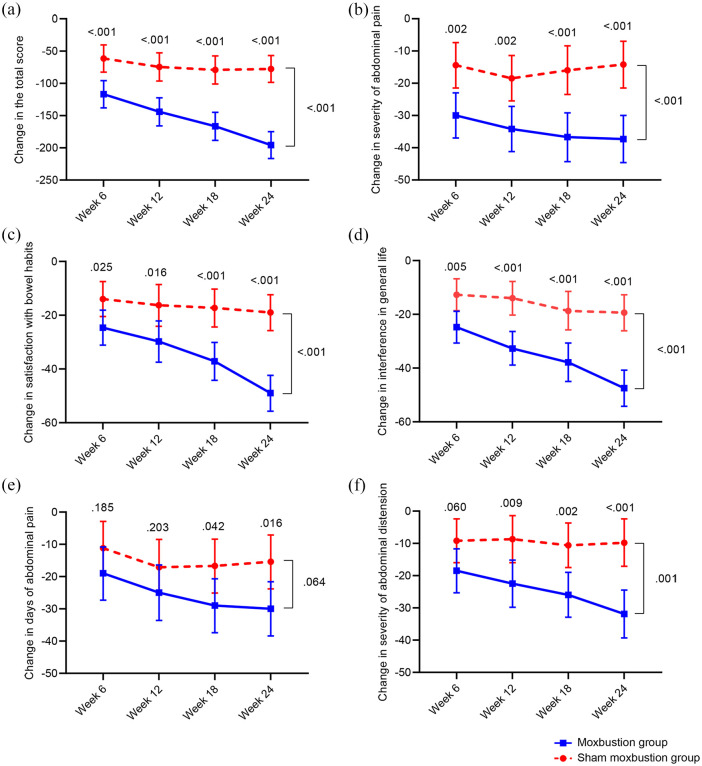
Based on an intention-to-treat analysis, the rate of IBS-AR in the moxibustion group was significantly higher than the sham group at 6 weeks (76.9% 42.3%; < 0.001); the mean decrease of total IBS-BSS score in the moxibustion group was lower than that of the sham group (-116.9 -61.5; < 0.001), both of which maintained throughout the follow-up period. Five specific domains of the IBS-SSS were lower in the moxibustion group than the sham, throughout ( < 0.001). At week 6, the rate of reduction >50 points in IBS-SSS of the treatment group was significantly higher than that of the sham ( < 0.001), which persisted throughout the follow-up period. Similar long-lasting improvements were observed in BSS, stool frequency, and stool urgency ( < 0.001). Improvements of IBS-QOL and HADS were comparable between the groups.
Moxibustion treatment benefits the long-term relief of symptoms in IBS-D patients.
Clinical trials.gov (NCT02421627). Registered on 20 April 2015.
艾灸越来越多地用于治疗肠易激综合征(IBS)。本研究调查了艾灸对腹泻型肠易激综合征(IBS-D)的长期影响。
将IBS-D患者分为艾灸组或假艾灸组(每组52例,每周3次,共6周),并随访至24周。穴位为双侧天枢(ST25)和足三里(ST36),艾灸组和假艾灸组穴位处的体表温度分别为43°C±1°C和37°C±1°C。主要结局是从基线到6周时IBS充分缓解(IBS-AR)的变化。次要结局包括以下内容:IBS症状严重程度量表(IBS-SSS)、布里斯托大便分型量表(BSS)、IBS生活质量(IBS-QOL)以及医院焦虑抑郁量表(HADS)。
基于意向性分析,艾灸组在6周时的IBS-AR率显著高于假艾灸组(76.9%对42.3%;P<0.001);艾灸组IBS-BSS总分的平均降低幅度低于假艾灸组(-116.9对-61.5;P<0.001),两者在整个随访期内均保持。艾灸组IBS-SSS的五个特定领域在整个过程中均低于假艾灸组(P<0.001)。在第6周时,治疗组IBS-SSS降低>50分的比例显著高于假艾灸组(P<0.001),这在整个随访期内持续存在。在BSS、大便频率和大便急迫感方面也观察到了类似的长期改善(P<0.001)。两组之间IBS-QOL和HADS的改善情况相当。
艾灸治疗有利于IBS-D患者症状的长期缓解。
ClinicalTrials.gov(NCT02421627)。于2015年4月20日注册。