Hoang Tung, Sohn Dae Kyung, Kim Byung Chang, Cha Yongjun, Kim Jeongseon
Department of Cancer Biomedical Science, National Cancer Center Graduate School of Cancer Science and Policy, Goyang, South Korea.
Center for Colorectal Cancer, Research Institute and Hospital, National Cancer Center, Goyang, South Korea.
Front Oncol. 2022 Feb 9;11:756214. doi: 10.3389/fonc.2021.756214. eCollection 2021.
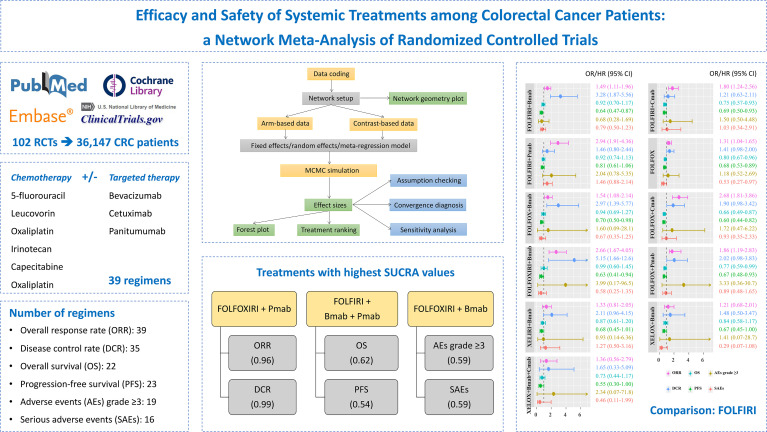
Systemic treatments, namely, either monotherapy or combination therapy, are commonly administered to patients with advanced or metastatic colorectal cancer (CRC). This study aimed to provide the complete efficacy and safety profiles and ranking of systemic therapies for the treatment of unresectable advanced or metastatic CRC.
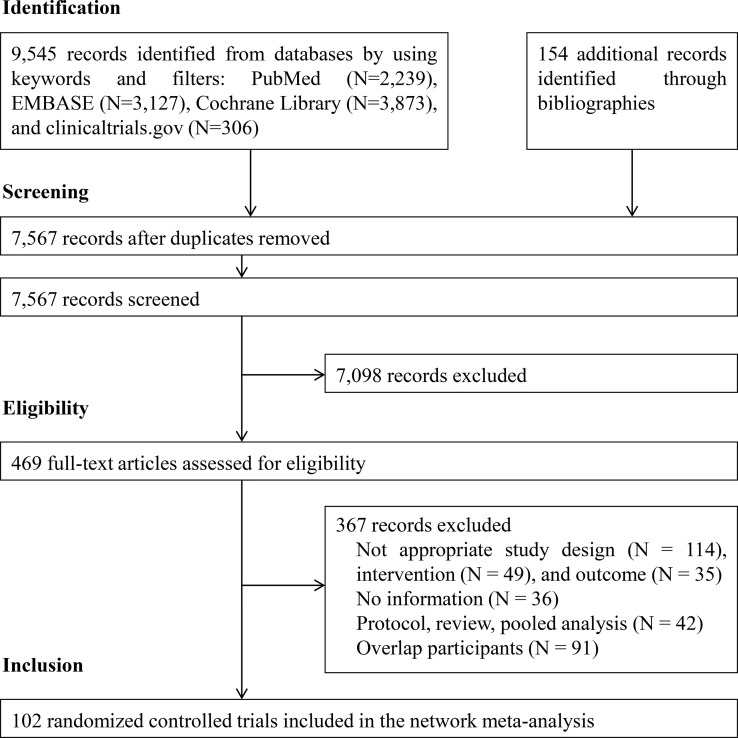
We searched PubMed, Embase, the Cochrane Library, and ClinicalTrials.gov from inception until June 30, 2021, and also the bibliographies of relevant studies. Randomized controlled trials comparing two or more treatments, namely, at least capecitabine, 5-fluorouracil, leucovorin, irinotecan, bevacizumab, cetuximab, oxaliplatin, or panitumumab were investigated. A network meta-analysis using the Bayesian approach was performed to compare the efficacy and safety of treatments. The surface under the cumulative ranking curve (SUCRA) was calculated for the probability of each treatment as the most effective. The overall response rate (ORR), disease control rate (DCR), overall survival (OS), progression-free survival (PFS), adverse events (AEs) grade ≥3, and serious adverse events (SAEs) were evaluated.
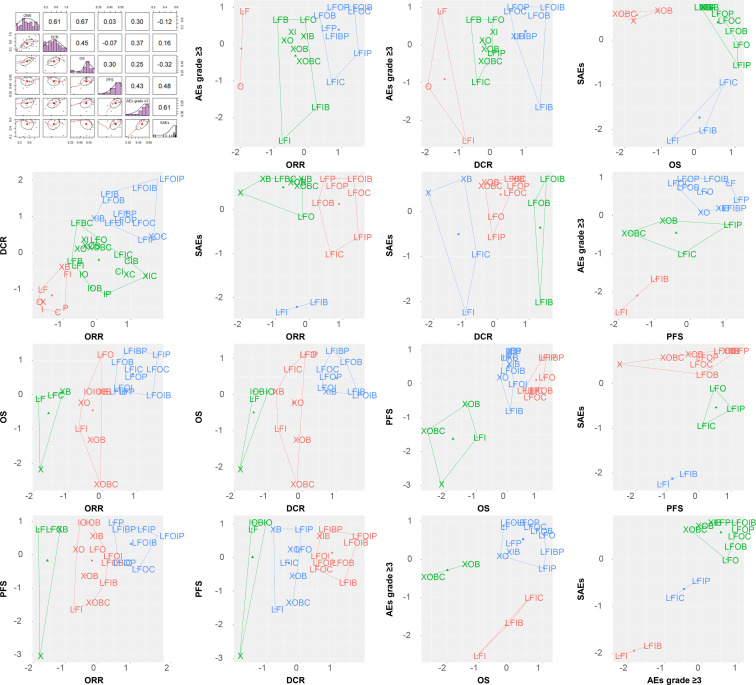
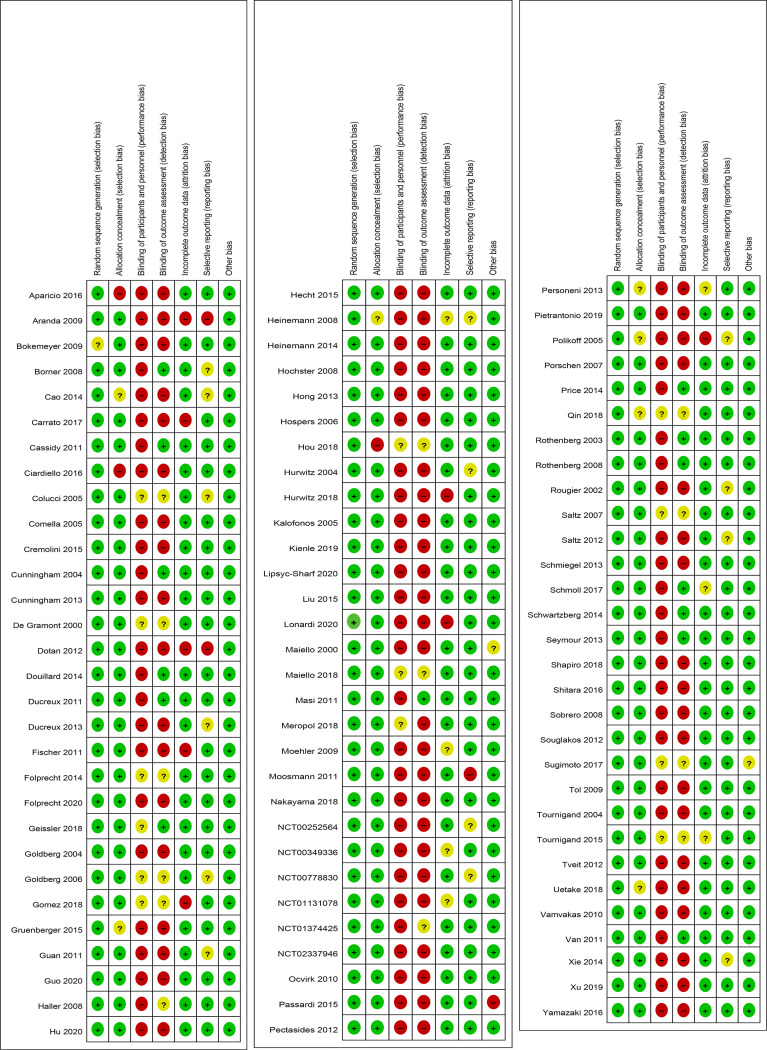
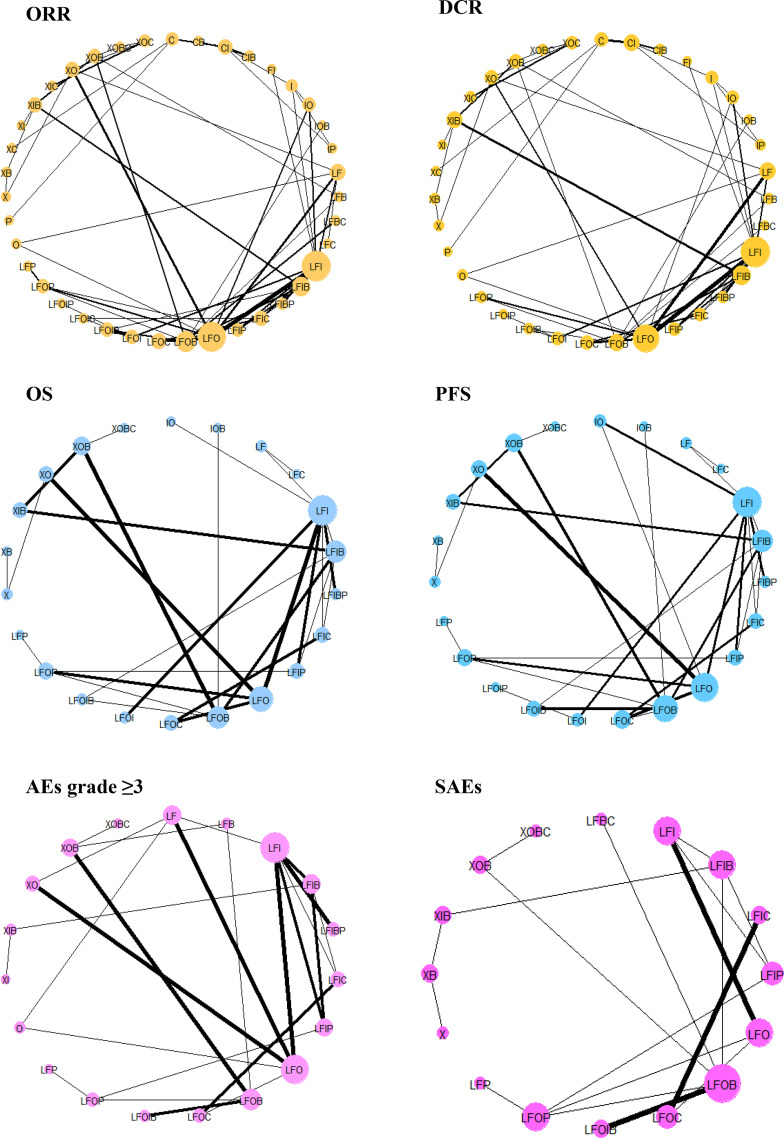
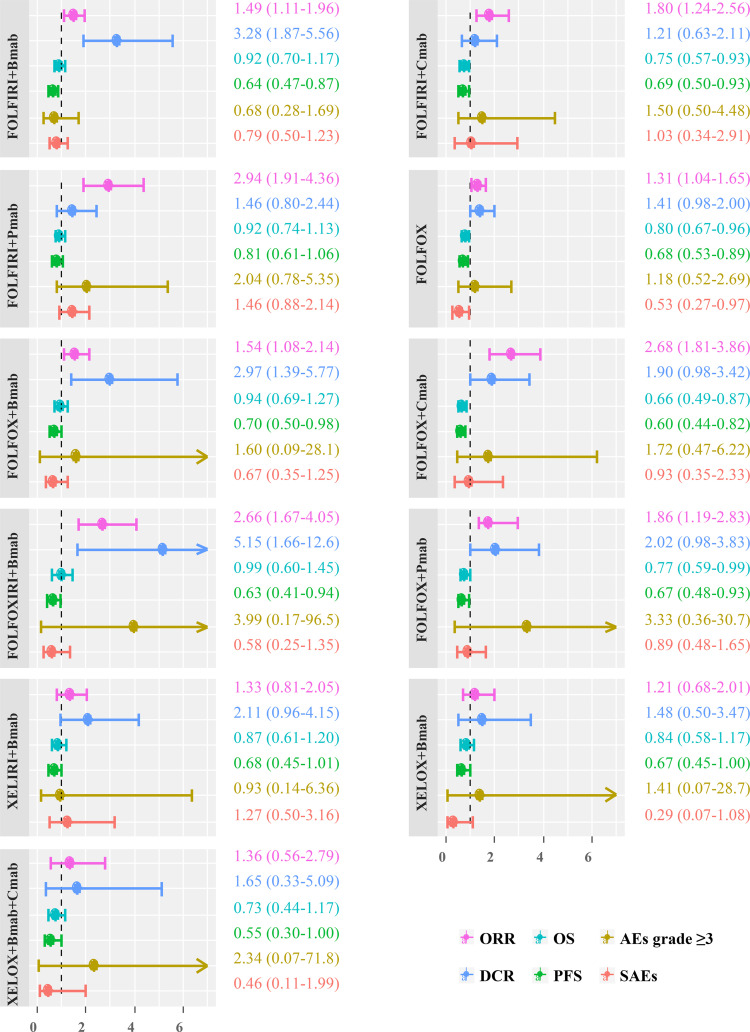
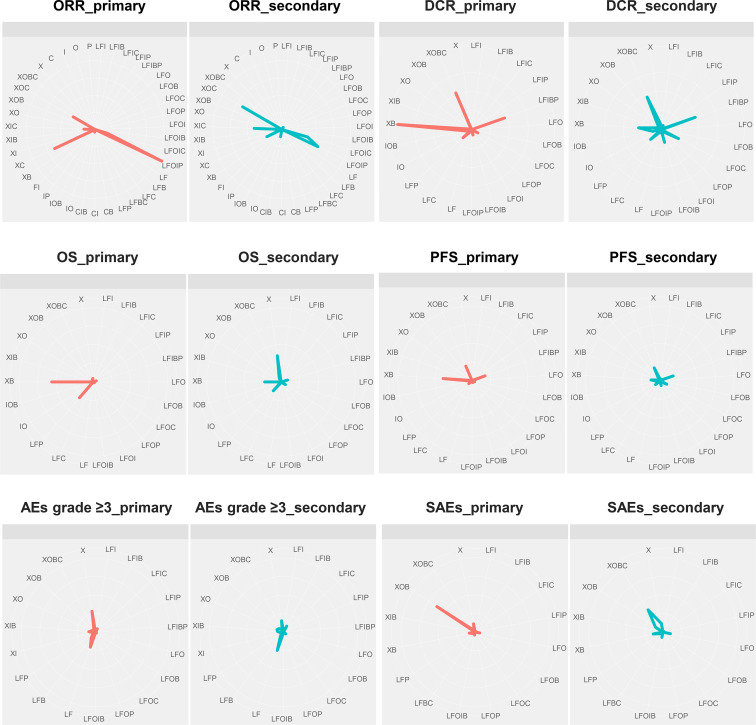
One hundred two publications with 36,147 participants were assigned to 39 different treatments. Among 11 treatments with full information on six outcomes, FOLFIRI/FOLFOX/FOLFOXIRI + bevacizumab significantly improved both the ORR and DCR, compared to FOLFIRI. Although FOLFOX and FOLFIRI/FOLFOX + cetuximab significantly prolonged both OS and PFS, treatments were comparable in terms of AEs grade ≥3 and SAEs. The top highest SUCRA values were observed in the FOLFOXIRI + panitumumab group for ORR (96%) and DCR (99%), FOLFIRI + bevacizumab + panitumumab group for OS (62%) and PFS (54%), and FOLFOXIRI + bevacizumab group for AEs grade ≥3 (59%) and SAEs (59%) outcomes.
These findings suggest an available range of systemic treatment therapies with different efficacy and safety profiles with patients. Further investigations of the side effects and mutation status are required to confirm our findings.
https://www.crd.york.ac.uk/prospero/, identifier CRD42019127772.
全身治疗,即单药治疗或联合治疗,常用于晚期或转移性结直肠癌(CRC)患者。本研究旨在提供全身治疗不可切除的晚期或转移性CRC的完整疗效和安全性概况以及排名。
我们检索了从创刊至2021年6月30日的PubMed、Embase、Cochrane图书馆和ClinicalTrials.gov,以及相关研究的参考文献。研究比较了两种或更多治疗方法的随机对照试验,即至少包括卡培他滨、5-氟尿嘧啶、亚叶酸钙、伊立替康、贝伐单抗、西妥昔单抗、奥沙利铂或帕尼单抗。采用贝叶斯方法进行网络荟萃分析,以比较各治疗方法的疗效和安全性。计算累积排名曲线下面积(SUCRA),以确定每种治疗方法作为最有效治疗的概率。评估总缓解率(ORR)、疾病控制率(DCR)、总生存期(OS)、无进展生存期(PFS)、3级及以上不良事件(AE)和严重不良事件(SAE)。
102篇文献纳入36147名参与者,涉及39种不同治疗方法。在11种具有全部六项结局信息的治疗方法中,与FOLFIRI相比,FOLFIRI/FOLFOX/FOLFOXIRI + 贝伐单抗显著提高了ORR和DCR。虽然FOLFOX以及FOLFIRI/FOLFOX + 西妥昔单抗显著延长了OS和PFS,但在3级及以上AE和SAE方面,各治疗方法相当。在FOLFOXIRI + 帕尼单抗组中,ORR(96%)和DCR(99%)的SUCRA值最高;在FOLFIRI + 贝伐单抗 + 帕尼单抗组中,OS(62%)和PFS(54%)的SUCRA值最高;在FOLFOXIRI + 贝伐单抗组中,3级及以上AE(59%)和SAE(59%)结局的SUCRA值最高。
这些发现表明,有一系列全身治疗方法可供患者选择,其疗效和安全性各不相同。需要进一步研究副作用和突变状态以证实我们的发现。