Institute for Medical Microbiology and Hospital Epidemiology, Hannover Medical Schoolgrid.10423.34, Hannover, Germany.
Max von Pettenkofer Institute for Hygiene and Medical Microbiology, Munich, Germany.
mBio. 2022 Apr 26;13(2):e0375521. doi: 10.1128/mbio.03755-21. Epub 2022 Mar 1.
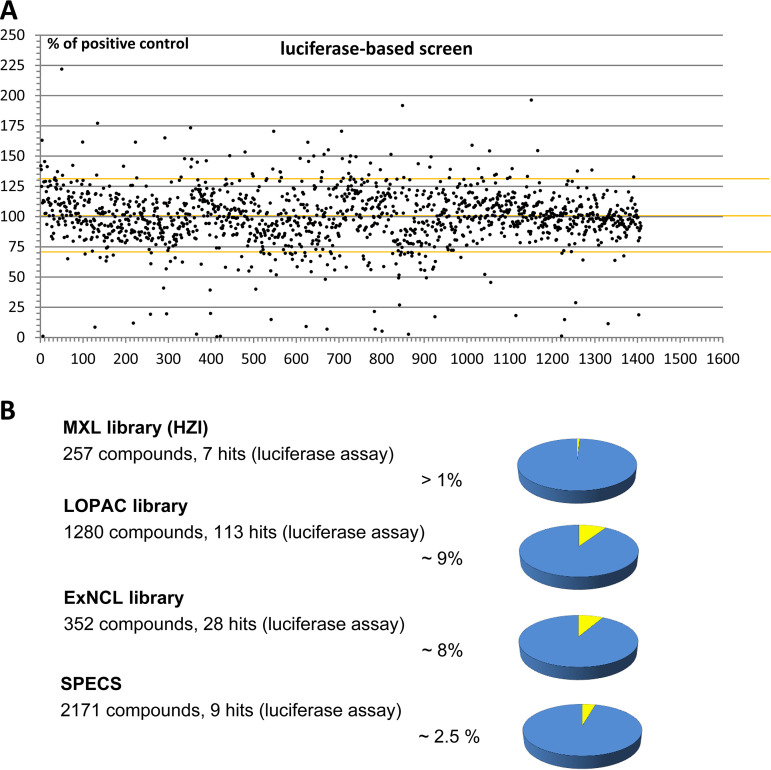
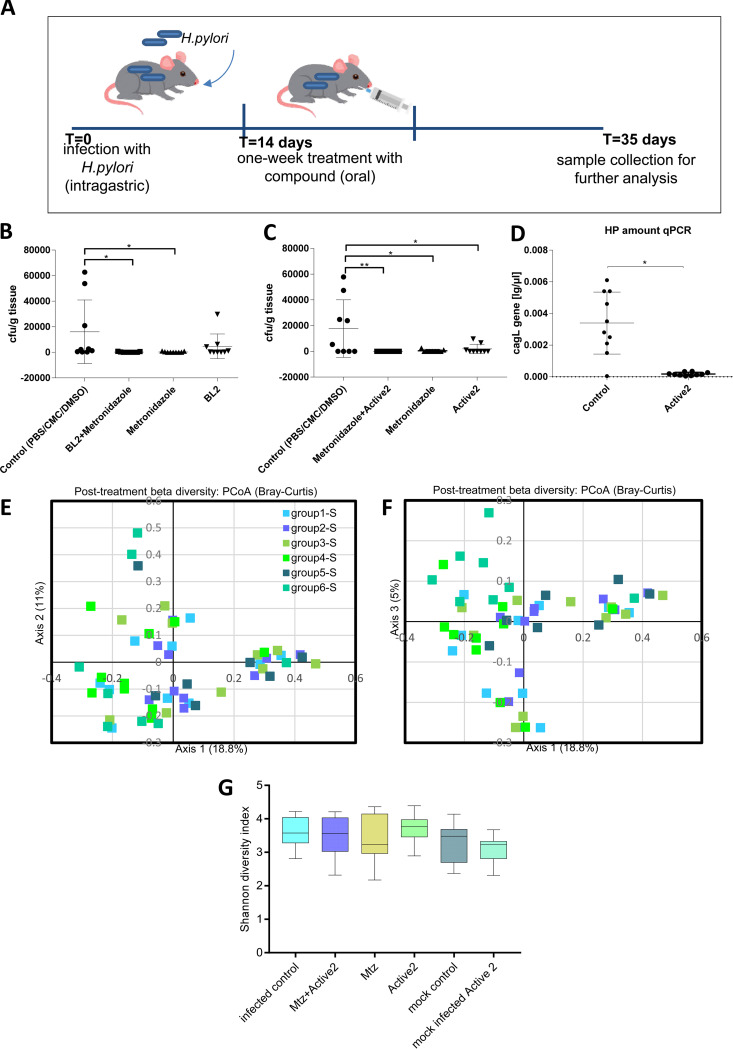
New treatment options against the widespread cancerogenic gastric pathogen Helicobacter pylori are urgently needed. We describe a novel screening procedure for inhibitors of H. pylori flagellar biosynthesis. The assay is based on a flagellin gene-luciferase reporter fusion in H. pylori and was amenable to multi-well screening formats with an excellent Z factor. We screened various compound libraries to identify virulence blockers ("antimotilins") that inhibit H. pylori motility or the flagellar type III secretion apparatus. We identified compounds that either inhibit both motility and the bacterial viability, or the flagellar system only, without negatively affecting bacterial growth. Novel anti-virulence compounds which suppressed flagellar biosynthesis in H. pylori were active on pure H. pylori cultures and partially suppressed motility directly, reduced flagellin transcript and flagellin protein amounts. We performed a proof-of-principle treatment study in a mouse model of chronic H. pylori infection and demonstrated a significant effect on H. pylori colonization for one antimotilin termed Active2 even as a monotherapy. The diversity of the intestinal microbiota was not significantly affected by Active2. In conclusion, the novel antimotilins active against motility and flagellar assembly bear promise to complement commonly used antibiotic-based combination therapies for treating and eradicating H. pylori infections. Helicobacter pylori is one of the most prevalent bacterial pathogens, inflicting hundreds of thousands of peptic ulcers and gastric cancers to patients every year. Antibacterial treatment of H. pylori is complicated due to the need of combining multiple antibiotics, entailing serious side effects and increasing selection for antibiotic resistance. Here, we aimed to explore novel nonantibiotic approaches to H. pylori treatment. We selected an antimotility approach since flagellar motility is essential for H. pylori colonization. We developed a screening system for inhibitors of H. pylori motility and flagellar assembly, and identified numerous novel antibacterial and anti-motility compounds (antimotilins). Selected compounds were further characterized, and one was evaluated in a preclinical therapy study in mice. The antimotilin compound showed a good efficacy to reduce bacterial colonization in the model, such that the antimotilin approach bears promise to be further developed into a therapy against H. pylori infection in humans.
新的治疗方案迫切需要针对广泛存在的致癌性胃病原体幽门螺杆菌。我们描述了一种新的筛选幽门螺杆菌鞭毛生物合成抑制剂的方法。该测定基于幽门螺杆菌鞭毛基因 - 荧光素酶报告融合,并适合于多微孔筛选格式,具有出色的 Z 因子。我们筛选了各种化合物文库,以鉴定抑制幽门螺杆菌运动或鞭毛 III 型分泌装置的毒力阻断剂(“抗动力蛋白”)。我们发现了既能抑制运动又能抑制细菌活力的化合物,或仅抑制鞭毛系统而不影响细菌生长的化合物。抑制幽门螺杆菌鞭毛生物合成的新型抗毒力化合物在纯幽门螺杆菌培养物中具有活性,并且直接部分抑制运动,减少鞭毛素转录和鞭毛蛋白量。我们在慢性幽门螺杆菌感染的小鼠模型中进行了原理验证治疗研究,并证明了一种名为 Active2 的抗动力蛋白对幽门螺杆菌定植有显著作用,甚至作为单一疗法。肠道微生物组的多样性没有被 Active2 显著影响。总之,针对运动和鞭毛组装的新型抗动力蛋白具有补充常用抗生素联合疗法治疗和根除幽门螺杆菌感染的潜力。幽门螺杆菌是最常见的细菌病原体之一,每年导致数十万例消化性溃疡和胃癌患者。由于需要联合使用多种抗生素,幽门螺杆菌的抗菌治疗变得复杂,这会带来严重的副作用并增加对抗生素的耐药性选择。在这里,我们旨在探索治疗幽门螺杆菌的新非抗生素方法。我们选择了一种抗动力蛋白方法,因为鞭毛运动对于幽门螺杆菌定植至关重要。我们开发了一种用于抑制幽门螺杆菌运动和鞭毛组装的抑制剂筛选系统,并鉴定了许多新型抗菌和抗动力蛋白化合物(抗动力蛋白)。选择的化合物进一步进行了表征,并在小鼠的临床前治疗研究中评估了一种化合物。该抗动力蛋白化合物在该模型中显示出良好的降低细菌定植的功效,使得抗动力蛋白方法有望进一步开发为人类幽门螺杆菌感染的治疗方法。