Department of Social Epidemiology, Graduate School of Medicine and School of Public Health, Kyoto University, Kyoto, Japan.
Department of Social Epidemiology, Graduate School of Medicine and School of Public Health, Kyoto University, Kyoto, Japan.
Health Place. 2022 Mar;74:102772. doi: 10.1016/j.healthplace.2022.102772. Epub 2022 Feb 25.
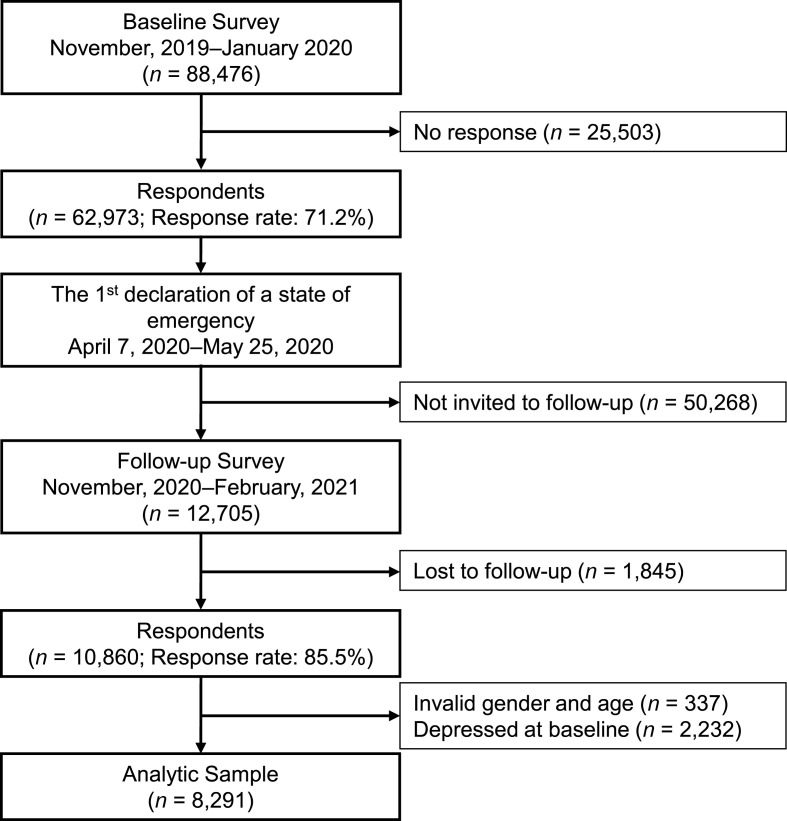
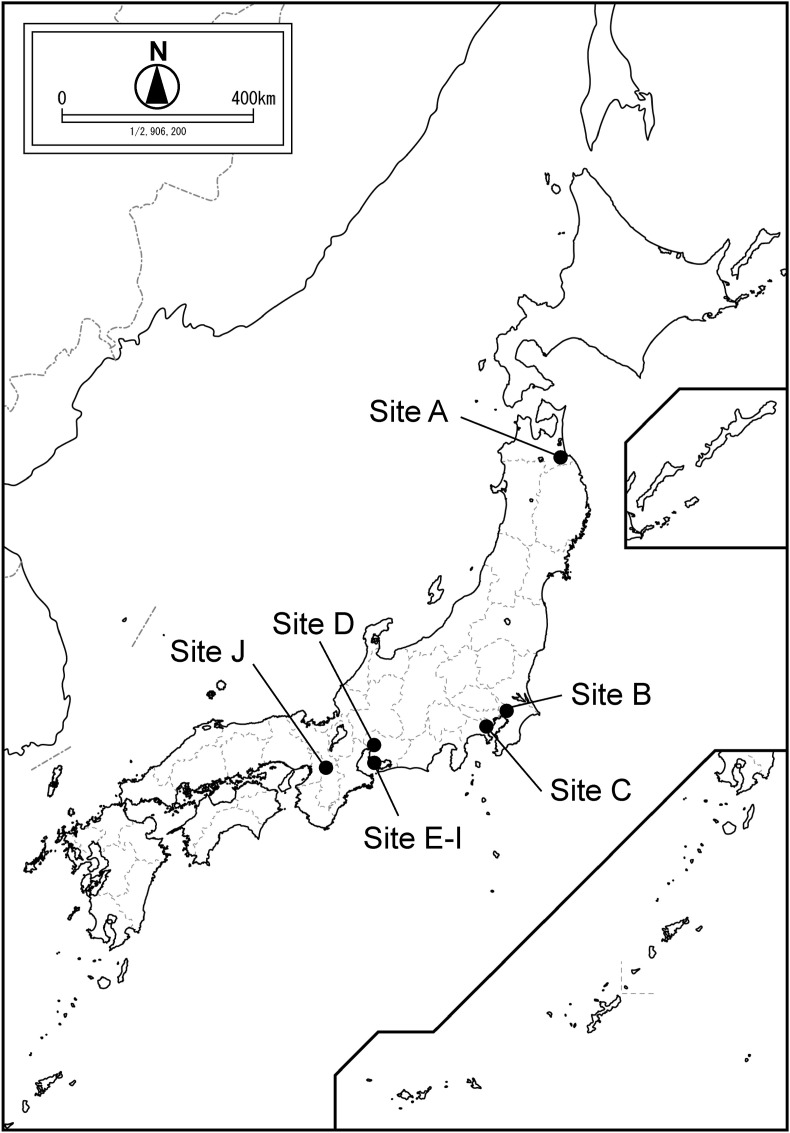
During a pandemic, it is important to know whether social capital can mitigate the risk of mental disorders, given the restrictions on social interactions. However, evidence using longitudinal data is scarce. This study examined the association between pre-pandemic social capital and depressive symptoms during COVID-19 among older adults. We used longitudinal data from the Japan Gerontological Evaluation Study (JAGES), including 8291 participants aged 65 or older who were physically and cognitively independent and not depressed at baseline. We conducted baseline and follow-up mail surveys in ten municipalities in Japan from November 2019 to January 2020 (pre-pandemic period) and from November 2020 to February 2021 (pandemic period), respectively. We measured depressive symptoms using the 15-item Geriatric Depression Scale. Social capital was measured with three validated subscales, namely, civic participation, social cohesion, and reciprocity. We performed a multilevel logistic regression analysis to examine the association. A total of 1089 (13.1%) participants newly developed depressive symptoms during the pandemic. The logistic regression showed that pre-pandemic individual-level social cohesion (odds ratio = 0.79, 95% confidence interval: 0.73 to 0.86) and reciprocity (0.89, 0.82 to 0.96) and community-level reciprocity (0.93, 0.88 to 0.98) were negatively associated with the odds of depressive symptoms. Even after adjusting for declines in social capital during the pandemic, the observed associations of pre-pandemic social capital remained. Fostering social cohesion and reciprocity may increase resilience to mental disorders during a pandemic of infectious disease.
在大流行期间,由于社交互动受到限制,了解社会资本是否可以减轻精神障碍的风险非常重要。然而,使用纵向数据的证据很少。本研究检查了老年人群体中,大流行前的社会资本与 COVID-19 期间抑郁症状之间的关联。我们使用了来自日本老年评估研究(JAGES)的纵向数据,该研究包括 8291 名身体和认知能力正常且基线时无抑郁的 65 岁及以上老年人。我们分别于 2019 年 11 月至 2020 年 1 月(大流行前时期)和 2020 年 11 月至 2021 年 2 月(大流行时期)在日本的十个市进行了基线和随访邮件调查。我们使用 15 项老年抑郁量表来衡量抑郁症状。社会资本通过三个经过验证的子量表来衡量,即公民参与度、社会凝聚力和互惠性。我们进行了多层次逻辑回归分析来检验关联。共有 1089 名(13.1%)参与者在大流行期间新出现了抑郁症状。逻辑回归表明,大流行前的个体层面社会凝聚力(比值比=0.79,95%置信区间:0.73 至 0.86)和互惠性(0.89,0.82 至 0.96)以及社区层面的互惠性(0.93,0.88 至 0.98)与抑郁症状的几率呈负相关。即使在调整了大流行期间社会资本下降的情况后,观察到的大流行前社会资本的关联仍然存在。培养社会凝聚力和互惠性可能会增加在传染病大流行期间对精神障碍的适应能力。