Green Templeton College, University of Oxford, Oxford, UK.
Sir William Dunn School of Pathology, University of Oxford, Oxford, UK.
Br J Cancer. 2022 Jun;126(12):1663-1675. doi: 10.1038/s41416-022-01743-4. Epub 2022 Feb 28.
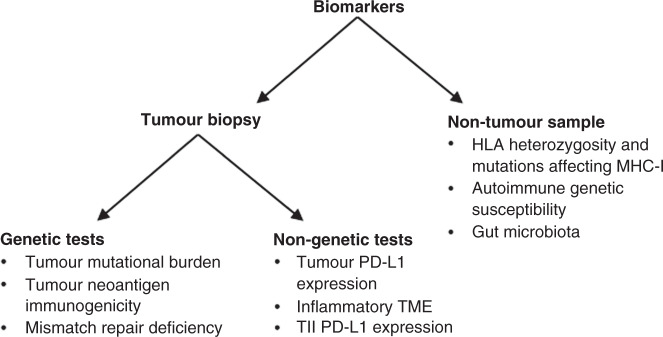
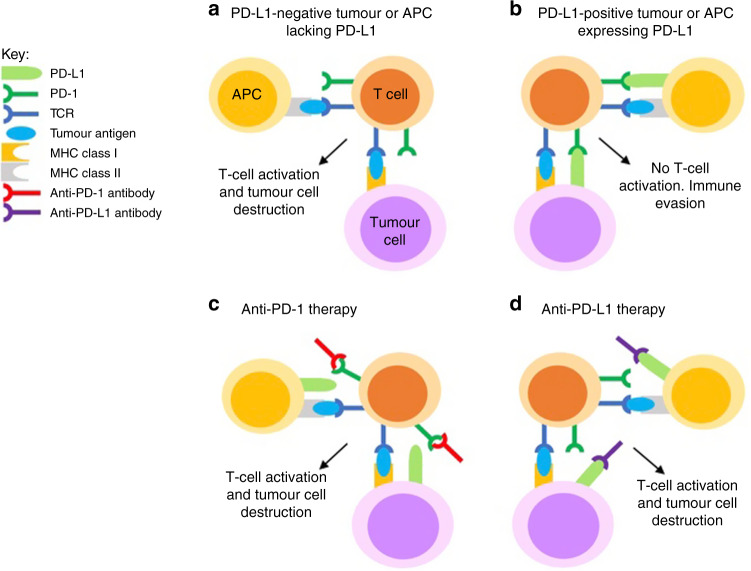
The binding of T cell immune checkpoint proteins programmed death 1 (PD-1) and cytotoxic T-lymphocyte-associated protein 4 (CTLA-4) to their ligands allows immune evasion by tumours. The development of therapeutic antibodies, termed checkpoint inhibitors, that bind these molecules or their ligands, has provided a means to release this brake on the host anti-tumour immune response. However, these drugs are costly, are associated with potentially severe side effects, and only benefit a small subset of patients. It is therefore important to identify biomarkers that discriminate between responders and non-responders. This review discusses the determinants for a successful response to antibodies that bind PD-1 or its ligand PD-L1, dividing them into markers found in the tumour biopsy and those in non-tumour samples. It provides an update on the established predictive biomarkers (tumour PD-L1 expression, tumour mismatch repair deficiency and tumour mutational burden) and assesses the evidence for new potential biomarkers.
T 细胞免疫检查点蛋白程序性死亡受体 1(PD-1)和细胞毒性 T 淋巴细胞相关蛋白 4(CTLA-4)与其配体的结合允许肿瘤发生免疫逃逸。开发了称为检查点抑制剂的治疗性抗体,这些抗体与这些分子或其配体结合,为释放宿主抗肿瘤免疫反应的这种制动提供了一种手段。然而,这些药物昂贵,与潜在的严重副作用相关,并且仅使一小部分患者受益。因此,识别能够区分应答者和非应答者的生物标志物非常重要。这篇综述讨论了成功应答于结合 PD-1 或其配体 PD-L1 的抗体的决定因素,将其分为肿瘤活检中的标志物和非肿瘤样本中的标志物。它提供了对既定预测生物标志物(肿瘤 PD-L1 表达、肿瘤错配修复缺陷和肿瘤突变负担)的更新,并评估了新的潜在生物标志物的证据。