School of Pharmacy, The University of Auckland, Auckland, 1142, New Zealand.
Auckland Cancer Society Research Centre, The University of Auckland, Auckland, New Zealand.
Pharm Res. 2022 Jun;39(6):1181-1195. doi: 10.1007/s11095-022-03206-0. Epub 2022 Feb 28.
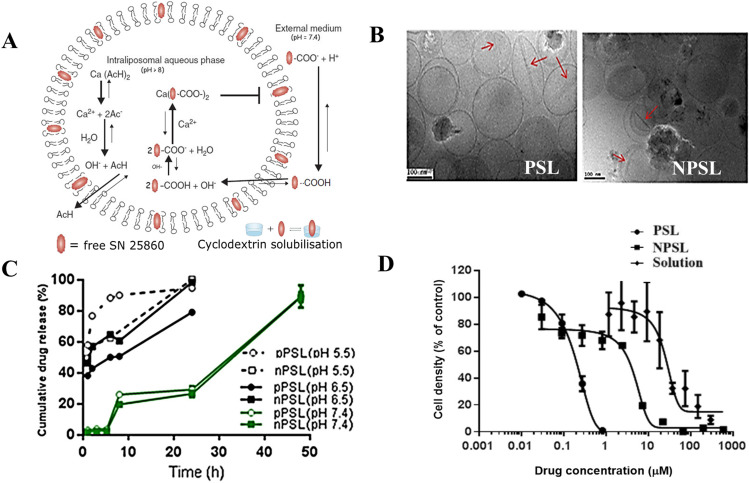
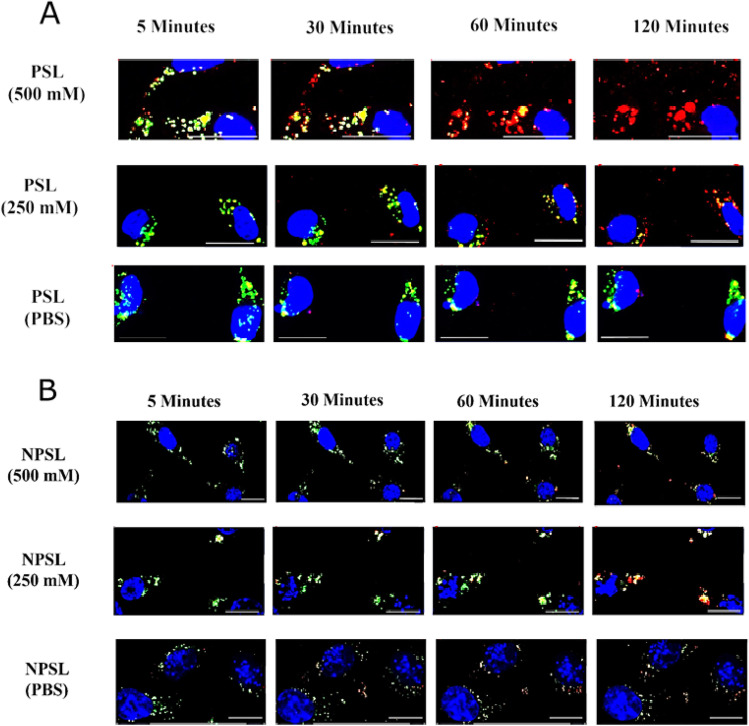
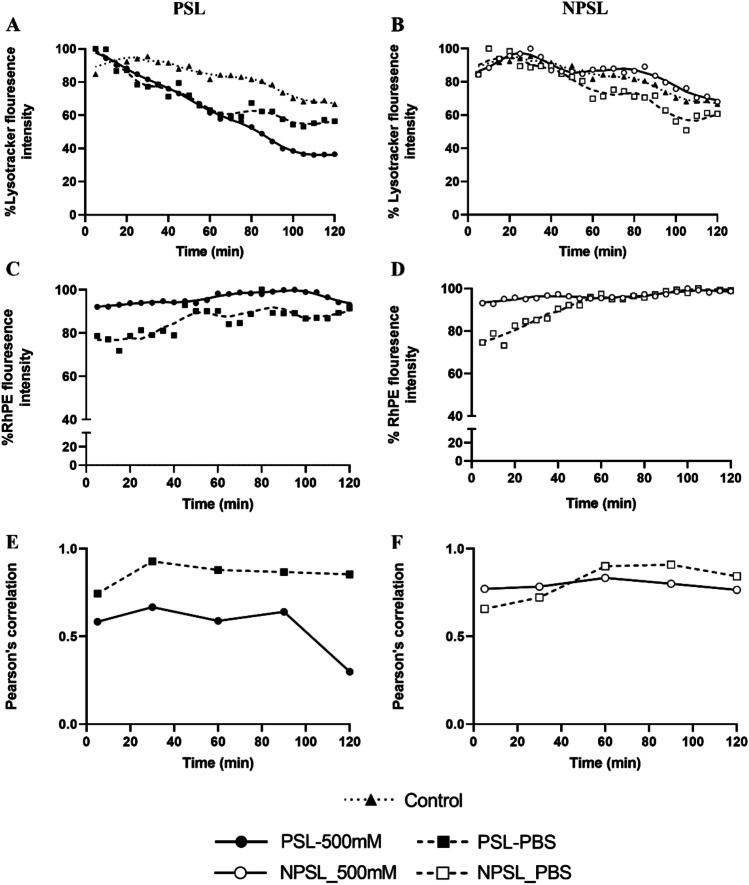
While delivery of chemotherapeutics to cancer cells by nanomedicines can improve therapeutic outcomes, many fail due to the low drug loading (DL), poor cellular uptake and endosomal entrapment. This study investigated the potential to overcome these limitations using pH-sensitive liposomes (PSL) empowered by the use of calcium acetate. An acidic dinitrobenzamide mustard prodrug SN25860 was used as a model drug, with non pH-sensitive liposomes (NPSL) as a reference. Calcium acetate as a remote loading agent allowed to engineer PSL- and NPSL-SN25860 with DL of > 31.1% (w/w). The IC of PSL-SN25860 was 21- and 141-fold lower than NPSL and free drug, respectively. At 48 h following injection of PSL-SN25860, NPSL-SN25860 and the free drug, drug concentrations in EMT6-nfsB murine breast tumors were 56.3 µg/g, 6.76 µg/g and undetectable (< 0.015 µg/g), respectively (n = 3). Meanwhile, the ex vivo tumor clonogenic assay showed 9.1%, 19.4% and 42.7% cell survival in the respective tumors. Live-cell imaging and co-localization analysis suggested endosomal escape was accomplished by destabilization of PSL followed by release of Ca in endosomes allowing induction of a proton sponge effect. Subsequent endosomal rupture was observed approximately 30 min following endocytosis of PSL containing Ca. Additionally, calcium in liposomes promoted internalization of both PSL and NPSL. Taken together, this study demonstrated multifaceted functions of calcium acetate in promoting drug loading into liposomes, cellular uptake, and endosomal escape of PSL for efficient cytoplasmic drug delivery. The results shed light on designing nano-platforms for cytoplasmic delivery of various therapeutics.
虽然纳米药物将化疗药物递送到癌细胞中可以改善治疗效果,但许多药物由于药物载药量(DL)低、细胞摄取率差和内体捕获而失败。本研究探讨了使用醋酸钙克服这些限制的潜力,使用醋酸钙作为远程加载剂,可以构建载药量(DL)>31.1%(w/w)的 pH 敏感脂质体(PSL)和非 pH 敏感脂质体(NPSL)。使用酸性二硝基苯甲酰胺芥 SN25860 作为模型药物,以非 pH 敏感脂质体(NPSL)作为参考。作为远程加载剂的醋酸钙允许工程化 PSL-和 NPSL-SN25860 的载药量(DL)>31.1%(w/w)。PSL-SN25860 的 IC 分别比 NPSL 和游离药物低 21 倍和 141 倍。在注射 PSL-SN25860 后 48 小时,PSL-SN25860、NPSL-SN25860 和游离药物在 EMT6-nfsB 小鼠乳腺癌肿瘤中的药物浓度分别为 56.3µg/g、6.76µg/g 和无法检测到(<0.015µg/g)(n=3)。同时,离体肿瘤克隆形成试验显示,在相应的肿瘤中细胞存活率分别为 9.1%、19.4%和 42.7%。活细胞成像和共定位分析表明,通过 PSL 内体不稳定和 Ca 在内涵体中的释放来实现内涵体逃逸,从而诱导质子海绵效应。在 PSL 内化后约 30 分钟观察到随后的内涵体破裂。此外,脂质体中的钙促进了 PSL 和 NPSL 的内化。总之,本研究证明了醋酸钙在促进脂质体药物载药量、细胞摄取和 PSL 内涵体逃逸方面的多种功能,为有效细胞质药物递送提供了高效的细胞质药物递送。该结果为设计各种治疗药物的细胞质递送纳米平台提供了思路。