Department of Gynecology and Obstetrics, Mainz University Medical Center, Langenbeckstr. 1, 55131, Mainz, Germany.
Arch Gynecol Obstet. 2022 Nov;306(5):1531-1537. doi: 10.1007/s00404-022-06460-0. Epub 2022 Mar 1.
Traumatic experiences during or after childbirth are subject of intense discussions in mainstream and social media as well as in scientific literature. Aim of this evaluation is to estimate the prevalence of post-traumatic stress disorder (PTSD) following childbirth in postpartum women and to evaluate the influence of maternal, obstetrical and neonatal characteristics on the degree of PTSD symptoms measured by the Impact of Events Scale questionnaire (IES-R).
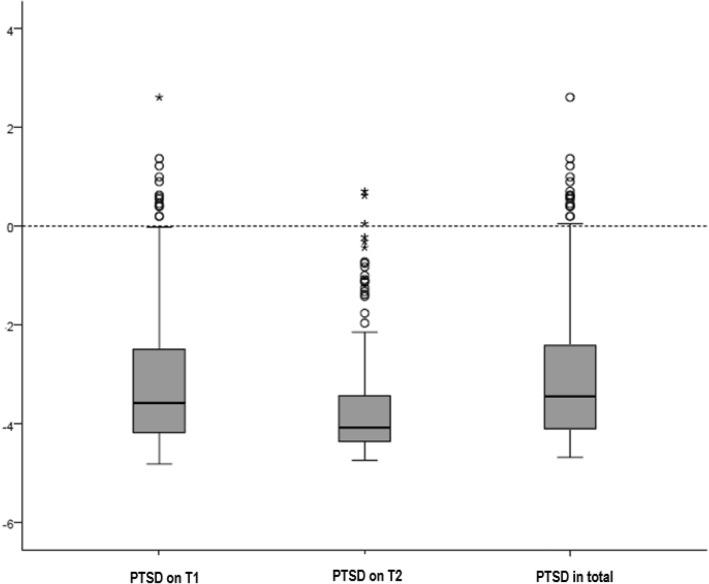
In total, 589 women who gave birth in the University Medical Center Mainz, Germany in 2016, participated in a survey within the first days after birth. Of these, 278 also participated 6 months later. All participants received the validated Impact of Events Scale questionnaire (IES-R). The influence of maternal, obstetric and fetal parameters on PTSD score was evaluated.
PTSD overall prevalence was 2.9%. Patients with PTSD had significantly less often personal support during labor (p < 0.001). Maternal age (p < 0.001), parity (p < 0.001), migration background (p < 0.001), mode of delivery (p < 0.001) and assistance during labor (p < 0.001) were parameters significantly influential on the PTSD symptom level measured by the IES-R.
Maternal PTSD prevalence after childbirth seems to be quite rare with 2.9%. Nevertheless, recent findings assume that this prevalence may only represent the "tip of the iceberg". PTSD after childbirth should not be underestimated. As PTSD depends on personal vulnerability and existing risk factors, patients at risk have to be detected before childbirth, which appears to be challenging especially for obstetric and family care professionals.
分娩期间或之后的创伤经历是主流和社交媒体以及科学文献中讨论的热点。本评估旨在估计产后妇女产后创伤后应激障碍(PTSD)的患病率,并评估母体、产科和新生儿特征对事件影响量表问卷(IES-R)测量的 PTSD 症状严重程度的影响。
2016 年,共有 589 名在德国美因茨大学医学中心分娩的妇女在分娩后几天内参加了一项调查。其中,278 人还在 6 个月后参加了调查。所有参与者都接受了经过验证的事件影响量表问卷(IES-R)。评估了母体、产科和胎儿参数对 PTSD 评分的影响。
总体 PTSD 患病率为 2.9%。患有 PTSD 的患者在分娩期间得到的个人支持明显较少(p<0.001)。产妇年龄(p<0.001)、产次(p<0.001)、移民背景(p<0.001)、分娩方式(p<0.001)和分娩时的帮助(p<0.001)是通过 IES-R 测量的 PTSD 症状水平的显著影响因素。
产后母亲 PTSD 的患病率似乎相当低,为 2.9%。然而,最近的研究结果假设,这种患病率可能仅代表“冰山一角”。产后 PTSD 不应被低估。由于 PTSD 取决于个人脆弱性和现有风险因素,因此必须在分娩前发现有风险的患者,这对于产科和家庭护理专业人员来说似乎具有挑战性。