Department of Gastroenterology.
Microbial Immune Regulation Research Group, Helmholtz Center for Infection Research, Braunschweig, Germany.
Gut Microbes. 2022 Jan-Dec;14(1):2041943. doi: 10.1080/19490976.2022.2041943.
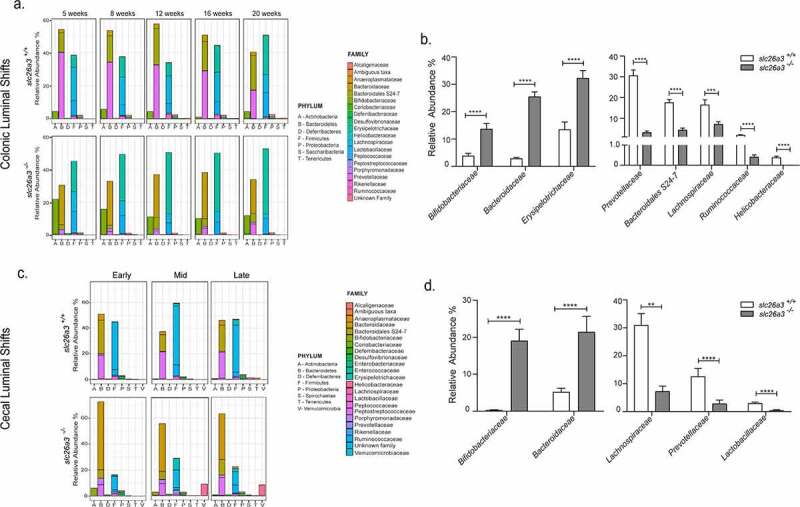
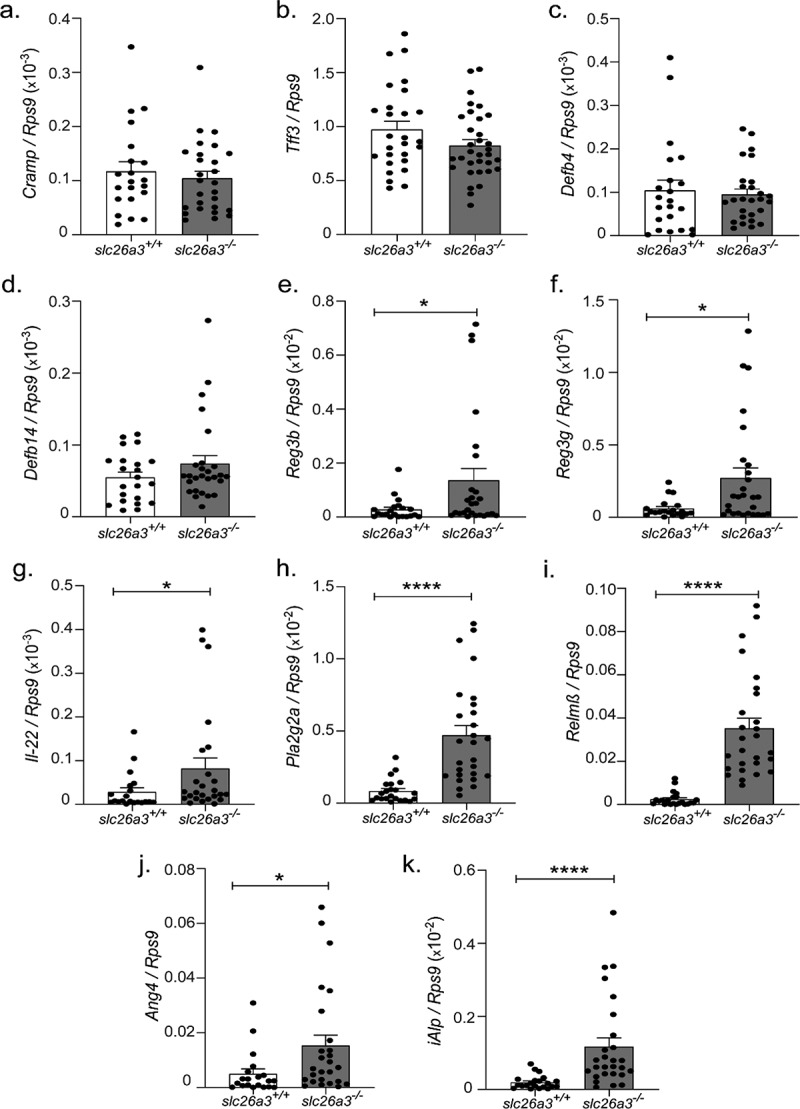
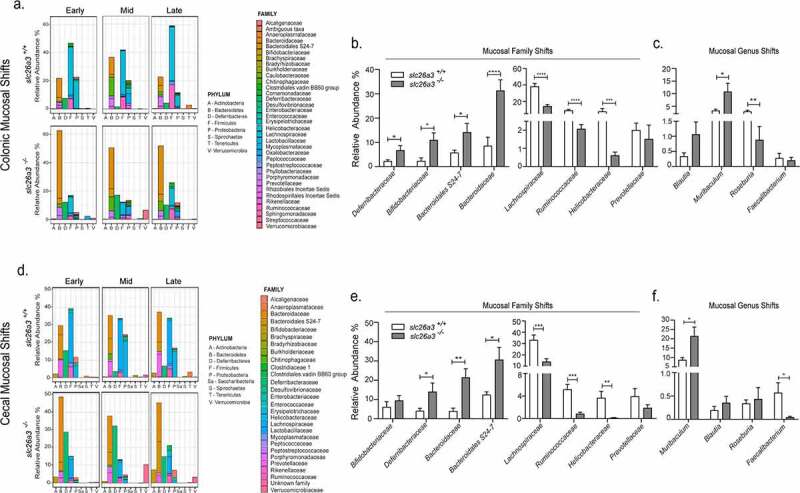
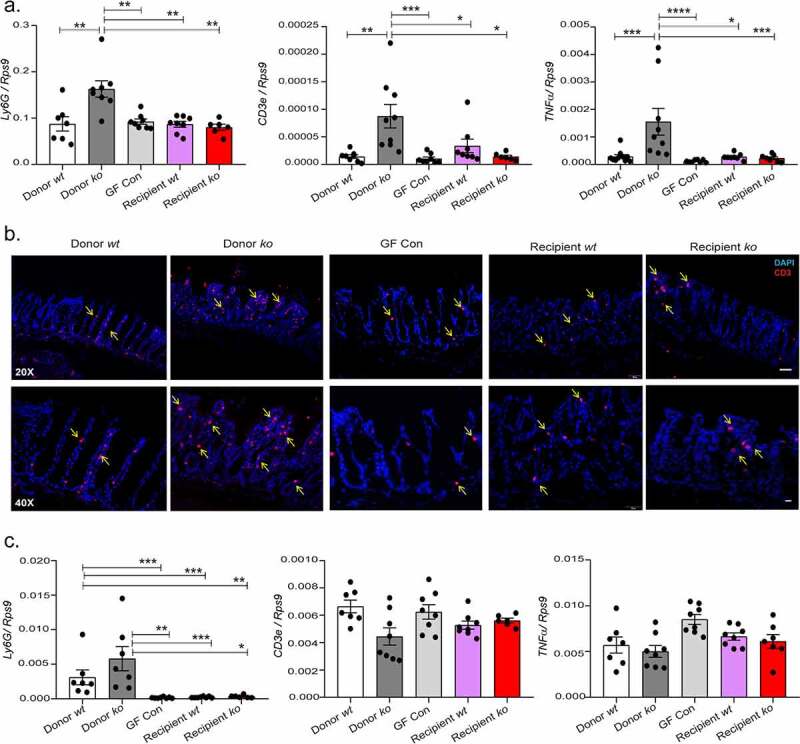
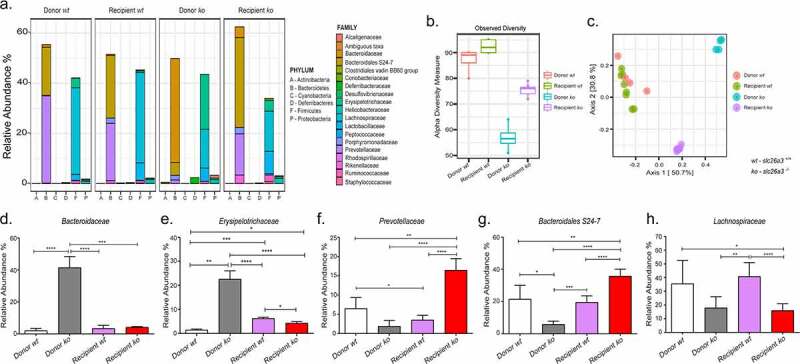
Genetic defects in SLC26A3 (DRA), an intestinal Cl/HCO exchanger, result in congenital chloride diarrhea (CLD), marked by lifelong acidic diarrhea and a high risk of inflammatory bowel disease. mice serve as a model to understand the pathophysiology of CLD and search for treatment options. This study investigates the microbiota changes in colon, the genotype-related causes for the observed microbiota alterations, its inflammatory potential, as well as the corresponding host responses. The luminal and the mucosa-adherent cecal and colonic microbiota of cohoused and littermates were analyzed by 16S rRNA gene sequencing. Fecal microbiota transfer from cohoused and littermates to germ-free mice was performed to analyze the stability and the inflammatory potential of the communities.The cecal and colonic luminal and mucosa-adherent microbiota of mice was abnormal from an early age, with a loss of diversity, of short-chain fatty acid producers, and an increase of pathobionts. The transfer of microbiota did not result in intestinal inflammation and the microbial diversity in the recipient mice normalized over time. A strong increase in the expression of , and other proteins with antimicrobial functions was observed in colon from juvenile age, while the mucosal and systemic inflammatory signature was surprisingly mild. The dysbiotic microbiota, low mucosal pH, and mucus barrier defect in colon are accompanied by a stark upregulation of the expression of a panel of antimicrobial proteins. This may explain the low inflammatory burden in the gut of these mice.
SLC26A3(DRA)中的遗传缺陷导致先天性氯腹泻(CLD),其特征为终生酸性腹泻和炎症性肠病的高风险。Slc26a3-/- 小鼠可作为研究 CLD 病理生理学和寻找治疗方法的模型。本研究调查了 Slc26a3-/- 结肠中的微生物群变化、观察到的微生物群改变的基因型相关原因、其炎症潜能以及相应的宿主反应。通过 16S rRNA 基因测序分析了共同饲养的 Slc26a3-/- 和 Slc26a3+/+ 同窝仔鼠的结肠腔和结肠黏膜固有菌群。通过粪便微生物群转移实验将共同饲养的 Slc26a3-/- 和 Slc26a3+/+ 仔鼠的微生物群转移至无菌 Slc26a3-/- 仔鼠,以分析菌群的稳定性和炎症潜能。Slc26a3-/- 仔鼠的结肠腔和结肠黏膜固有菌群从早期开始就异常,表现为多样性丧失、短链脂肪酸产生菌减少和条件致病菌增加。Slc26a3-/- 微生物群的转移不会导致肠道炎症,并且受体仔鼠的微生物多样性会随时间而正常化。从小鼠幼年期开始,Slc26a3-/- 结肠中观察到 、和其他具有抗菌功能的蛋白质的表达强烈增加,而黏膜和全身炎症特征却出人意料地轻微。Slc26a3-/- 结肠中失调的微生物群、低黏膜 pH 值和黏液屏障缺陷伴随着一组抗菌蛋白表达的明显上调。这可能解释了这些小鼠肠道中低炎症负担的原因。