Department of Breast Oncology, The First Hospital of Quanzhou Affiliated to Fujian Medical University, Anji Rd, 362000, Quanzhou, China.
Comprehensive Breast Health Center, Ruijin Hospital, Shanghai Jiaotong University School of Medicine, 200025, Shanghai, China.
BMC Cancer. 2022 Mar 2;22(1):226. doi: 10.1186/s12885-022-09286-w.
The oncogenic drivers of triple-negative breast cancer (TNBC), which is characterized by worst prognosis compared with other subtypes, are poorly understood. Although next-generation sequencing technology has facilitated identifying potential targets, few of the findings have been translated into daily clinical practice. The present study is aimed to explore ZNF703 (Zinc finger 703) function and its underlying mechanism in TNBC.
ZNF703 expressions in tissue microarray were retrospectively examined by immunohistochemistry. The cell proliferation by SRB assay and colony formation assay, as well as cell cycle distribution by flow cytometry were assessed. The protein levels associated with possible underlying molecular mechanisms were evaluated by western blotting. Kaplan-Meier analysis was used to plot survival analysis.
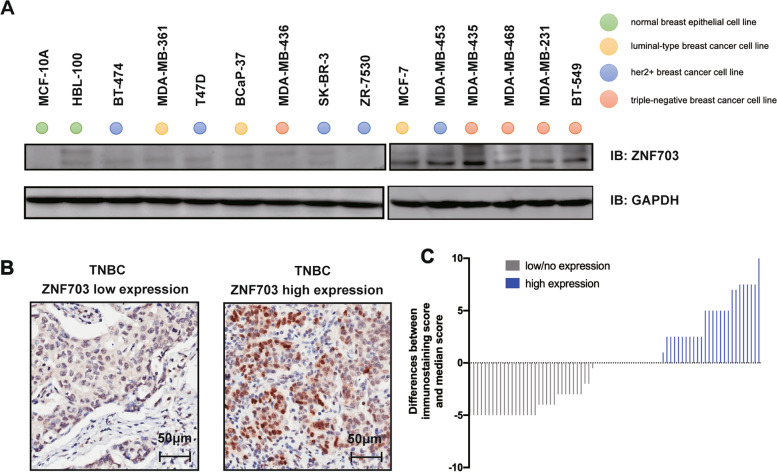
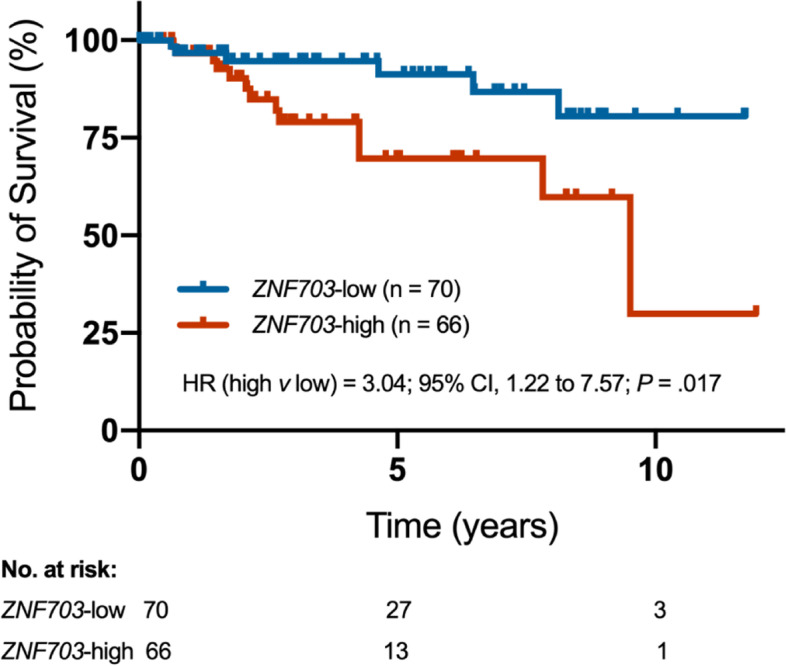
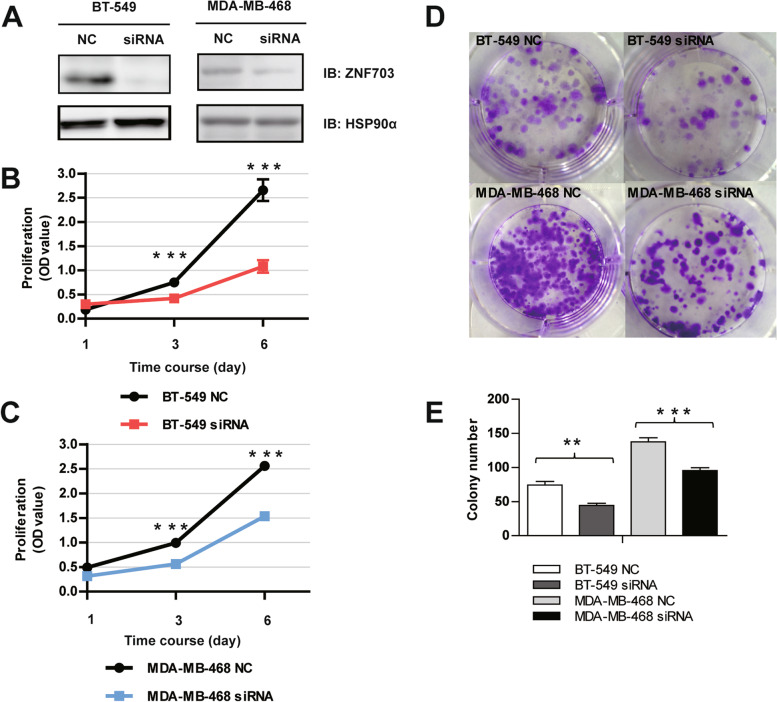
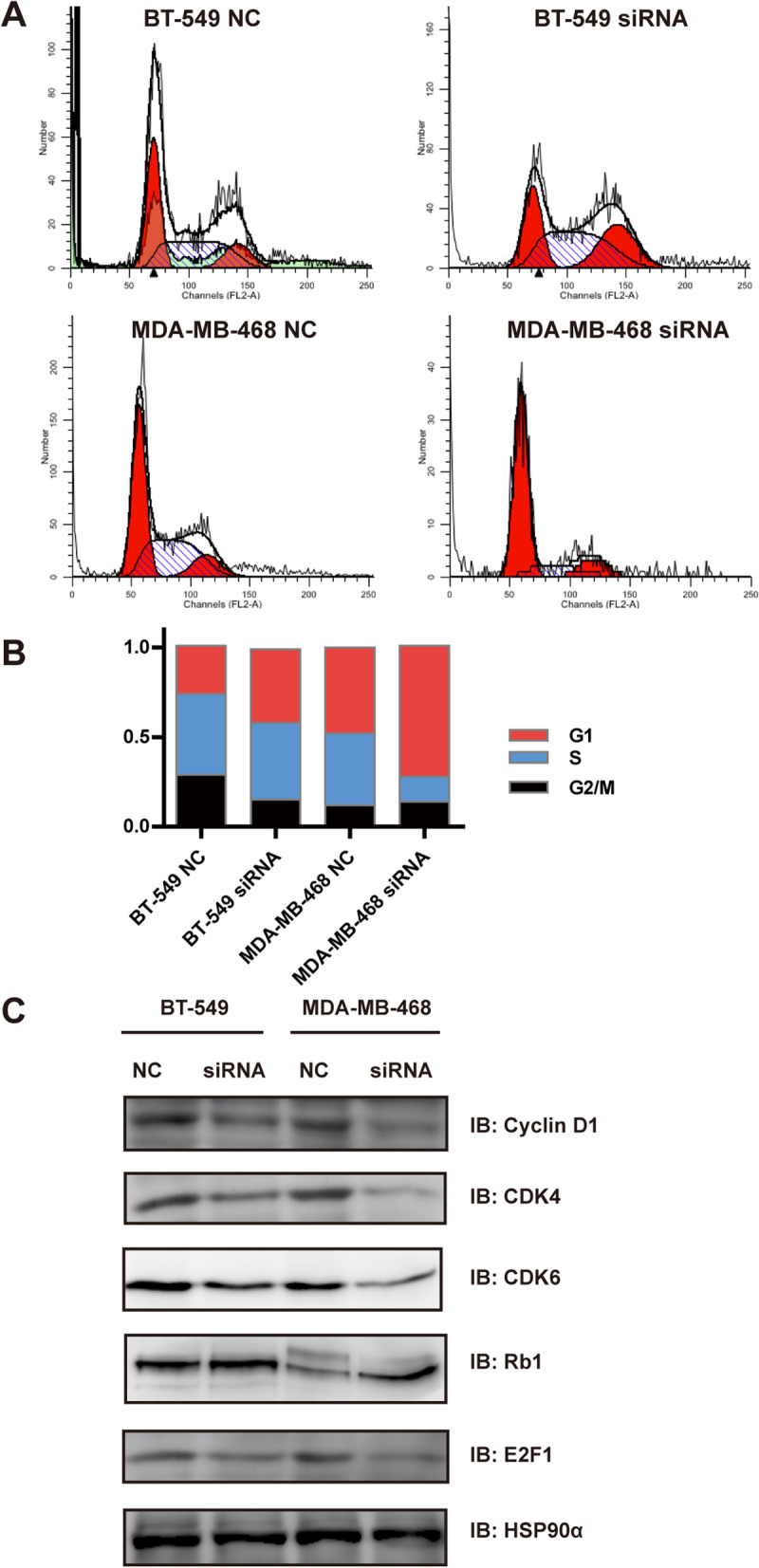
Our data suggest that ZNF703 expressed in 34.2% of triple-negative human breast tumors by immunohistochemistry. In vitro, ZNF703 knockdown had potent inhibitory effects on TNBC cell proliferation and cell cycle, with cyclin D1, CDK4, CDK6, and E2F1 downregulated, while Rb1 upregulated. Moreover, Kaplan-Meier analysis showed that high mRNA expression of ZNF703 was correlated to worse overall survival (HR for high expression was 3.04; 95% CI, 1.22 to 7.57, P = 0.017).
Taken together, the results identified that targeting ZNF703 contributed to the anti-proliferative effects in TNBC cells, due to induced G1-phase arrest. This study is the first to identify ZNF703 as a potentially important protein that is involved in TNBC progression.
三阴性乳腺癌(TNBC)的致癌驱动因素与其他亚型相比预后最差,但目前仍知之甚少。尽管下一代测序技术有助于识别潜在的靶点,但很少有发现转化为日常临床实践。本研究旨在探索 ZNF703(锌指蛋白 703)在 TNBC 中的功能及其潜在机制。
通过免疫组织化学法对组织微阵列中的 ZNF703 表达进行回顾性检测。采用 SRB 法和集落形成实验检测细胞增殖,采用流式细胞术检测细胞周期分布。通过 Western blot 评估与潜在分子机制相关的蛋白水平。采用 Kaplan-Meier 分析进行生存分析。
我们的数据表明,免疫组织化学法检测到 34.2%的三阴性人乳腺癌肿瘤中表达 ZNF703。在体外,ZNF703 敲低对 TNBC 细胞增殖和细胞周期具有显著的抑制作用,下调细胞周期蛋白 D1、CDK4、CDK6 和 E2F1,而上调 Rb1。此外,Kaplan-Meier 分析显示,ZNF703 的高 mRNA 表达与总生存期较差相关(高表达的 HR 为 3.04;95%CI,1.22 至 7.57,P=0.017)。
综上所述,研究结果表明,靶向 ZNF703 可通过诱导 G1 期阻滞,对 TNBC 细胞产生抗增殖作用。本研究首次鉴定 ZNF703 是一种参与 TNBC 进展的潜在重要蛋白。