Perelman School of Medicine, Department of Psychiatry, University of Pennsylvania, Philadelphia, PA, USA.
School of Nursing, University of Pennsylvania, Philadelphia, PA, USA.
BMC Psychiatry. 2022 Mar 2;22(1):159. doi: 10.1186/s12888-022-03770-0.
Childhood maltreatment is a serious public health concern. The association between child maltreatment, adverse behaviors, mental health outcomes, and alterations to brain function and structure have begun to be characterized. Less is known about the specific associations of maltreatment subtypes with cue-response to evocative cues and the moderating effects of confounding mental health/behavioral variables.
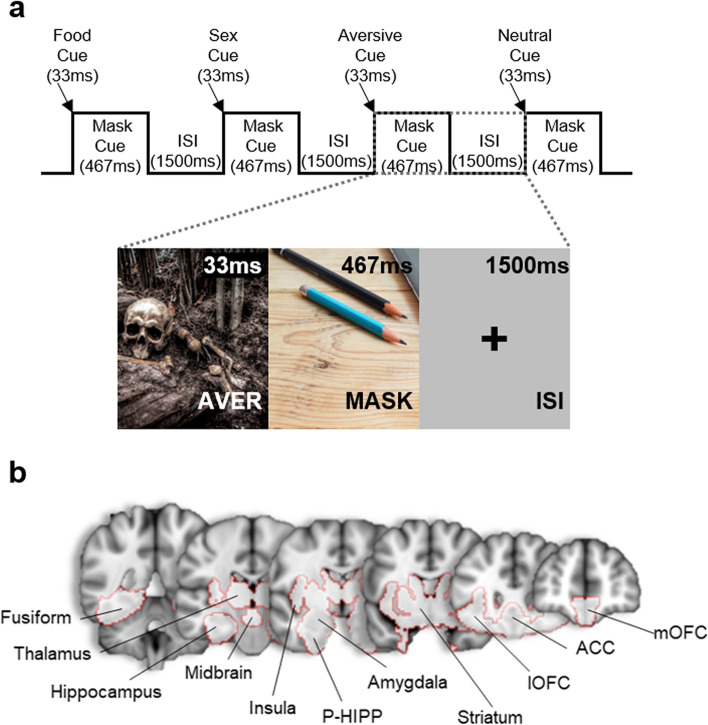
Fifty-four emerging adult women (aged 18-24) completed assessments for behaviors, mental health, and childhood maltreatment. They participated in a fMRI task featuring passive viewing of evocative (33 ms) cues presented by "backward masking" to prevent conscious processing. Correlations of abuse/neglect scores, behavioral/mental health factors, and brain function were assessed. Follow-up analyses investigated the moderating effects of behavioral/mental health factors on maltreatment and brain relationships.
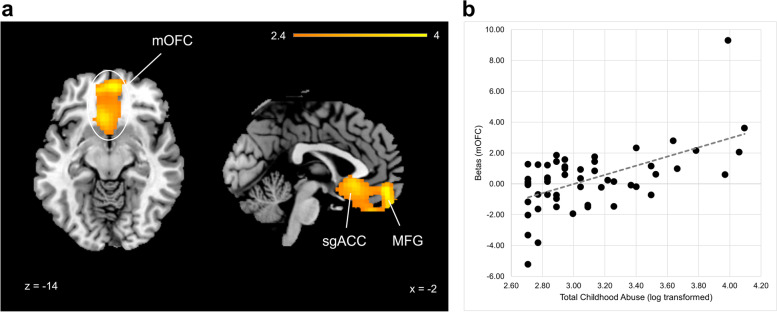
Greater frequency of childhood abuse and neglect were correlated with higher scores of impulsivity, depressive symptoms, and anxious attachment. Childhood abuse was positively associated with increased medial orbitofrontal cortical (mOFC) response to aversive (vs. neutral) cues. Among the behavioral/mental health variables, only impulsivity appeared to have a moderating effect on the relationship between childhood abuse and brain response to aversive cues.
The link between childhood abuse and a heightened mOFC response to "unseen" aversive stimuli, moderated by impulsivity, adds to the growing literature on the impact of prior adversity on brain function. These findings offer further understanding for the way in which childhood maltreatment affects the brain processing of negative stimuli, helping to explain the well-documented link between childhood maltreatment and a variety of adverse outcomes in adulthood.
儿童期虐待是一个严重的公共卫生问题。儿童虐待与不良行为、心理健康结果以及大脑功能和结构的改变之间的关联已经开始得到描述。然而,对于虐待亚型与唤起线索的反应以及混杂的心理健康/行为变量的调节作用的具体关联知之甚少。
54 名成年早期女性(18-24 岁)完成了行为、心理健康和儿童虐待评估。她们参与了一项 fMRI 任务,其中包括通过“倒向掩蔽”被动观看唤起性(33ms)线索,以防止有意识的处理。评估了虐待/忽视分数、行为/心理健康因素和大脑功能的相关性。后续分析调查了行为/心理健康因素对虐待和大脑关系的调节作用。
童年期虐待的频率越高,冲动、抑郁症状和焦虑依恋的得分越高。童年期虐待与内侧眶额皮质(mOFC)对厌恶(与中性)线索的反应增加呈正相关。在行为/心理健康变量中,只有冲动性似乎对童年虐待与对厌恶线索的大脑反应之间的关系具有调节作用。
童年虐待与对“看不见”的厌恶刺激的 mOFC 反应之间的联系,被冲动性所调节,这增加了关于先前逆境对大脑功能影响的越来越多的文献。这些发现进一步理解了儿童虐待如何影响大脑对负面刺激的处理方式,有助于解释儿童虐待与成年后各种不良后果之间的有据可查的联系。