Department of Cell Biology and Genetics, Key Laboratory of Molecular Biology in High Cancer Incidence Coastal Chao Shan Area of Guang Dong Higher Education Institutes, Shantou University Medical College, Shantou, China.
Department of Clinical Laboratory, Affiliated Hospital of Youjiang Medical University for Nationalities, Baise, China.
Front Immunol. 2022 Feb 14;13:731500. doi: 10.3389/fimmu.2022.731500. eCollection 2022.
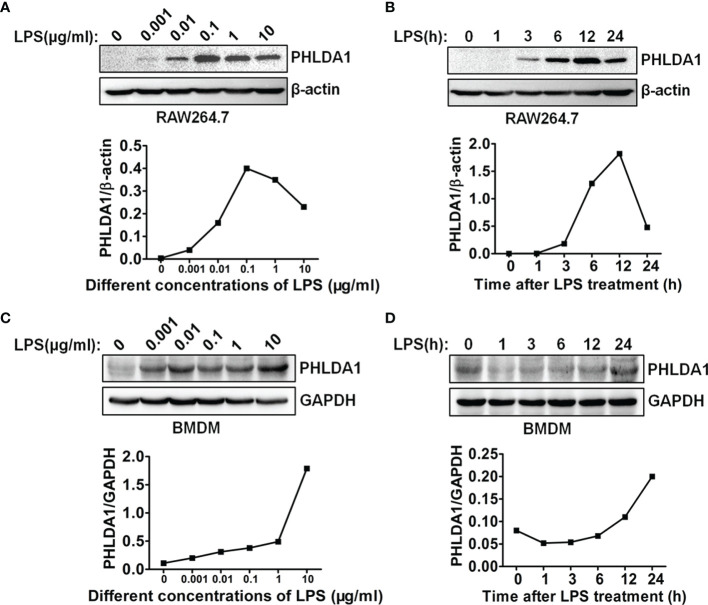
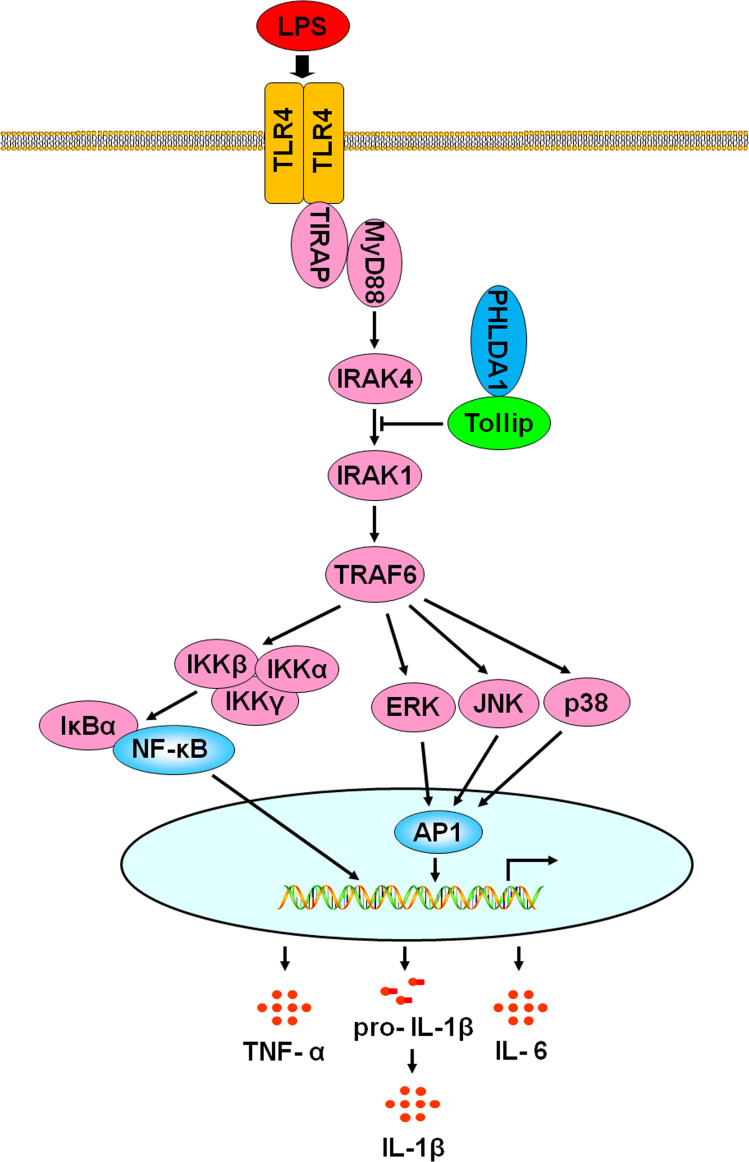
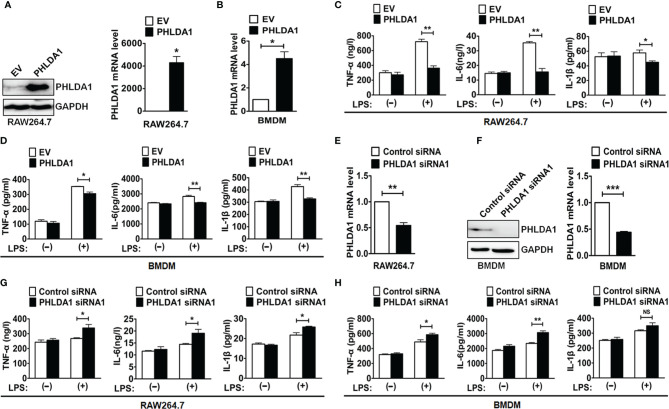
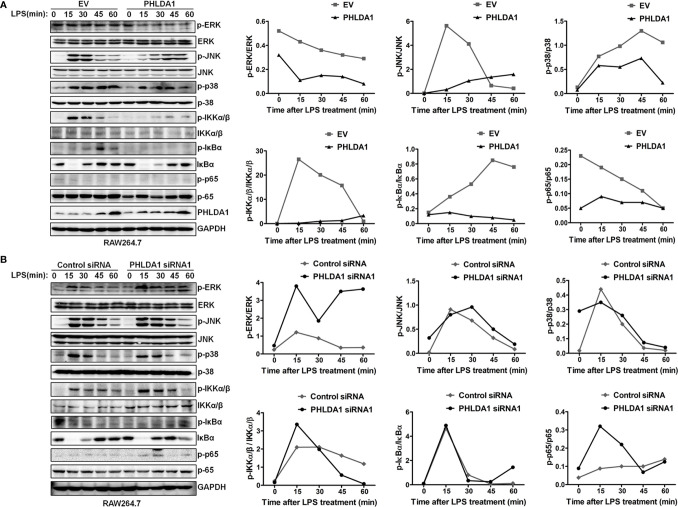
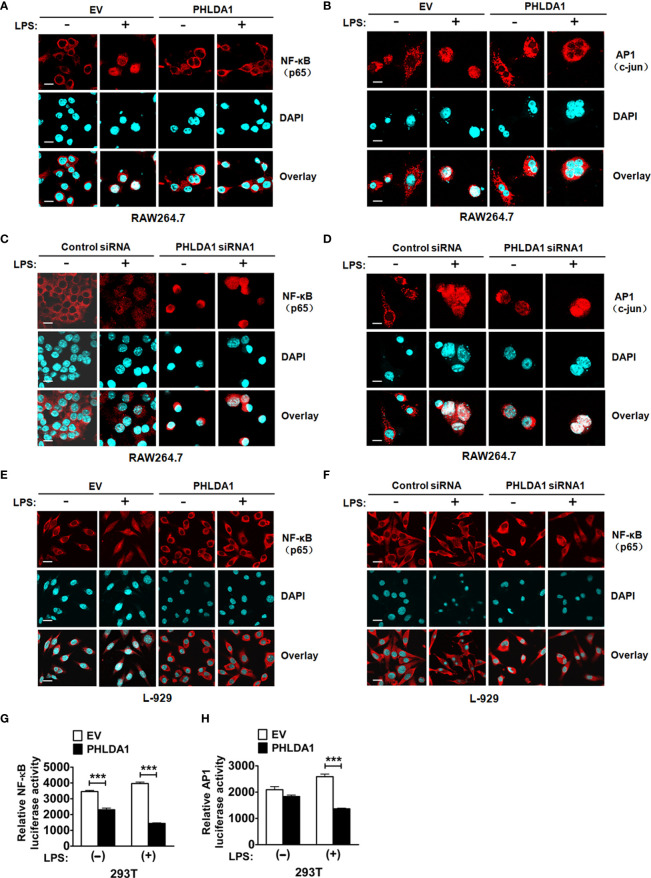
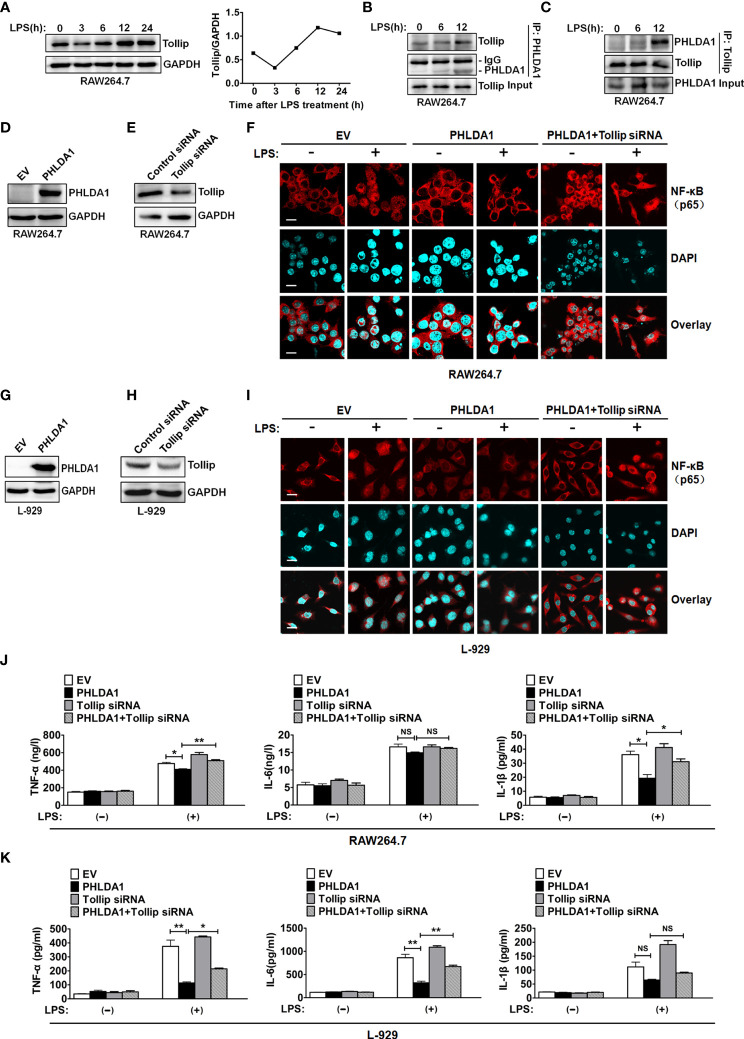
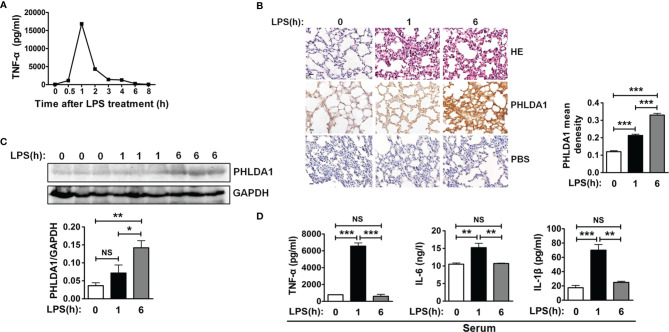
Pleckstrin homology-like domain, family A, member 1 (PHLDA1) has been reported to be expressed in many mammalian tissues and cells. However, the functions and exact mechanisms of PHLDA1 remain unclear. In this study, we found that PHLDA1 expression was significantly altered in macrophages after exposure to lipopolysaccharide (LPS) , suggesting that PHLDA1 may be involved in the regulation of TLR4 signaling pathway activated by LPS. PHLDA1 attenuated the production of LPS-stimulated proinflammatory cytokines (TNF-α, IL-6, and IL-1β). Further research showed that the phosphorylation levels of some important signal molecules in TLR4/MyD88-mediated MAPK and NF-κB signaling pathways were reduced by PHLDA1, which in turn impaired the transcription factors NF-κB and AP1 nuclear translocation and their responsive element activities. Furthermore, we found that PHLDA1 repressed LPS-induced proinflammatory cytokine production binding to Tollip which restrained TLR4 signaling pathway. A mouse model of endotoxemia was established to confirm the above similar results. In brief, our findings demonstrate that PHLDA1 is a negative regulator of LPS-induced proinflammatory cytokine production by Tollip, suggesting that PHLDA1 plays an anti-inflammatory role through inhibiting the TLR4/MyD88 signaling pathway with the help of Tollip. PHLDA1 may be a novel therapeutic target in treating endotoxemia.
PHLDA1 结构域家族 A 成员 1 (PHLDA1) 已被报道在许多哺乳动物组织和细胞中表达。然而,PHLDA1 的功能和确切机制仍不清楚。在本研究中,我们发现脂多糖 (LPS) 处理后巨噬细胞中 PHLDA1 的表达明显改变,提示 PHLDA1 可能参与 LPS 激活的 TLR4 信号通路的调节。PHLDA1 减弱了 LPS 刺激的促炎细胞因子 (TNF-α、IL-6 和 IL-1β) 的产生。进一步的研究表明,TLR4/MyD88 介导的 MAPK 和 NF-κB 信号通路中一些重要信号分子的磷酸化水平被 PHLDA1 降低,从而损害了转录因子 NF-κB 和 AP1 的核转位及其反应元件活性。此外,我们发现 PHLDA1 通过与 Tollip 结合抑制 TLR4 信号通路,从而抑制 LPS 诱导的促炎细胞因子产生。内毒素血症的小鼠模型被建立以证实上述类似结果。总之,我们的研究结果表明 PHLDA1 是 Tollip 抑制 LPS 诱导的促炎细胞因子产生的负调节剂,提示 PHLDA1 通过 Tollip 抑制 TLR4/MyD88 信号通路发挥抗炎作用。PHLDA1 可能是治疗内毒素血症的一种新的治疗靶点。