Immunology and Infectious Diseases, Division of Biomedical Sciences, Faculty of Medicine, Memorial University, St. John's, NL, Canada.
Confocal Imaging/Flow Cytometry Unit, Medical Laboratories, Faculty of Medicine, Memorial University, St. John's, NL, Canada.
Front Immunol. 2022 Feb 14;13:788138. doi: 10.3389/fimmu.2022.788138. eCollection 2022.
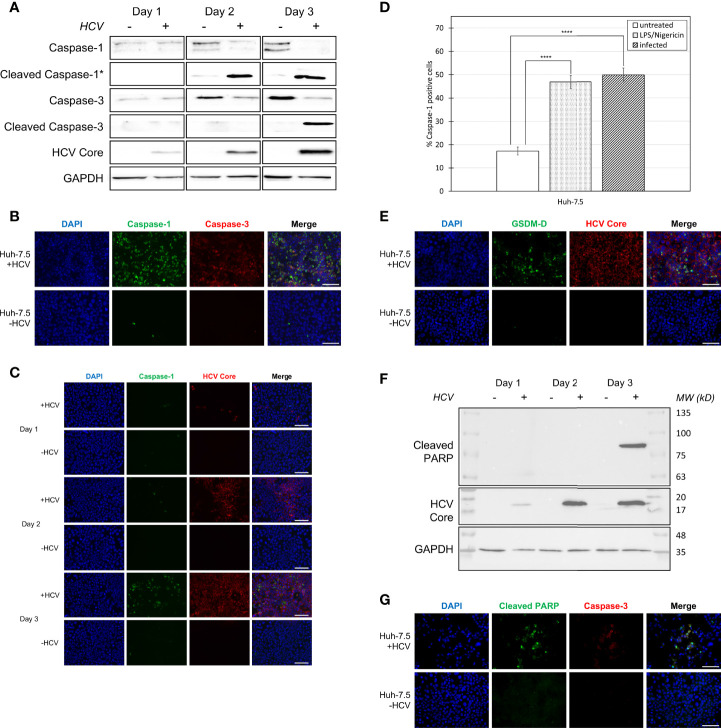
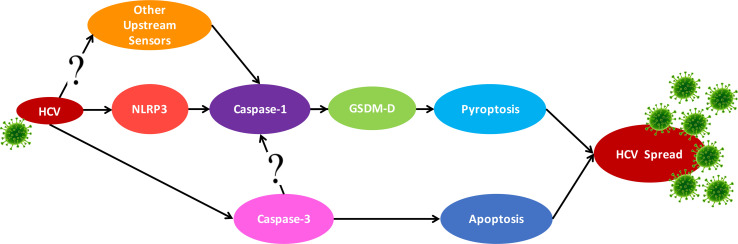
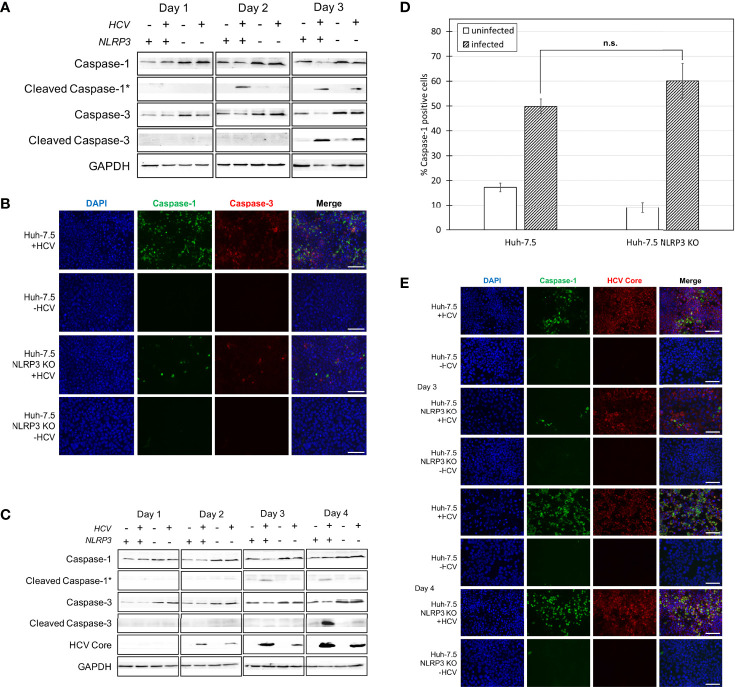
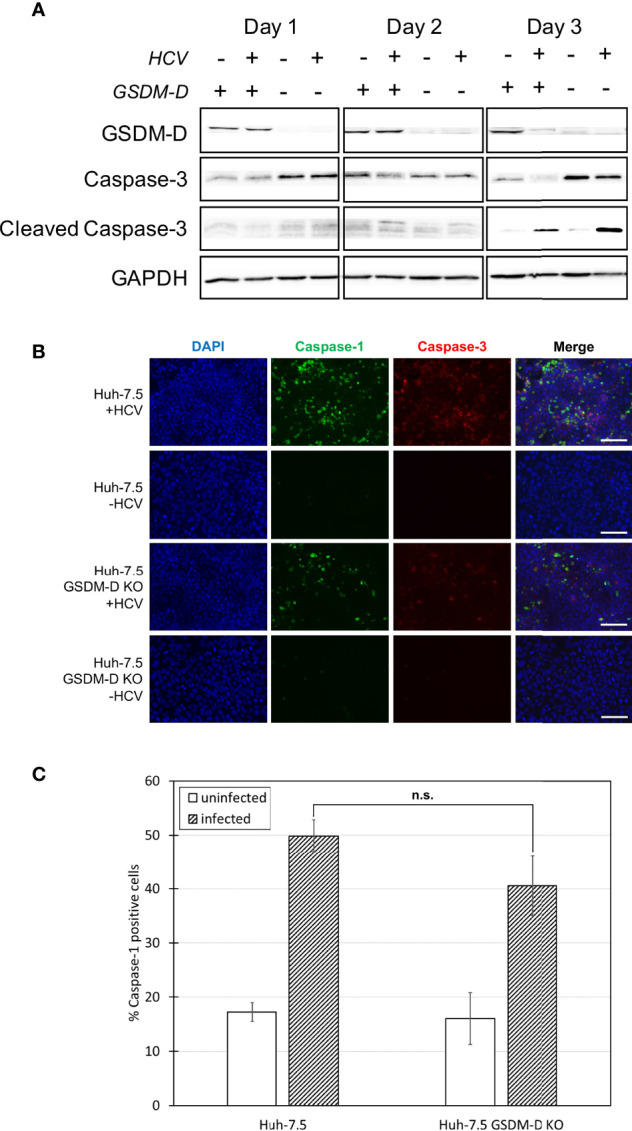
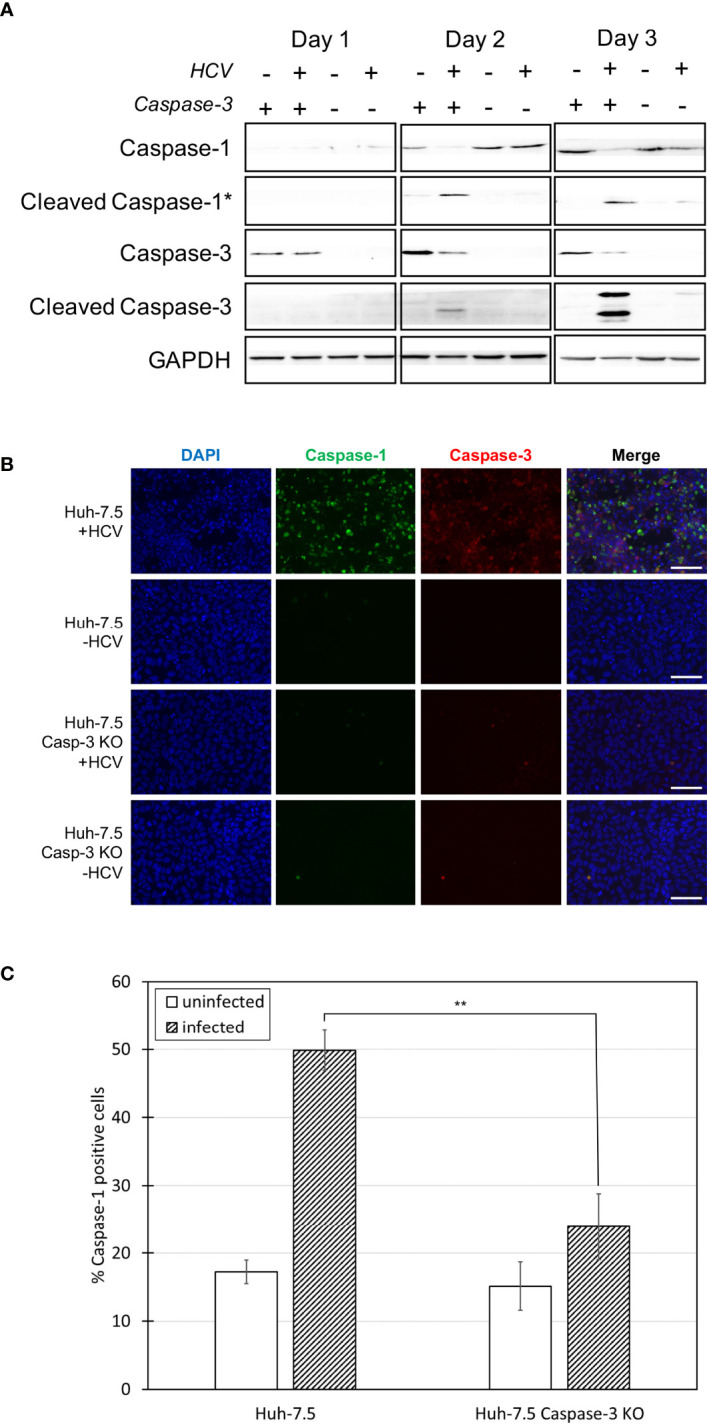
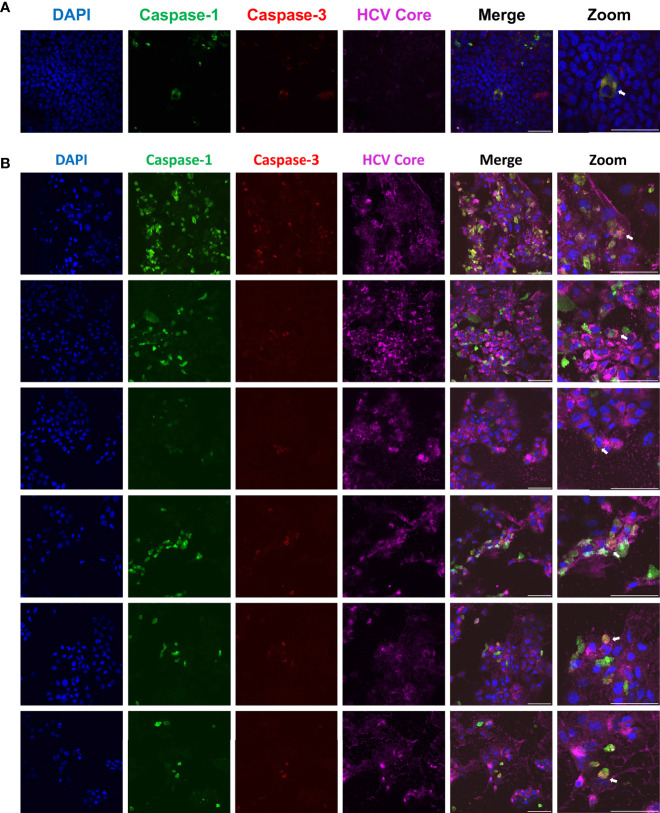
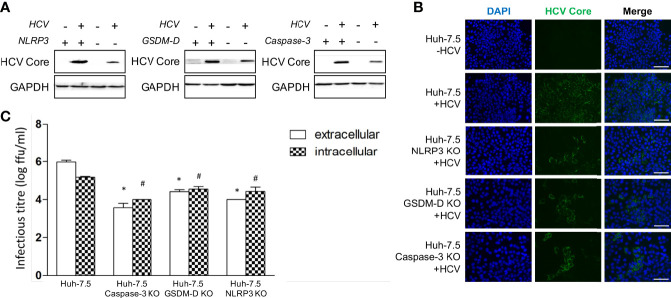
Extensive inflammation in the liver is known to contribute to the pathogenesis of hepatitis C virus (HCV) infection. Apoptosis has, for a long time, been known to act as a mechanism of hepatocyte death, but our previous research also identified inflammasome-mediated pyroptosis in infected and uninfected bystander cells as an additional mechanism of HCV-induced cytopathicity. The purpose of this study was to investigate the mechanism of HCV-induced cell death and to determine the timing and relative contributions of apoptosis and pyroptosis during HCV infection. In a model employing a cell culture-adapted strain of JFH-1 HCV and Huh-7.5 hepatocyte-like cells, we found that pyroptosis occurred earlier than did apoptosis during infection. CRISPR knockout of NLRP3 resulted in decreased caspase-1 activation, but not complete elimination, indicating multiple sensors are likely involved in HCV-induced pyroptosis. Knockout of gasdermin-D resulted in increased activation of apoptosis-related caspase-3, suggesting potential crosstalk between the two cell death pathways. An unexpected decrease in activated caspase-1 levels was observed when caspase-3 was knocked out, implying that caspase-3 may have a role in the initiation of pyroptosis, at least in the context of HCV infection. Lower viral titres in culture fluids and increased ratios of intracellular to extracellular levels of infectious virus were observed in knockout versus wild-type Huh-7.5 cells, suggesting that HCV may induce programmed cell death in order to enhance virus release from infected cells. These results contribute to the understanding of HCV pathogenesis and add to the increasing volume of literature suggesting various programmed cell death pathways are not mutually exclusive.
已知肝脏的广泛炎症有助于丙型肝炎病毒 (HCV) 感染的发病机制。凋亡长期以来一直被认为是肝细胞死亡的一种机制,但我们之前的研究还发现,感染和未感染的旁观者细胞中的炎性体介导的细胞焦亡也是 HCV 诱导细胞病变的另一种机制。本研究旨在探讨 HCV 诱导细胞死亡的机制,并确定凋亡和细胞焦亡在 HCV 感染过程中的时间和相对贡献。在使用细胞培养适应株 JFH-1 HCV 和 Huh-7.5 类肝细胞的模型中,我们发现细胞焦亡发生在感染过程中早于凋亡。CRISPR 敲除 NLRP3 导致 caspase-1 激活减少,但不完全消除,表明可能有多种传感器参与 HCV 诱导的细胞焦亡。Gasdermin-D 的敲除导致凋亡相关 caspase-3 的激活增加,表明这两种细胞死亡途径之间可能存在潜在的串扰。当敲除 caspase-3 时,观察到活化的 caspase-1 水平意外下降,这意味着 caspase-3 可能在细胞焦亡的启动中发挥作用,至少在 HCV 感染的情况下是如此。在敲除型 versus 野生型 Huh-7.5 细胞中,培养物中病毒滴度降低,细胞内与细胞外感染性病毒水平的比值增加,这表明 HCV 可能诱导程序性细胞死亡,以增强感染细胞释放病毒。这些结果有助于理解 HCV 的发病机制,并增加了越来越多的文献表明各种程序性细胞死亡途径并非相互排斥。