Department of Family and Community Medicine, College of Medicine, King Khalid University, Abha, Saudi Arabia.
Oral Surgery Department, New York University, New York, NY, United States.
Front Public Health. 2022 Feb 14;10:771190. doi: 10.3389/fpubh.2022.771190. eCollection 2022.
A needle stick injury is a serious occupational health hazard in health care settings. Health care workers are at risk of bloodborne diseases and the psychological consequences of these injuries. This study aims to estimate the incidence of needle stick injuries among healthcare workers during the previous 12 months and to assess their knowledge, attitude, and practice toward these injuries.
This cross-sectional study was conducted from 1st August 2019 till 15th February 2020, and included 786 healthcare workers in Abha city, Saudi Arabia. A structured questionnaire was used to collect the data.
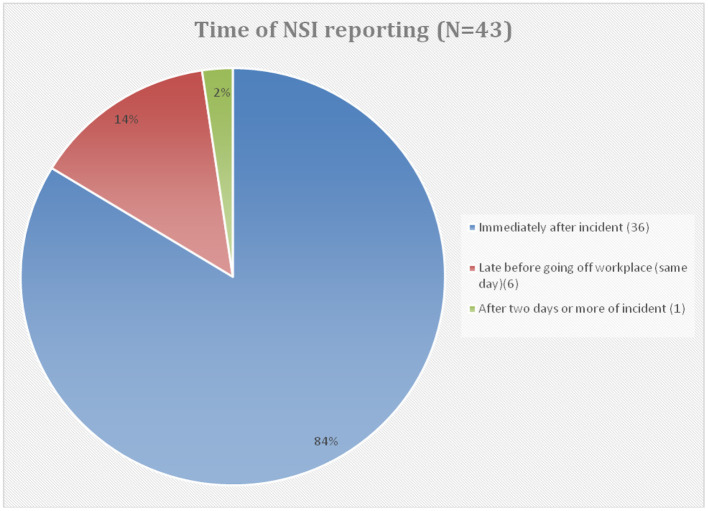
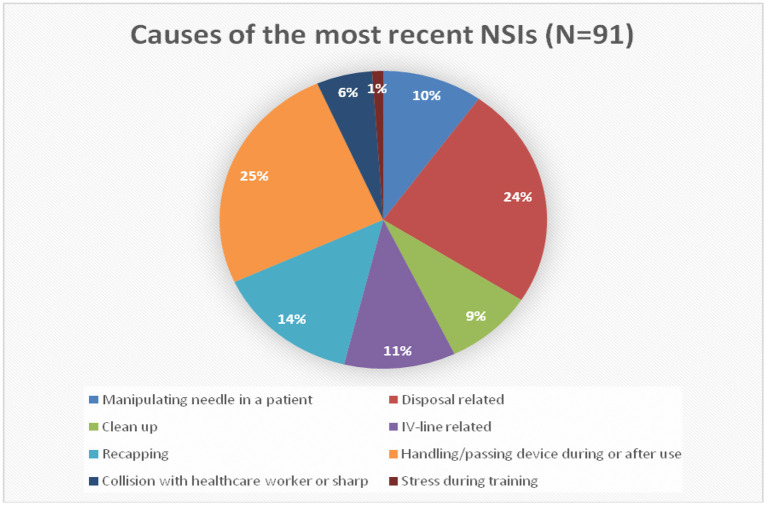
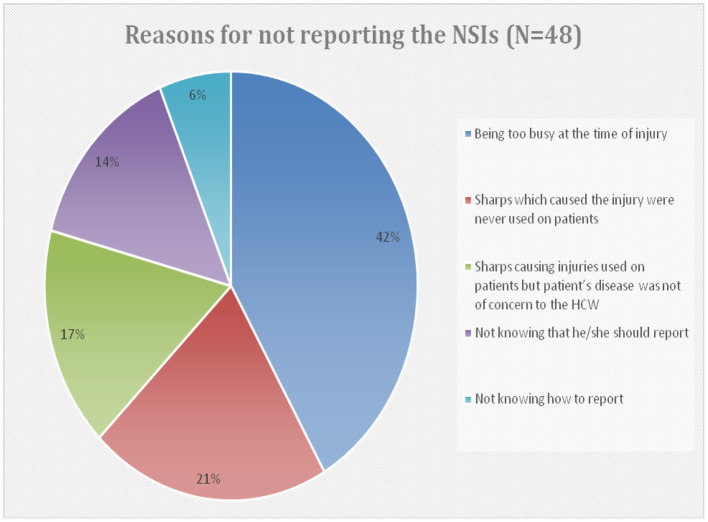
The incidence of needle stick injury among healthcare workers during the previous 12 months was (91/786) 11.57%. Nurses, females, and Saudis reported most needle stick injuries. More than half (52.7%) of the injuries went unreported. About 52.7% of needle stick injuries occurred during using sharp devices, and 42.9% of injuries happened in the patient room. The incidence of needle stick injury was significantly higher among those working at the secondary healthcare level ( = 0.003) and those practicing surgery ( < 0.001). Out of 786 participants, 94.7% knew the definition of needle stick injury, and 81.0% were aware of the procedure and guidelines to follow on sustaining a needle stick injury. Only 61.2% recognized that the recap of the needle is not recommended. Almost half of the participants (47.1%) agreed, and 33.6% strongly agreed that needle stick injury is preventable. A majority of healthcare workers (89.1%) had been vaccinated against Hepatitis B. Nearly 27.5% of healthcare workers incorrectly practiced recapping the needles with two hands and 8.7% bent needles before disposal. Recapping the needles was statistically significantly higher among healthcare workers who had a history of needle stick injury ( = 0. 046).
Needle stick injury and its under reporting among healthcare professionals is still a prevalent risk. Raising awareness among healthcare workers and improving the reporting systems for needle stick injuries to ensure more protection and early use of post-exposure prophylaxis is required. Implementation of safety precautions and safe injection practices and providing engineered safety devices may further reduce the risk.
针刺伤是医疗保健环境中严重的职业健康危害。医护人员面临血液传播疾病的风险,以及这些伤害带来的心理后果。本研究旨在评估过去 12 个月医护人员发生针刺伤的发生率,并评估他们对这些伤害的知识、态度和实践。
本横断面研究于 2019 年 8 月 1 日至 2020 年 2 月 15 日进行,纳入沙特阿拉伯阿巴市的 786 名医护人员。使用结构化问卷收集数据。
过去 12 个月医护人员发生针刺伤的发生率为(91/786)11.57%。护士、女性和沙特人报告的针刺伤最多。超过一半(52.7%)的损伤未报告。约 52.7%的针刺伤发生在使用锐器时,42.9%的损伤发生在病房。在二级保健水平工作的医护人员(=0.003)和从事手术的医护人员(<0.001)发生针刺伤的发生率显著更高。在 786 名参与者中,94.7%知道针刺伤的定义,81.0%知道发生针刺伤时应遵循的程序和指南。只有 61.2%的人认识到不建议重新套针帽。近一半的参与者(47.1%)同意,33.6%强烈同意针刺伤是可以预防的。大多数医护人员(89.1%)已接种乙型肝炎疫苗。近 27.5%的医护人员错误地用双手重新套针帽,8.7%在处理前弯曲针头。针刺伤史的医护人员重新套针帽的情况明显更高(=0.046)。
针刺伤及其在医护人员中的漏报仍然是一个普遍存在的风险。需要提高医护人员的意识,并改善针刺伤报告系统,以确保更多的保护和早期使用接触后预防措施。实施安全预防措施和安全注射操作,并提供工程安全设备,可能进一步降低风险。