Meier M K, Lerch T D, Hanke M S, Tannast M, Steppacher S D, Schmaranzer F
Department für Orthopädische Chirurgie und Traumatologie, Inselspital, Universitätsspital Bern, Universität Bern, Bern, Schweiz.
Department für Diagnostische, Interventionelle und Pädiatrische Radiologie, Inselspital, Universitätsspital Bern, Universität Bern, Bern, Schweiz.
Radiologe. 2022 Mar;62(3):271-284. doi: 10.1007/s00117-022-00973-0. Epub 2022 Mar 3.
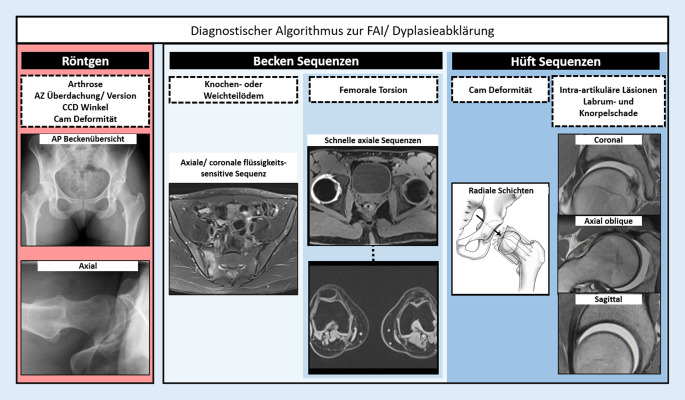
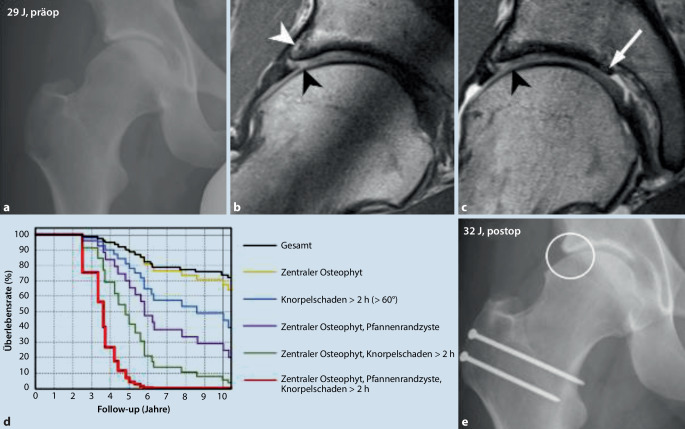
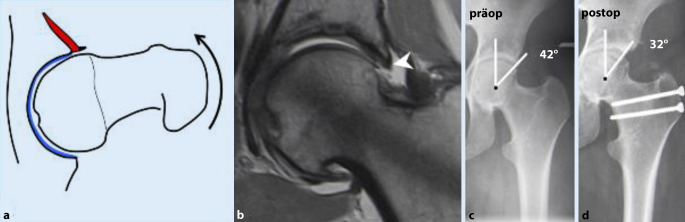
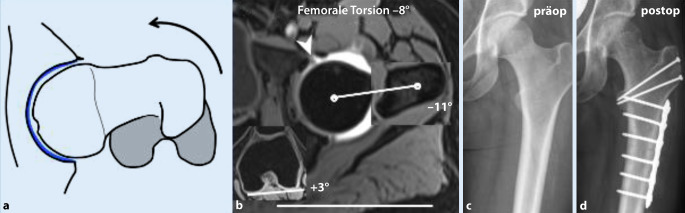
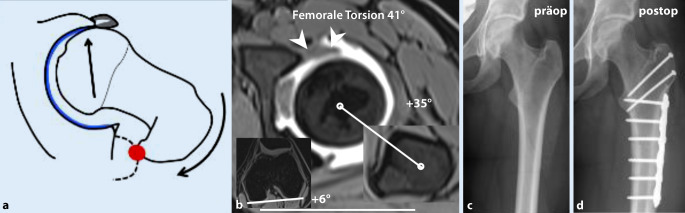
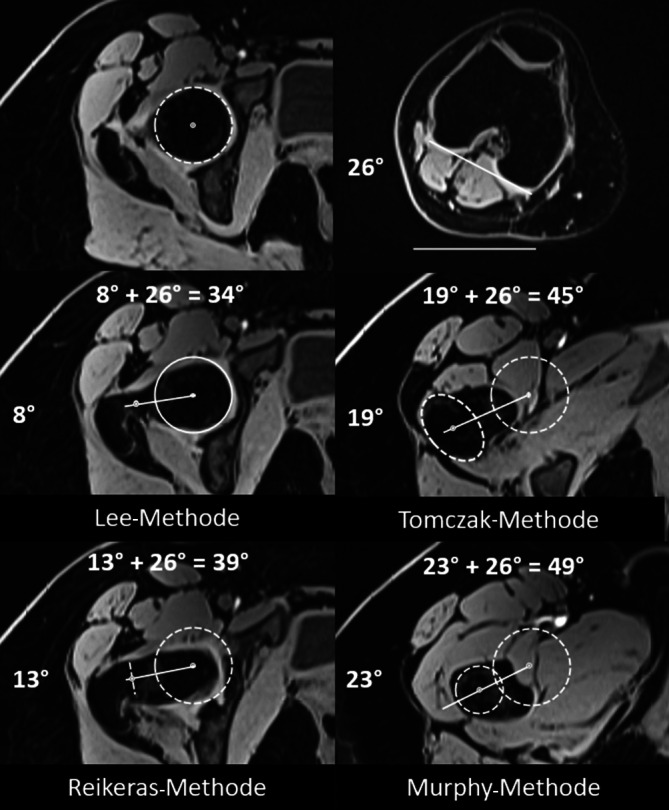
Instability and impingement of the hip are the main pathomechanisms that can lead to chondrolabral damage, painful restriction of motion and early hip osteoarthritis due to increased mechanical stress, even in young patients. The goals of joint-preserving hip surgery are correction of the osseous deformities and chondrolabral damage as well as restoration of joint function. A prerequisite for successful surgery is the identification of the underlying hip pathologies, which can also occur in combination. Dedicated radiographic and magnetic resonance (MR) imaging of osseous morphology and the internal degenerative joint lesions play an essential role for the treatment indications and surgical treatment planning. This article provides a concise overview of the prevalence, pathomechanisms and indicated treatment of hip deformities as well as detailed recommendations on the specific radiological clarification.
髋关节的不稳定和撞击是主要的病理机制,即使在年轻患者中,也可因机械应力增加导致盂唇软骨损伤、疼痛性活动受限和早期髋关节骨关节炎。保髋手术的目标是矫正骨畸形和盂唇软骨损伤以及恢复关节功能。成功手术的一个先决条件是识别潜在的髋关节病变,这些病变也可能合并出现。专门针对骨形态和关节内部退行性病变的放射学和磁共振(MR)成像对于治疗指征和手术治疗规划起着至关重要的作用。本文简要概述了髋关节畸形的患病率、病理机制和推荐治疗方法,以及关于具体放射学检查的详细建议。