Division of Hepatitis and Enterovirus Vaccines, Institute of Biological Products, National Institutes for Food and Drug Control; NHC Key Laboratory of Research on Quality and Standardization of Biotech Products; NMPA Key Laboratory for Quality Research and Evaluation of Biological Products, Beijing, 102629, People's Republic of China.
Institute of Medical Biology, Chinese Academy of Medicine Sciences & Peking Union Medical College, Kunming, 650118, People's Republic of China.
Signal Transduct Target Ther. 2022 Mar 3;7(1):69. doi: 10.1038/s41392-022-00926-y.
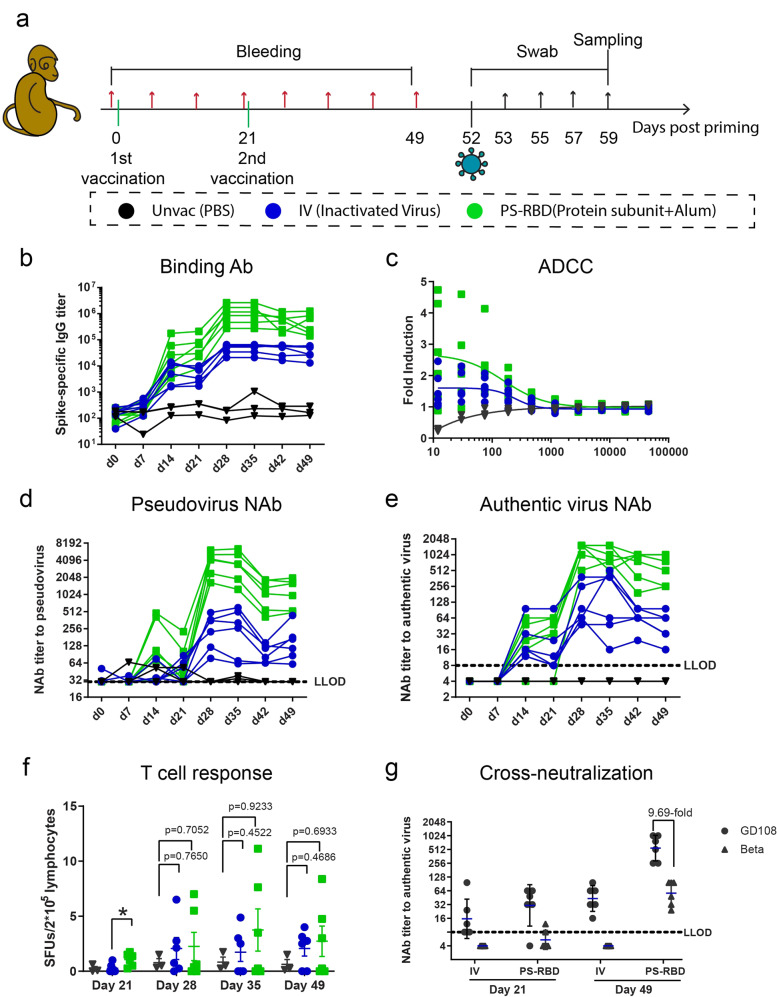
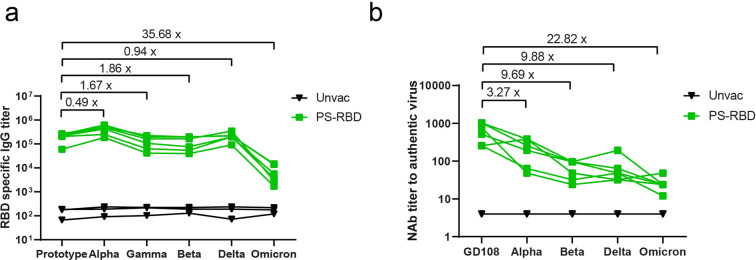
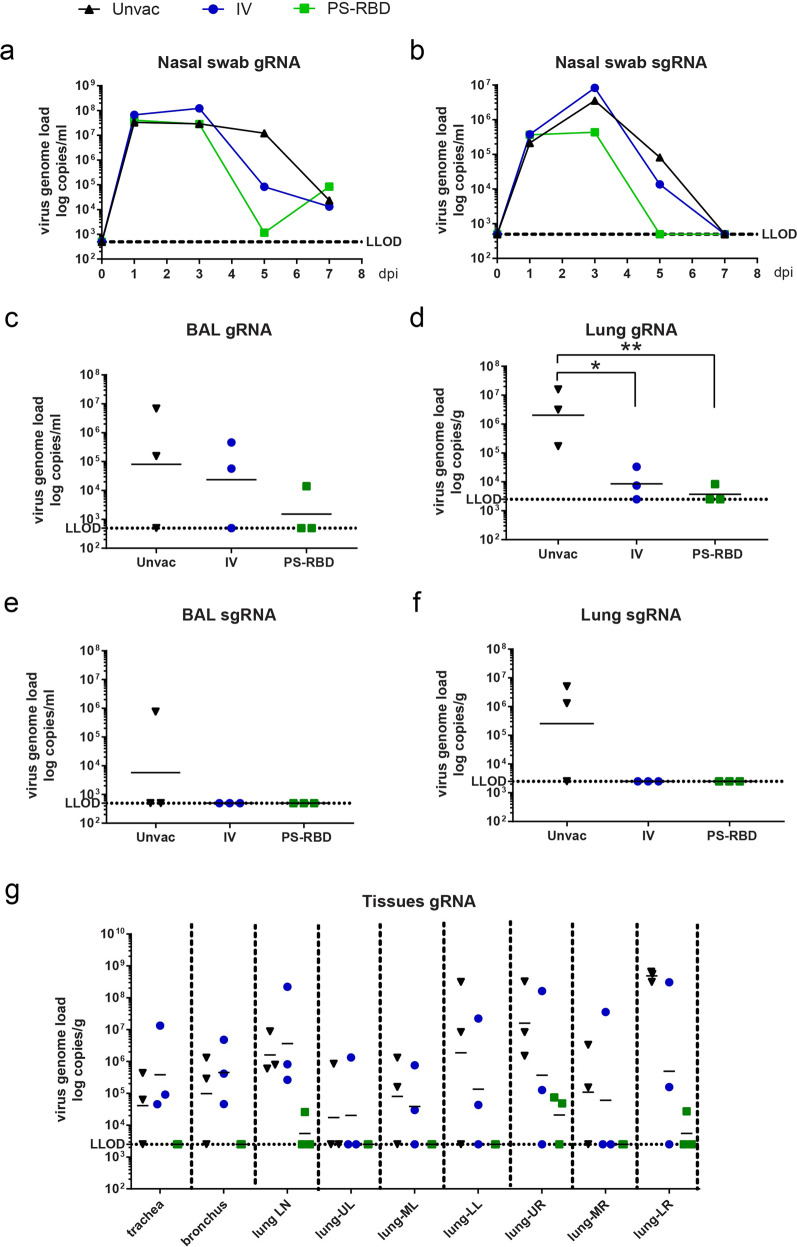
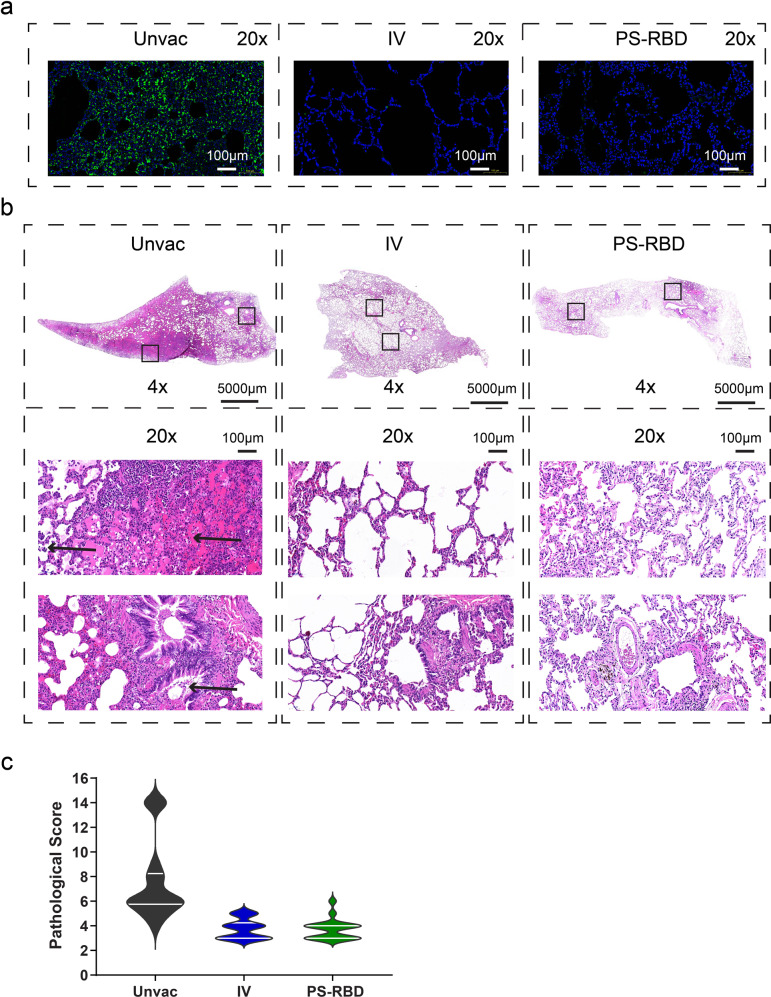
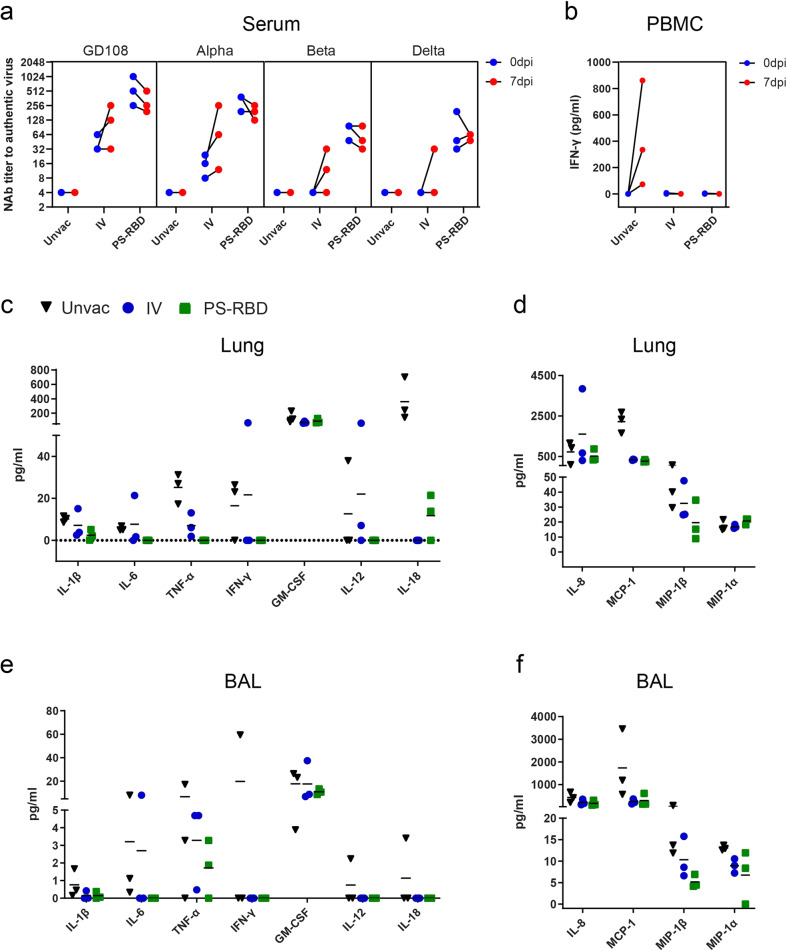
Emerging SARS-CoV-2 variants and the gradually decreasing neutralizing antibodies over time post vaccination have led to an increase in incidents of breakthrough infection across the world. To investigate the potential protective effect of the recombinant protein subunit COVID-19 vaccine targeting receptor-binding domain (RBD) (PS-RBD) and whole inactivated virus particle vaccine (IV) against the variant strains, in this study, rhesus macaques were immunized with PS-RBD or IV vaccine, followed by a Beta variant (B.1.351) challenge. Although neutralizing activity against the Beta variant was reduced compared with that against the prototype, the decreased viral load in both upper and lower respiratory tracts, milder pathological changes, and downregulated inflammatory cytokine levels in lung tissues after challenge demonstrated that PS-RBD and IV still provided effective protection against the Beta variant in the macaque model. Furthermore, PS-RBD-induced macaque sera possessed general binding and neutralizing activity to Alpha, Beta, Delta, and Omicron variants in our study, though the neutralizing antibody (NAb) titers declined by varying degrees, demonstrating potential protection of PS-RBD against current circulating variants of concern (VOCs). Interestingly, although the IV vaccine-induced extremely low neutralizing antibody titers against the Beta variant, it still showed reduction for viral load and significantly alleviated pathological change. Other correlates of vaccine-induced protection (CoP) like antibody-dependent cellular cytotoxicity (ADCC) and immune memory were both confirmed to be existing in IV vaccinated group and possibly be involved in the protective mechanism.
新型 SARS-CoV-2 变异株的出现,以及接种疫苗后中和抗体水平随时间逐渐下降,导致全球突破性感染病例不断增加。为了研究针对受体结合域(RBD)的重组蛋白亚单位 COVID-19 疫苗(PS-RBD)和全灭活病毒颗粒疫苗(IV)对变异株的潜在保护作用,本研究中,恒河猴分别接种 PS-RBD 或 IV 疫苗,然后用 Beta 变异株(B.1.351)进行攻毒。虽然与原型株相比,针对 Beta 变异株的中和活性降低,但在上呼吸道和下呼吸道的病毒载量均降低,肺部病理变化较轻,肺部组织中炎症细胞因子水平下调,表明 PS-RBD 和 IV 仍能在恒河猴模型中对 Beta 变异株提供有效保护。此外,PS-RBD 诱导的恒河猴血清在本研究中对 Alpha、Beta、Delta 和 Omicron 变异株具有普遍的结合和中和活性,尽管中和抗体(NAb)滴度不同程度下降,表明 PS-RBD 对当前流行的关切变异株(VOCs)具有潜在保护作用。有趣的是,尽管 IV 疫苗对 Beta 变异株的中和抗体滴度极低,但它仍能降低病毒载量,并显著减轻病理变化。疫苗诱导保护的其他相关因素(CoP),如抗体依赖性细胞毒性(ADCC)和免疫记忆,在 IV 疫苗接种组中均得到证实,并可能参与保护机制。