Faculty of Information Science and Electrical Engineering, Kyushu University, Fukuoka, Japan.
Global Communication Center, Grameen Communications, Dhaka, Bangladesh.
Sci Rep. 2022 Mar 4;12(1):3601. doi: 10.1038/s41598-022-07571-z.
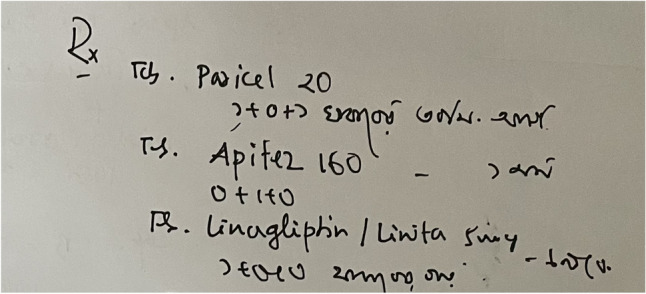
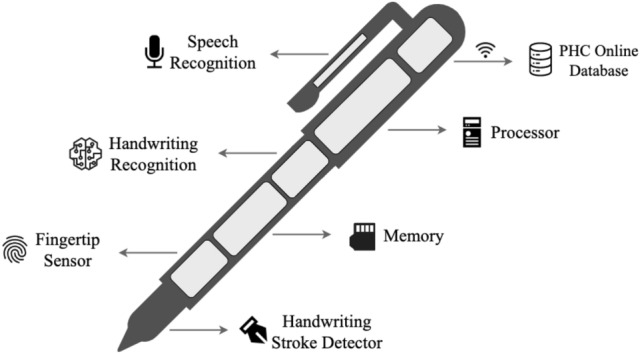
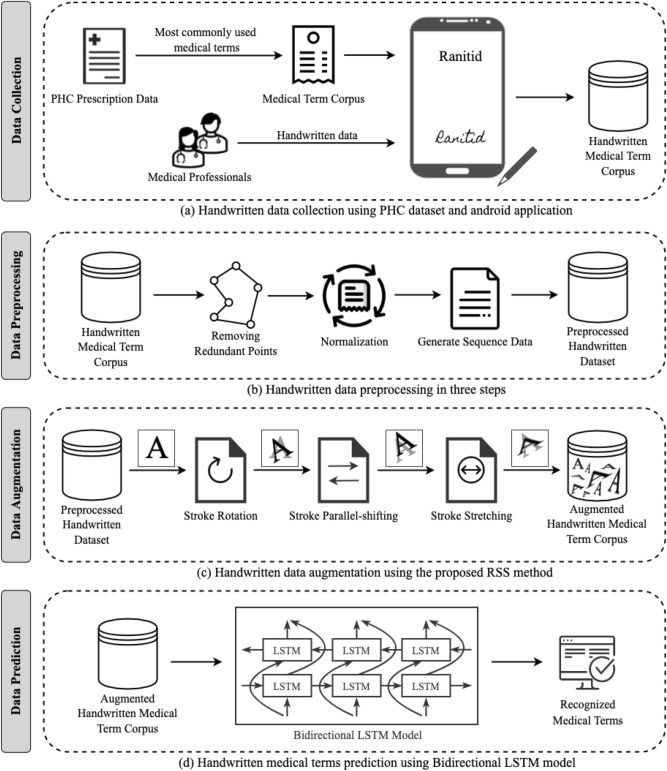
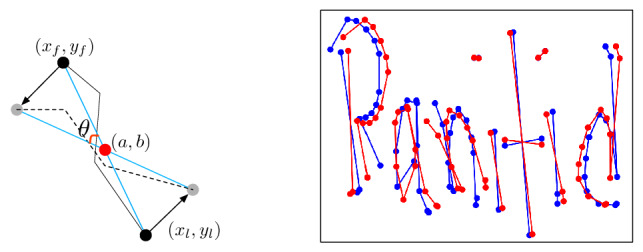
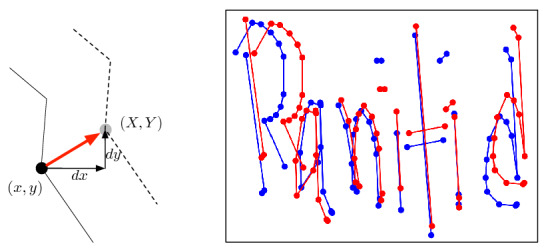
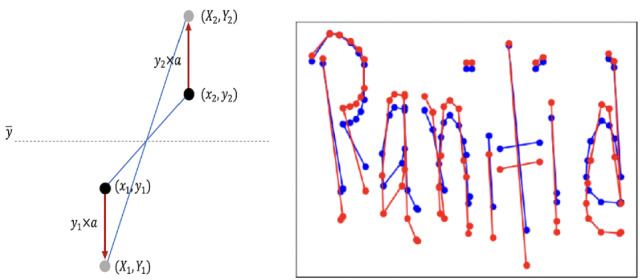
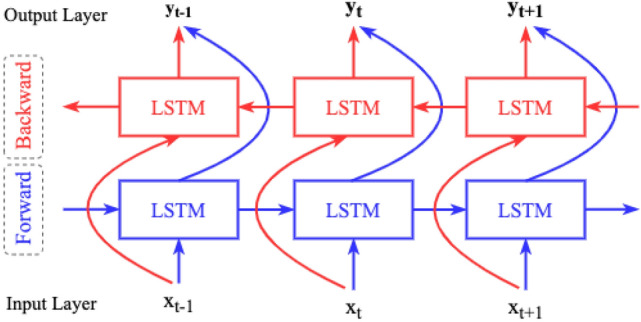
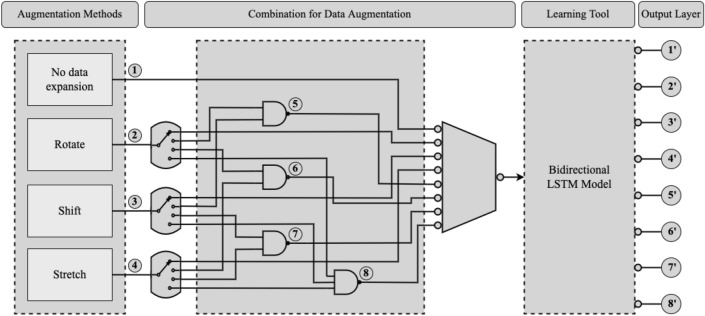
Doctors in developing countries are too busy to write digital prescriptions. Ninety-seven percent of Bangladeshi doctors write handwritten prescriptions, the majority of which lack legibility. Prescriptions are harder to read as they contain multiple languages. This paper proposes a machine learning approach to recognize doctors' handwriting to create digital prescriptions. A 'Handwritten Medical Term Corpus' dataset is developed containing 17,431 samples of 480 medical terms. In order to improve the recognition efficiency, this paper introduces a data augmentation technique to widen the variety and increase the sample size. A sequence of line data is extracted from the augmented images of 1,591,100 samples and fed to a Bidirectional Long Short-Term Memory (LSTM) network. Data augmentation includes pattern Rotating, Shifting, and Stretching (RSS). Eight different combinations are applied to evaluate the strength of the proposed method. The result shows 93.0% average accuracy (max: 94.5%, min: 92.1%) using Bidirectional LSTM and RSS data augmentation. This accuracy is 19.6% higher than the recognition result with no data expansion. The proposed handwritten recognition technology can be installed in a smartpen for busy doctors which will recognize the writings and digitize them in real-time. It is expected that the smartpen will contribute to reduce medical errors, save medical costs and ensure healthy living in developing countries.
发展中国家的医生太忙了,没时间开电子处方。97%的孟加拉国医生开手写处方,其中大部分难以辨认。由于处方中包含多种语言,因此更难阅读。本文提出了一种机器学习方法来识别医生的手写体,以创建电子处方。开发了一个“手写医疗术语语料库”数据集,其中包含 480 个医疗术语的 17431 个样本。为了提高识别效率,本文引入了一种数据增强技术来拓宽种类并增加样本量。从 1591100 个样本的增强图像中提取一系列行数据,并将其输入到双向长短期记忆(LSTM)网络中。数据增强包括模式旋转、移位和拉伸(RSS)。应用了八种不同的组合来评估所提出方法的强度。结果表明,使用双向 LSTM 和 RSS 数据增强的平均准确率为 93.0%(最高:94.5%,最低:92.1%)。这一准确率比没有数据扩展的识别结果高 19.6%。所提出的手写识别技术可以安装在智能笔中,供忙碌的医生使用,实时识别手写内容并将其数字化。预计智能笔将有助于减少医疗错误、节省医疗成本并确保发展中国家的健康生活。