Departments of Chemical Engineering, University of Texas, Austin, Texas, USA.
Departments of Molecular Biosciences, University of Texas, Austin, Texas, USA.
J Biol Chem. 2022 Apr;298(4):101798. doi: 10.1016/j.jbc.2022.101798. Epub 2022 Mar 3.
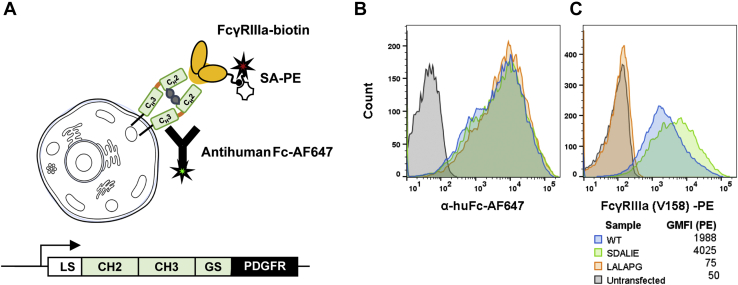
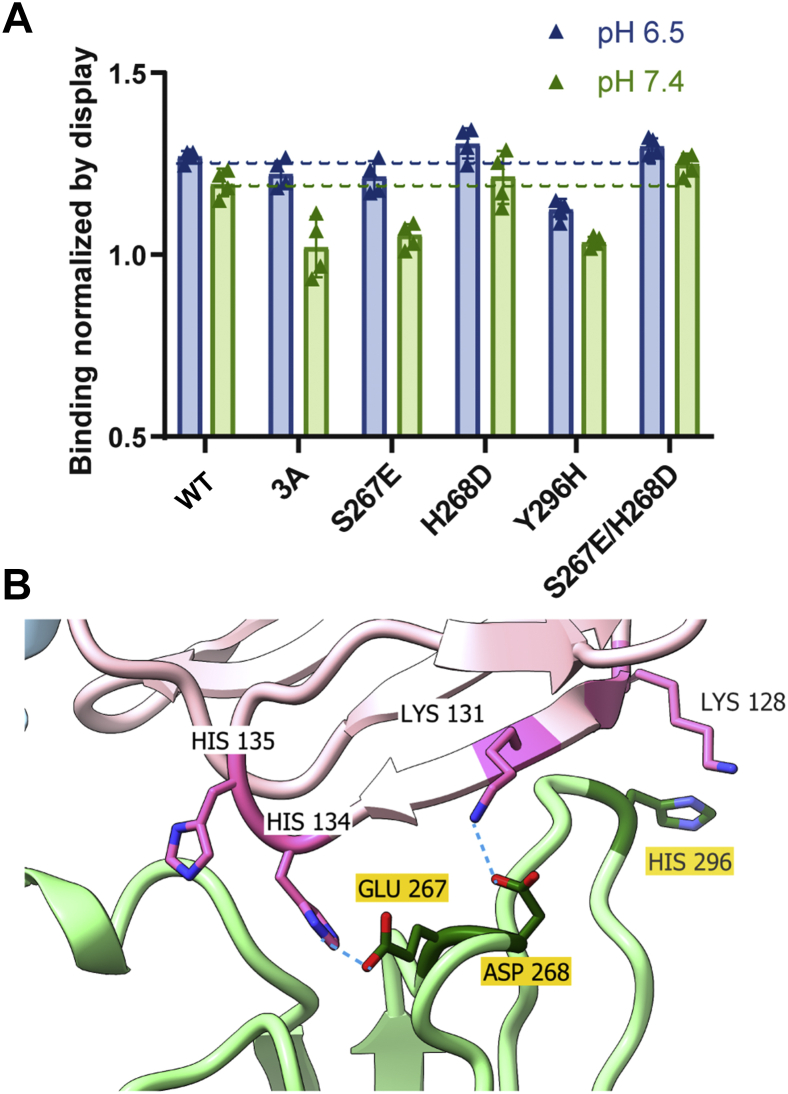
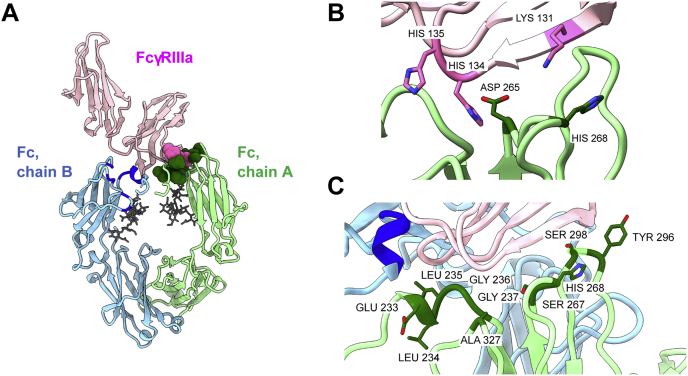
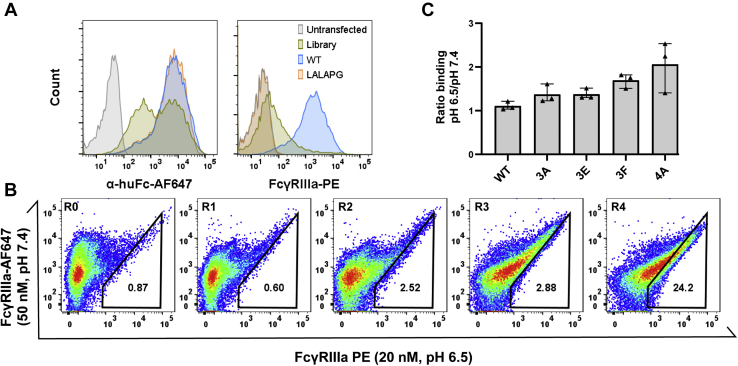
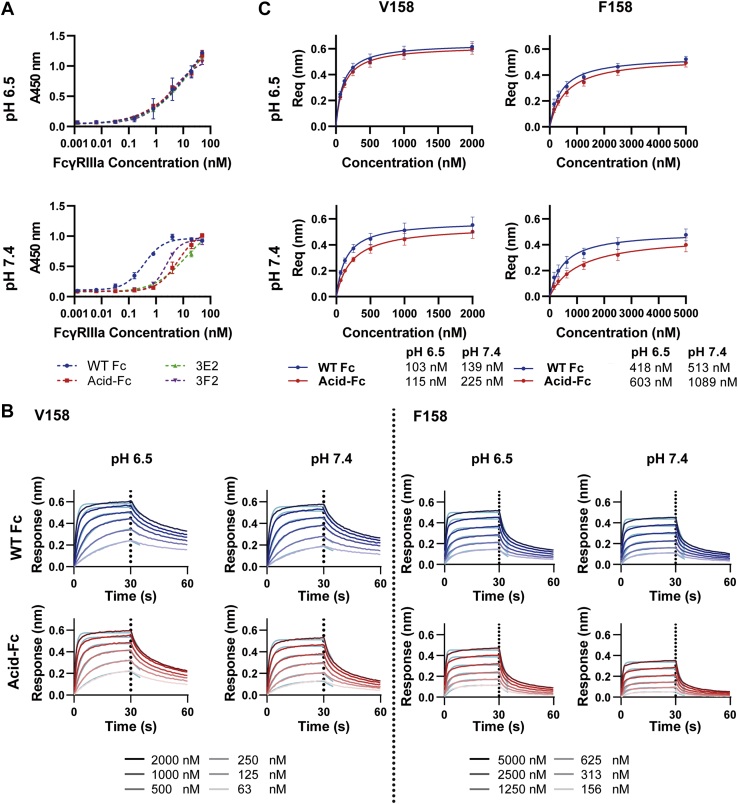
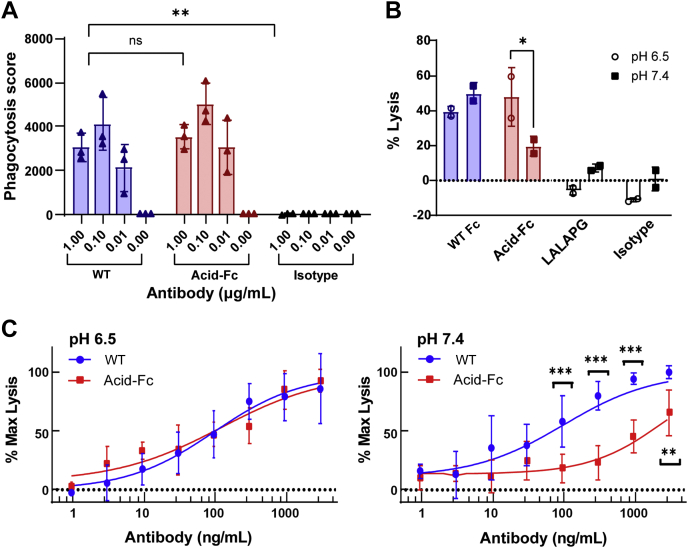
Despite the exquisite specificity and high affinity of antibody-based cancer therapies, treatment side effects can occur since the tumor-associated antigens targeted are also present on healthy cells. However, the low pH of the tumor microenvironment provides an opportunity to develop conditionally active antibodies with enhanced tumor specificity. Here, we engineered the human IgG1 Fc domain to enhance pH-selective binding to the receptor FcγRIIIa and subsequent antibody-dependent cellular cytotoxicity (ADCC). We displayed the Fc domain on the surface of mammalian cells and generated a site-directed library by altering Fc residues at the Fc-FcγRIIIa interface to support interactions with positively charged histidine residues. We then used a competitive staining and flow cytometric selection strategy to isolate Fc variants exhibiting reduced FcγRIIIa affinities at neutral pH, but physiological affinities at the tumor-typical pH 6.5. We demonstrate that antibodies composed of Fab arms binding the breast cell epithelial marker Her2 and the lead Fc variant, termed acid-Fc, exhibited an ∼2-fold pH-selectivity for FcγRIIIa binding based on the ratio of equilibrium dissociation constants K/K, due to a faster dissociation rate at pH 7.4. Finally, in vitro ADCC assays with human FcγRIIIa-positive natural killer and Her2-positive target cells demonstrated similar activities for anti-Her2 antibodies bearing the wild-type or acid-Fc at pH 6.5, but nearly 20-fold reduced ADCC for acid-Fc at pH 7.4, based on EC ratios. This work shows the promise of mammalian cell display for Fc engineering and the feasibility of pH-selective Fc activation to provide a second dimension of selective tumor cell targeting.
尽管基于抗体的癌症疗法具有极高的特异性和亲和力,但由于靶向的肿瘤相关抗原也存在于健康细胞上,因此可能会出现治疗副作用。然而,肿瘤微环境的低 pH 值为开发具有增强肿瘤特异性的条件性激活抗体提供了机会。在这里,我们对人 IgG1 Fc 结构域进行了工程改造,以增强对受体 FcγRIIIa 的 pH 选择性结合以及随后的抗体依赖性细胞毒性 (ADCC)。我们将 Fc 结构域展示在哺乳动物细胞表面,并通过改变 Fc-FcγRIIIa 界面上的 Fc 残基来生成一个定点文库,以支持与带正电荷的组氨酸残基的相互作用。然后,我们使用竞争性染色和流式细胞术选择策略来分离在中性 pH 下 FcγRIIIa 亲和力降低但在肿瘤典型 pH 6.5 下具有生理亲和力的 Fc 变体。我们证明,由 Fab 臂结合乳腺癌细胞上皮标志物 Her2 和领先的 Fc 变体(称为酸-Fc)组成的抗体在 pH 6.5 下对 FcγRIIIa 结合具有约 2 倍的 pH 选择性,这是由于在 pH 7.4 时解离速率更快所致。最后,在 pH 6.5 下,用含有野生型或酸-Fc 的抗 Her2 抗体进行的体外 ADCC 测定显示,与野生型相比,对于 pH 7.4 的 ADCC 降低了近 20 倍酸-Fc,基于 EC 比。这项工作展示了哺乳动物细胞展示用于 Fc 工程的前景以及 pH 选择性 Fc 激活的可行性,以提供肿瘤细胞靶向的第二个维度。