Department of Interdisciplinary Oncology, Stanley S. Scott Cancer Center, LSU-LCMC Cancer Center, Louisiana State University Health Sciences Center, 1700 Tulane Ave, Room 911, New Orleans, LA 70112, USA; Department of Genetics, Louisiana State University Health Sciences Center, New Orleans, LA, USA.
Department of Surgery, Ochsner Clinic Foundation, New Orleans, LA, USA.
EBioMedicine. 2022 Mar;77:103910. doi: 10.1016/j.ebiom.2022.103910. Epub 2022 Mar 3.
Low-density neutrophils (LDN) are increased in several inflammatory diseases and may also play a role in the low-grade chronic inflammation associated with obesity. Here we explored their role in obesity, determined their gene signatures, and assessed the effect of bariatric surgery.
We compared the number, function, and gene expression profiles of circulating LDN in morbidly obese patients (MOP, n=27; body mass index (BMI) > 40 Kg/m) and normal-weight controls (NWC, n=20; BMI < 25 Kg/m) in a case-control study. Additionally, in a prospective longitudinal study, we measured changes in the frequency of LDN after bariatric surgery (n=36) and tested for associations with metabolic and inflammatory parameters.
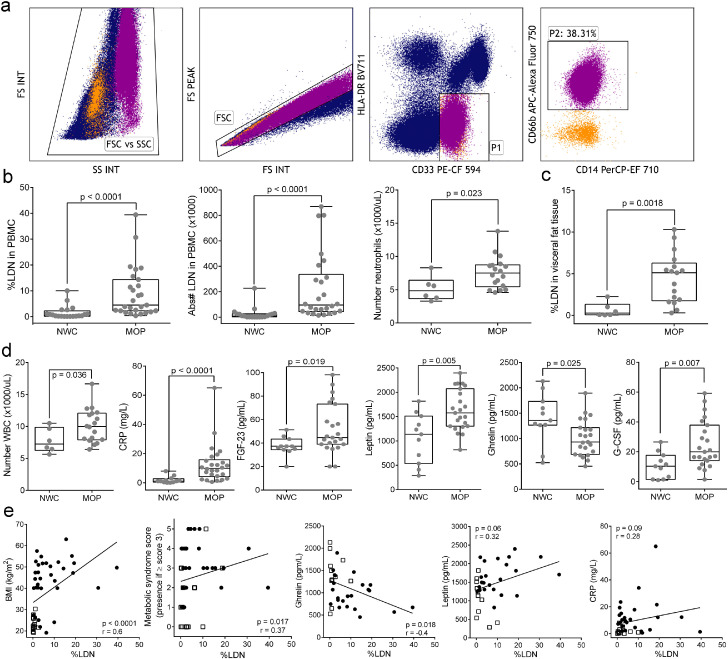
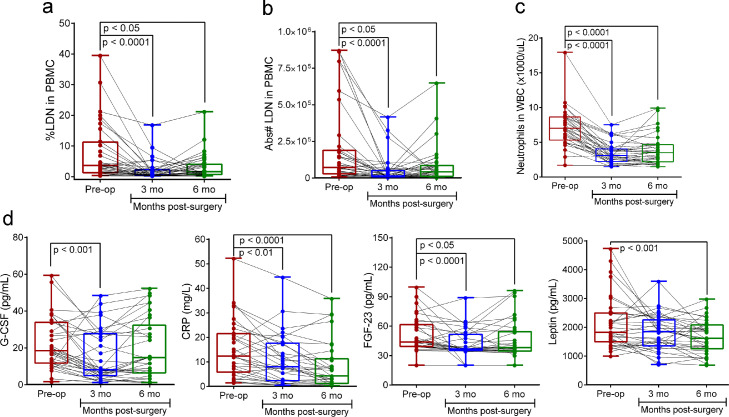
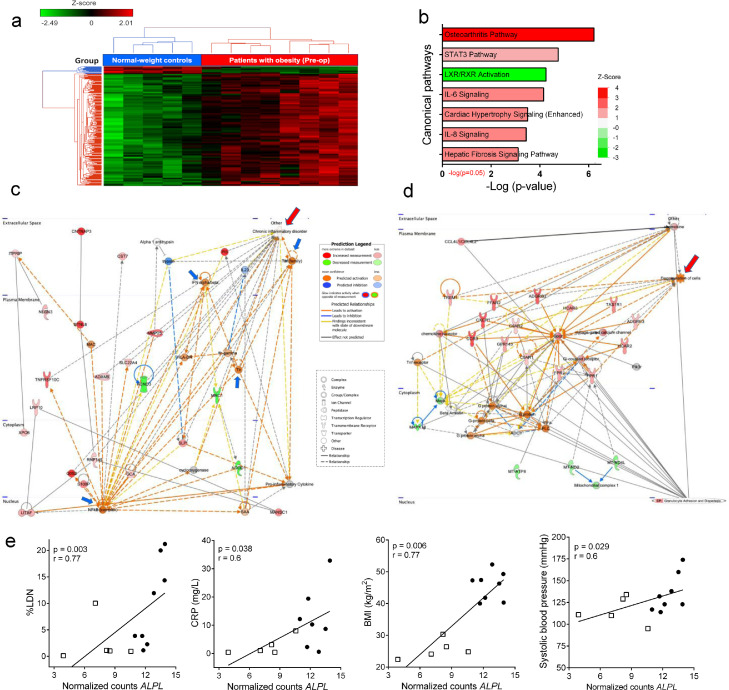
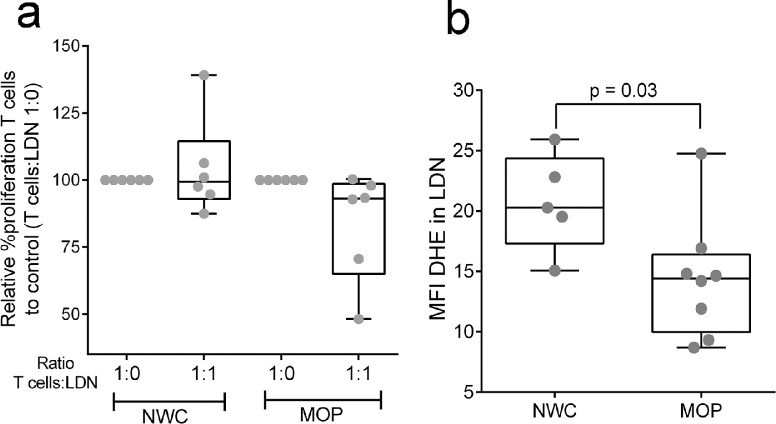
LDN and inflammatory markers were significantly increased in MOP compared to NWC. Transcriptome analysis showed increased neutrophil-related gene expression signatures associated with inflammation, neutrophil activation, and immunosuppressive function. However, LDN did not suppress T cells proliferation and produced low levels of reactive oxygen species (ROS). Circulating LDN in MOP significantly decreased after bariatric surgery in parallel with BMI, metabolic syndrome, and inflammatory markers.
Obesity increases LDN displaying an inflammatory gene signature. Our results suggest that LDN may represent a neutrophil subset associated with chronic inflammation, a feature of obesity that has been previously associated with the appearance and progression of co-morbidities. Furthermore, bariatric surgery, as an efficient therapy for severe obesity, reduces LDN in circulation and improves several components of the metabolic syndrome supporting its recognized anti-inflammatory and beneficial metabolic effects.
This work was supported in part by grants from the National Institutes of Health (NIH; 5P30GM114732-02, P20CA233374 - A. Ochoa and L. Miele), Pennington Biomedical NORC (P30DK072476 - E. Ravussin & LSU-NO Stanley S. Scott Cancer Center and Louisiana Clinical and Translational Science Center (LACaTS; U54-GM104940 - J. Kirwan).
在几种炎症性疾病中,低密度中性粒细胞(LDN)增加,并且在与肥胖相关的低度慢性炎症中可能也发挥作用。在此,我们研究了其在肥胖中的作用,确定了它们的基因特征,并评估了减重手术的效果。
我们在病例对照研究中比较了病态肥胖患者(MOP,n=27;体重指数(BMI)> 40 Kg/m)和正常体重对照组(NWC,n=20;BMI < 25 Kg/m)循环中 LDN 的数量、功能和基因表达谱。此外,在一项前瞻性纵向研究中,我们测量了减重手术后 LDN 频率的变化,并测试了其与代谢和炎症参数的关联。
与 NWC 相比,MOP 中的 LDN 和炎症标志物显著增加。转录组分析显示,与炎症、中性粒细胞激活和免疫抑制功能相关的中性粒细胞相关基因表达谱增加。然而,LDN 并未抑制 T 细胞增殖,并且产生的活性氧(ROS)水平较低。MOP 中的循环 LDN 在减重手术后与 BMI、代谢综合征和炎症标志物平行显著降低。
肥胖增加了表现出炎症基因特征的 LDN。我们的结果表明,LDN 可能代表与慢性炎症相关的中性粒细胞亚群,这是肥胖的一个特征,先前与合并症的出现和进展有关。此外,减重手术作为一种治疗严重肥胖的有效疗法,可减少循环中的 LDN,并改善代谢综合征的多个成分,支持其公认的抗炎和有益的代谢作用。
这项工作得到了美国国立卫生研究院(NIH;5P30GM114732-02、P20CA233374-A. Ochoa 和 L. Miele)、彭宁顿生物医学 NORC(P30DK072476-E. Ravussin 和 LSU-NO 斯坦利 S. 斯科特癌症中心和路易斯安那州临床和转化科学中心(LACaTS;U54-GM104940-J. Kirwan)的部分资助。