Department of Urology, The Third Xiangya Hospital, Central South University, Changsha, China.
Department of Nuclear Medicine, Hunan Cancer Hospital Affiliated to Central South University, Changsha, China.
Front Endocrinol (Lausanne). 2022 Feb 16;13:783855. doi: 10.3389/fendo.2022.783855. eCollection 2022.
Extramedullary plasmacytoma (EMP) can occur in various parts of the body. It is generally accepted that the highest site of occurrence is the head and neck region (80% to 90%), followed by the gastrointestinal tract and the skin. It is worth mentioning that the site of disease, in this case, was the urethral meatus, which is extremely rare in clinical practice.
A 50-year-old female complained of an episode of painless gross hematuria without symptoms of frequent urination, urgency, abdominal pain, abdominal distension, fever, or oliguria. The patient has no history of smoking or drinking and denied any family history of solid malignancy or hematological disease.
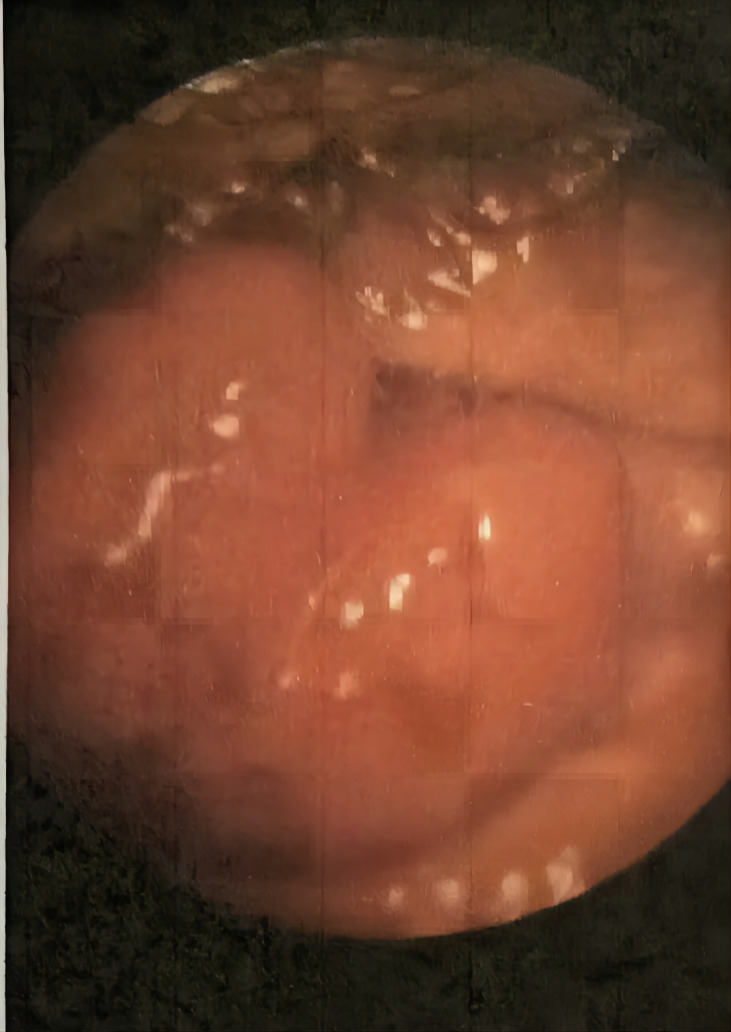
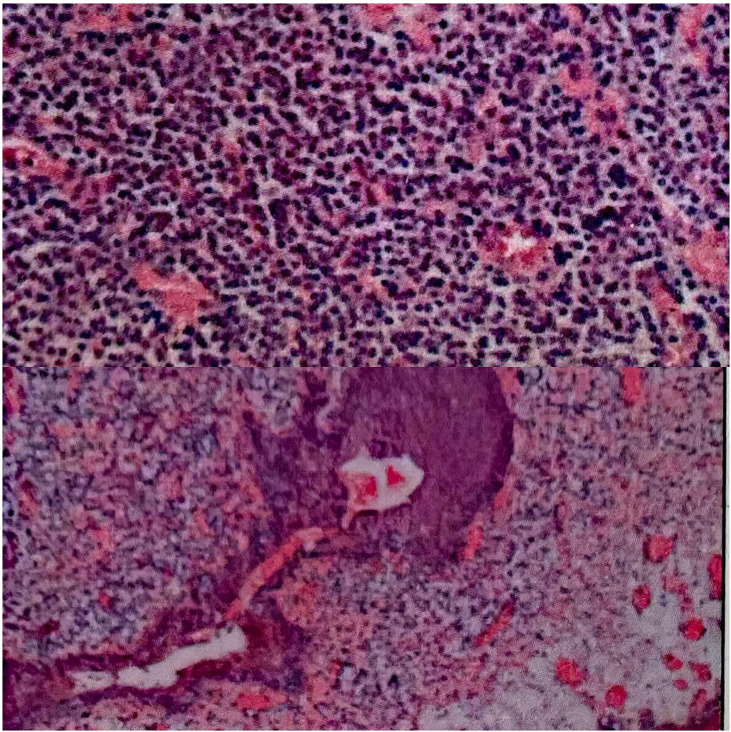
Urethrocystoscopy revealed urethral polypoid hyperplasia, which we initially thought could be a urethral caruncle. The patient was asked to undergo caruncle resection after 1 week of potassium permanganate sitz bath, and postoperative pathology revealed plasmacytoma. After that, a whole-body MRI showed no other lesions. She received postoperative radiotherapy.
During radiotherapy, the patient's condition and appetite were fair, and the skin mucositis was I°. Pelvic contrast-enhanced MRI and whole-body PET-CT 6 months after urethral meatus lumpectomy and radiotherapy showed changes without obvious abnormal signs. No recurrence or metastasis was detected after one year of follow-up.
Urinary EMP is a rare disease. It is not easy to diagnose due to its rare site of occurrence and non-specific symptoms. The diagnosis of EMP requires a combination of imaging studies and pathological findings. Currently, surgery combined with radiotherapy or radiotherapy alone is the mainstay treatment and usually results in an acceptable local control rate. At the same time, chemotherapy cannot be ignored.
髓外浆细胞瘤(EMP)可发生于身体的各个部位。一般认为发生部位最高的是头颈部(80%~90%),其次是胃肠道和皮肤。值得一提的是,本例疾病部位为尿道外口,在临床实践中极为罕见。
一名 50 岁女性因无痛性肉眼血尿就诊,无尿频、尿急、腹痛、腹胀、发热或少尿等症状。患者无吸烟或饮酒史,否认有实体恶性肿瘤或血液系统疾病家族史。
尿道膀胱镜检查发现尿道息肉样增生,我们最初认为可能是尿道肉阜。患者在 1 周的高锰酸钾坐浴后要求行肉阜切除术,术后病理提示浆细胞瘤。随后,全身 MRI 检查未发现其他病变。她接受了术后放疗。
在放疗期间,患者的病情和食欲良好,皮肤黏膜炎为 1 度。尿道外口肿块切除和放疗 6 个月后的盆腔增强 MRI 和全身 PET-CT 显示无明显异常征象的变化。随访 1 年后未发现复发或转移。
尿路上皮 EMP 是一种罕见疾病。由于其罕见的发生部位和非特异性症状,诊断并不容易。EMP 的诊断需要结合影像学研究和病理发现。目前,手术联合放疗或单纯放疗是主要的治疗方法,通常可获得可接受的局部控制率。同时,不能忽视化疗。