Department of Hepatopancreatobiliary Surgery, Ningbo Medical Center Lihuili Hospital, Ningbo University, 315040, Ningbo, Zhejiang, China.
Medical quality management office, Ningbo Medical Center Lihuili Hospital, Ningbo University, 315040, Ningbo, Zhejiang, China.
BMC Cancer. 2022 Mar 7;22(1):249. doi: 10.1186/s12885-022-09345-2.
Inflammation plays a significant role in tumour development, progression, and metastasis. In this study, we focused on comparing the predictive potential of inflammatory markers for overall survival (OS), recurrence-free survival (RFS), and 1- and 2-year RFS in hepatocellular carcinoma (HCC) patients.
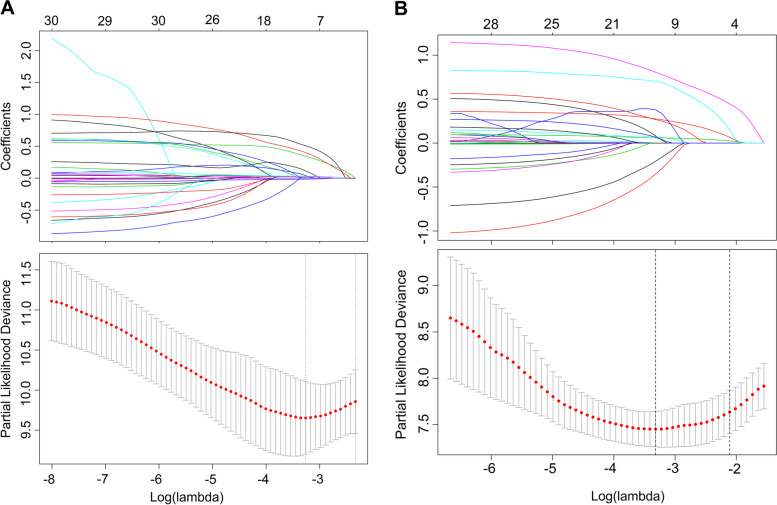
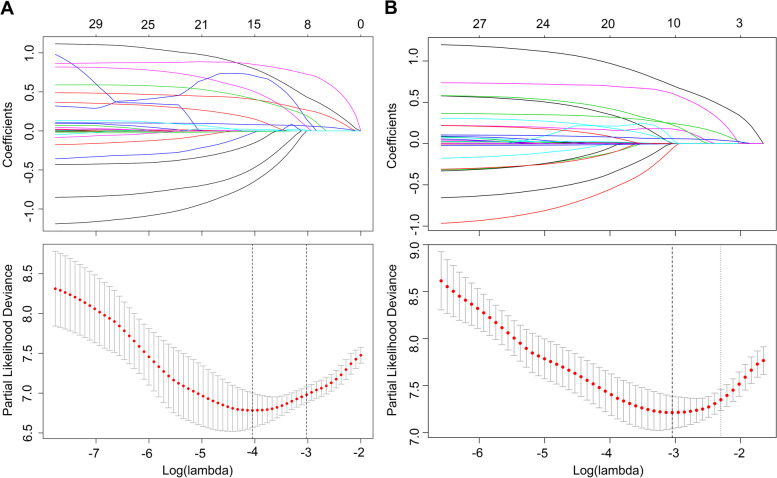
A total of 360 HCC patients were included in this study. A LASSO regression analysis model was used for data dimensionality reduction and element selection. Univariate and multivariate Cox regression analyses were performed to identify the independent risk factors for HCC prognosis. Nomogram prediction models were established and decision curve analysis (DCA) was conducted to determine the clinical utility of the nomogram model.
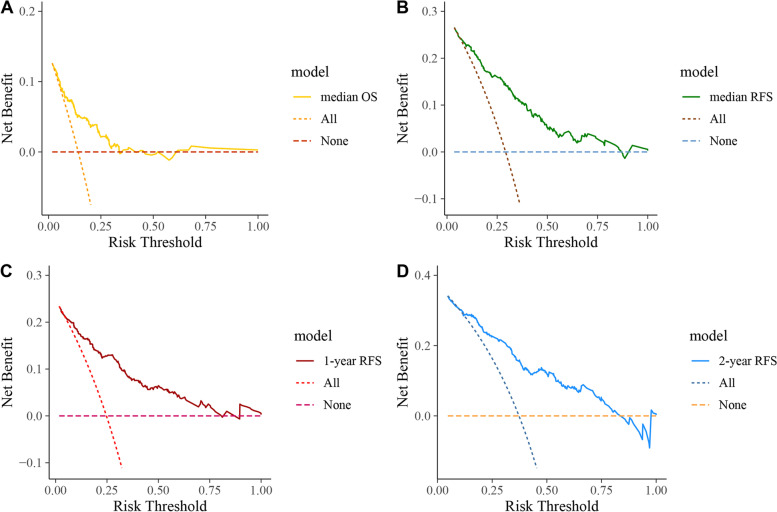
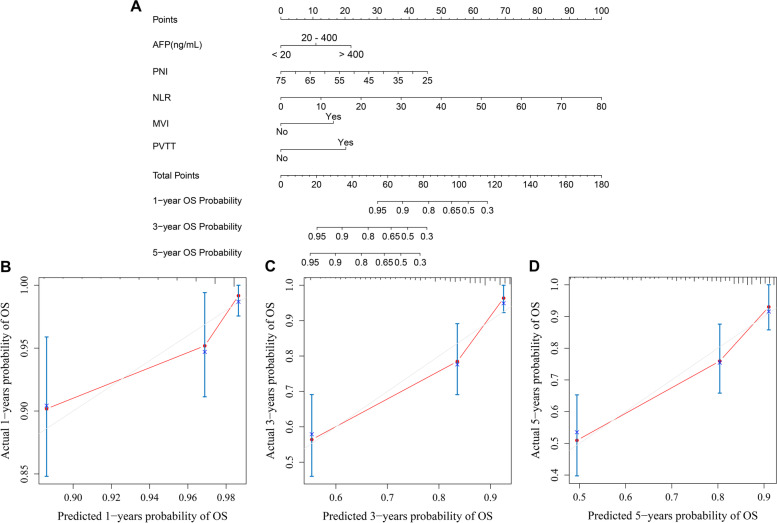
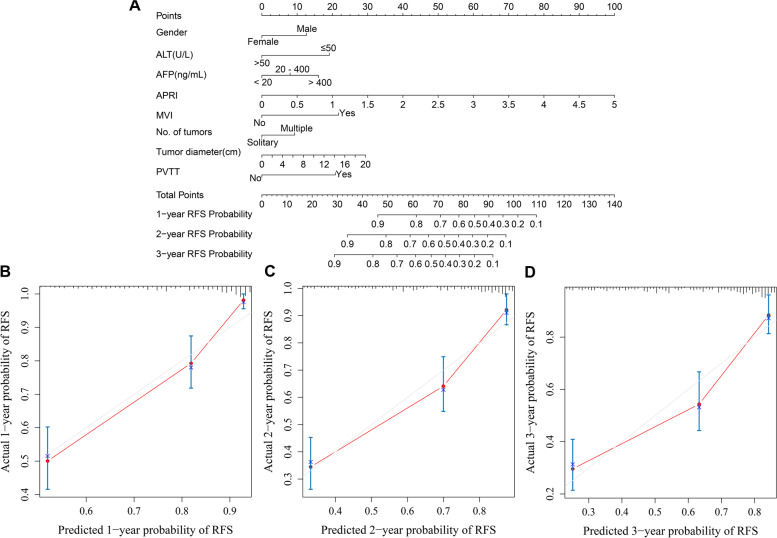
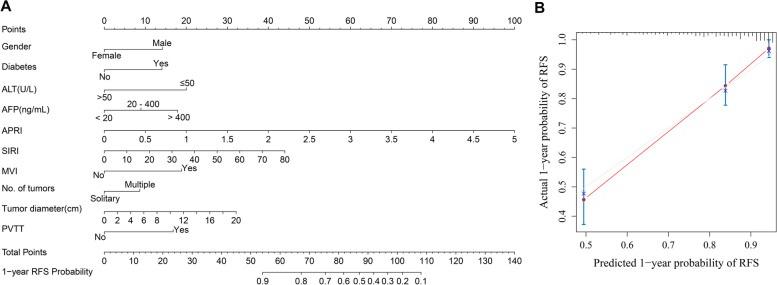
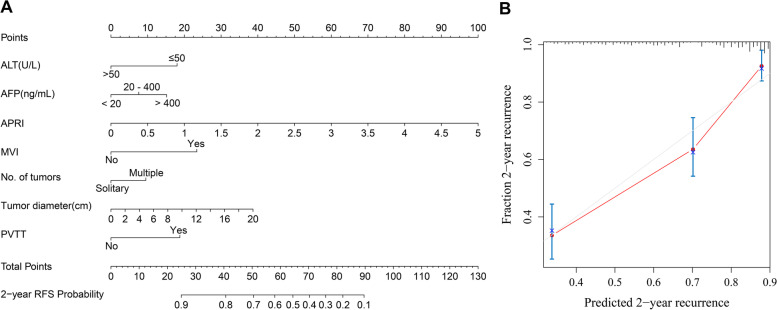
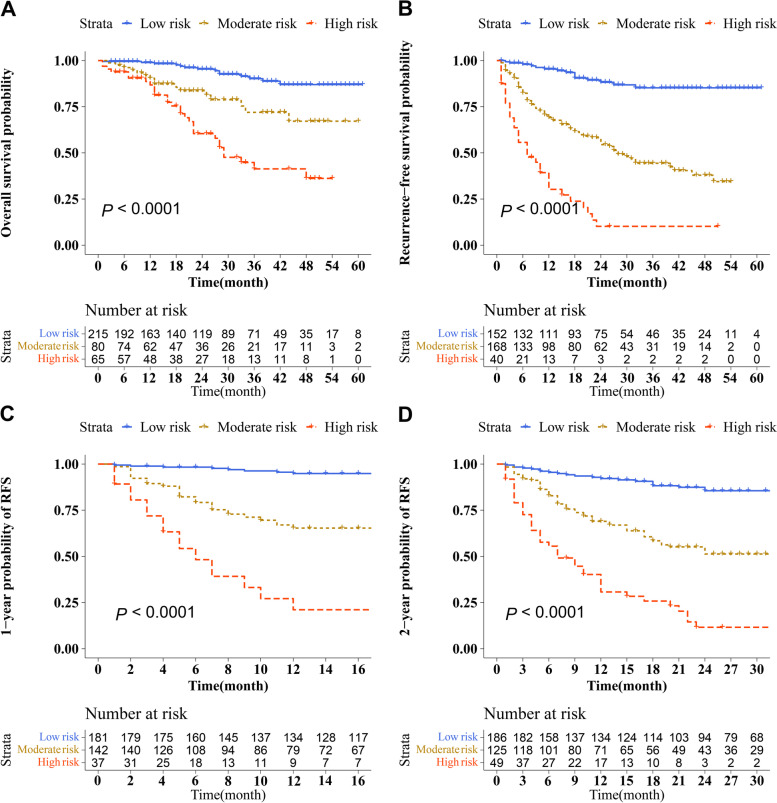
Multivariate Cox regression analysis indicated that the prognostic nutritional index (PNI) and neutrophil-to-lymphocyte ratio (NLR) were independent prognostic factors of OS, and aspartate aminotransferase-to-platelet ratio (APRI) was a common independent prognostic factor among RFS, 1-year RFS, and 2-year RFS. The systemic inflammation response index (SIRI) was an independent prognostic factor for 1-year RFS in HCC patients after curative resection. Nomograms established and achieved a better concordance index of 0.772(95% CI: 0.730-0.814), 0.774(95% CI: 0.734-0.815), 0.809(95% CI: 0.766-0.852), and 0.756(95% CI: 0.696-0.816) in predicting OS, RFS, 1-year RFS, and 2-year RFS respectively. The risk scores calculated by nomogram models divided HCC patients into high-, moderate- and low-risk groups (P < 0.05). DCA analysis revealed that the nomogram models could augment net benefits and exhibited a wider range of threshold probabilities in the prediction of HCC prognosis.
The nomograms showed high predictive accuracy for OS, RFS, 1-year RFS, and 2-year RFS in HCC patients after surgical resection. The nomograms could be useful clinical tools to guide a rational and personalized treatment approach and prognosis judgement.
炎症在肿瘤的发生、发展和转移中起着重要作用。本研究旨在比较炎症标志物对肝细胞癌(HCC)患者总生存期(OS)、无复发生存期(RFS)以及 1 年和 2 年 RFS 的预测潜力。
本研究共纳入 360 例 HCC 患者。采用 LASSO 回归分析模型进行数据降维和元素选择。进行单因素和多因素 Cox 回归分析,以确定 HCC 预后的独立危险因素。建立列线图预测模型,并进行决策曲线分析(DCA)以确定列线图模型的临床实用性。
多因素 Cox 回归分析表明,预后营养指数(PNI)和中性粒细胞与淋巴细胞比值(NLR)是 OS 的独立预后因素,天门冬氨酸氨基转移酶与血小板比值(APRI)是 RFS、1 年 RFS 和 2 年 RFS 的共同独立预后因素。系统炎症反应指数(SIRI)是 HCC 患者根治性切除术后 1 年 RFS 的独立预后因素。建立的列线图并达到了更好的一致性指数 0.772(95%CI:0.730-0.814)、0.774(95%CI:0.734-0.815)、0.809(95%CI:0.766-0.852)和 0.756(95%CI:0.696-0.816),分别用于预测 OS、RFS、1 年 RFS 和 2 年 RFS。列线图模型计算的风险评分将 HCC 患者分为高、中、低风险组(P < 0.05)。DCA 分析表明,列线图模型可提高净收益,并在预测 HCC 预后方面具有更广泛的阈值概率范围。
列线图对 HCC 患者手术后的 OS、RFS、1 年 RFS 和 2 年 RFS 具有较高的预测准确性。列线图可以成为指导合理和个性化治疗方法和预后判断的有用临床工具。