Wassermann Birgit, Abdelfattah Ahmed, Müller Henry, Korsten Lise, Berg Gabriele
Institute of Environmental Biotechnology, Graz University of Technology, Petersgasse 12, 8010, Graz, Austria.
Leibniz Institute for Agricultural Engineering and Bioeconomy (ATB), Max-Eyth Allee 100, 14469, Potsdam, Germany.
Environ Microbiome. 2022 Mar 7;17(1):10. doi: 10.1186/s40793-022-00402-8.
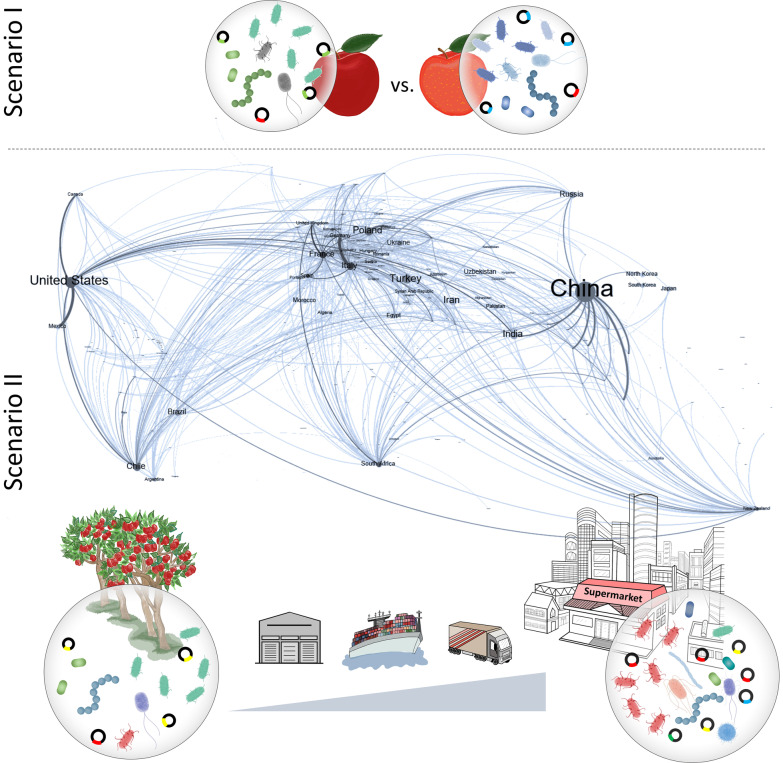
A detailed understanding of antimicrobial resistance trends among all human-related environments is key to combat global health threats. In food science, however, the resistome is still little considered. Here, we studied the apple microbiome and resistome from different cultivars (Royal Gala and Braeburn) and sources (freshly harvested in South Africa and exported apples in Austrian supermarkets) by metagenomic approaches, genome reconstruction and isolate sequencing.
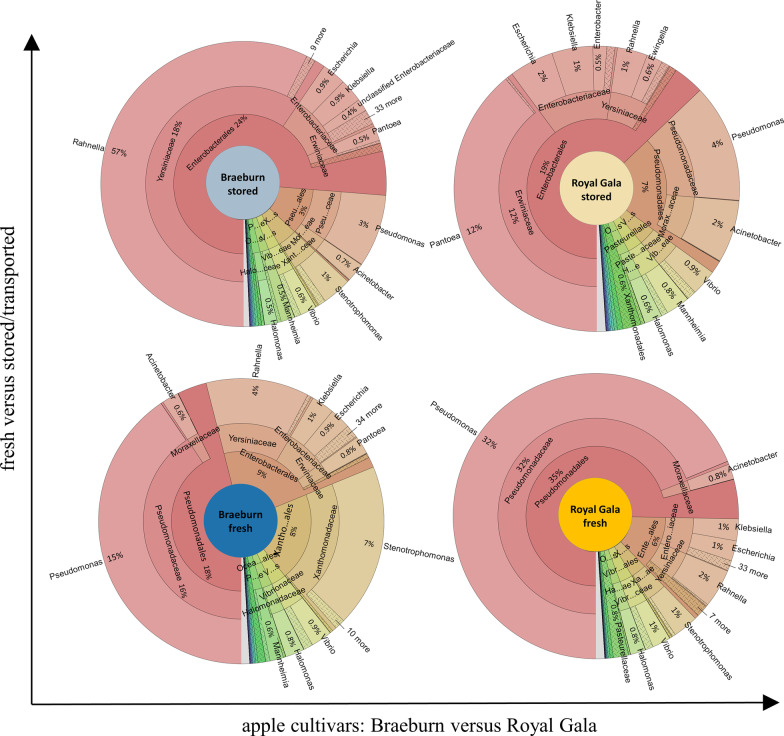
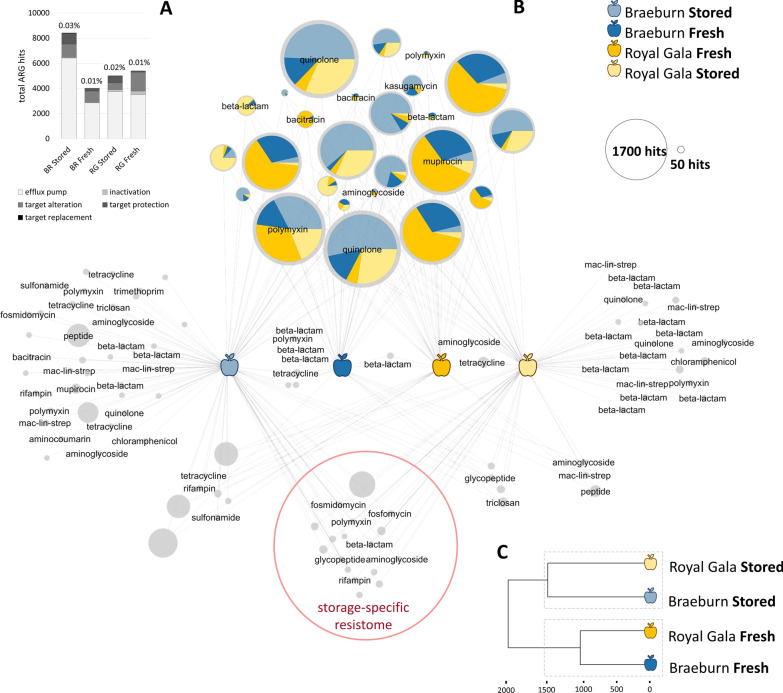
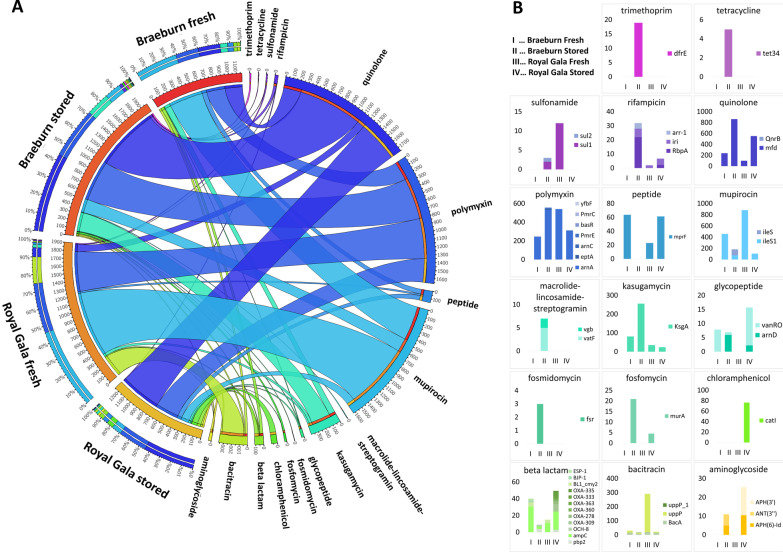
All fruits harbor an indigenous, versatile resistome composed of 132 antimicrobial resistance genes (ARGs) encoding for 19 different antibiotic classes. ARGs are partially of clinical relevance and plasmid-encoded; however, their abundance within the metagenomes is very low (≤ 0.03%). Post-harvest, after intercontinental transport, the apple microbiome and resistome was significantly changed independently of the cultivar. In comparison to fresh apples, the post-harvest microbiome is characterized by higher abundance of Enterobacteriales, and a more diversified pool of ARGs, especially associated with multidrug resistance, as well as quinolone, rifampicin, fosfomycin and aminoglycoside resistance. The association of ARGs with metagenome-assembled genomes (MAGs) suggests resistance interconnectivity within the microbiome. Bacterial isolates of the phyla Gammaproteobacteria, Alphaproteobacteria and Actinobacteria served as representatives actively possessing multidrug resistance and ARGs were confirmed by genome sequencing.
Our results revealed intrinsic and potentially acquired antimicrobial resistance in apples and strengthen the argument that all plant microbiomes harbor diverse resistance features. Although the apple resistome appears comparatively inconspicuous, we identified storage and transport as potential risk parameters to distribute AMR globally and highlight the need for surveillance of resistance emergence along complex food chains.
全面了解所有与人类相关环境中的抗菌药物耐药性趋势是应对全球健康威胁的关键。然而,在食品科学领域,耐药基因组仍很少受到关注。在此,我们通过宏基因组学方法、基因组重建和分离株测序,研究了不同品种(皇家嘎啦和澳洲青苹)和来源(南非新鲜采摘的以及奥地利超市中的进口苹果)苹果的微生物组和耐药基因组。
所有水果都含有一种本土的、多样的耐药基因组,由132个编码19种不同抗生素类别的抗菌药物耐药基因(ARGs)组成。ARGs部分具有临床相关性且由质粒编码;然而,它们在宏基因组中的丰度非常低(≤0.03%)。采后经过洲际运输后,苹果的微生物组和耐药基因组发生了显著变化,且与品种无关。与新鲜苹果相比,采后微生物组的特点是肠杆菌目丰度更高,ARGs库更加多样化,尤其是与多重耐药以及喹诺酮、利福平、磷霉素和氨基糖苷类耐药相关的基因。ARGs与宏基因组组装基因组(MAGs)的关联表明微生物组内存在耐药性的相互联系。γ-变形菌门、α-变形菌门和放线菌门的细菌分离株作为具有多重耐药性的代表,通过基因组测序证实了ARGs的存在。
我们的结果揭示了苹果中内在的以及潜在获得的抗菌药物耐药性,并进一步证明所有植物微生物组都具有多样的耐药特征。尽管苹果的耐药基因组相对不明显,但我们确定储存和运输是全球传播抗菌药物耐药性的潜在风险因素,并强调需要对复杂食物链中耐药性的出现进行监测。