Department of Cancer Biology, Sidney Kimmel Cancer Center, Thomas Jefferson University, Philadelphia, PA.
TriNetX LLC, Cambridge, MA.
JCO Clin Cancer Inform. 2022 Feb;6:e2100200. doi: 10.1200/CCI.21.00200.
This is an update to a previously published report characterizing the impact that efforts to control the COVID-19 pandemic have had on the normal course of cancer-related encounters.
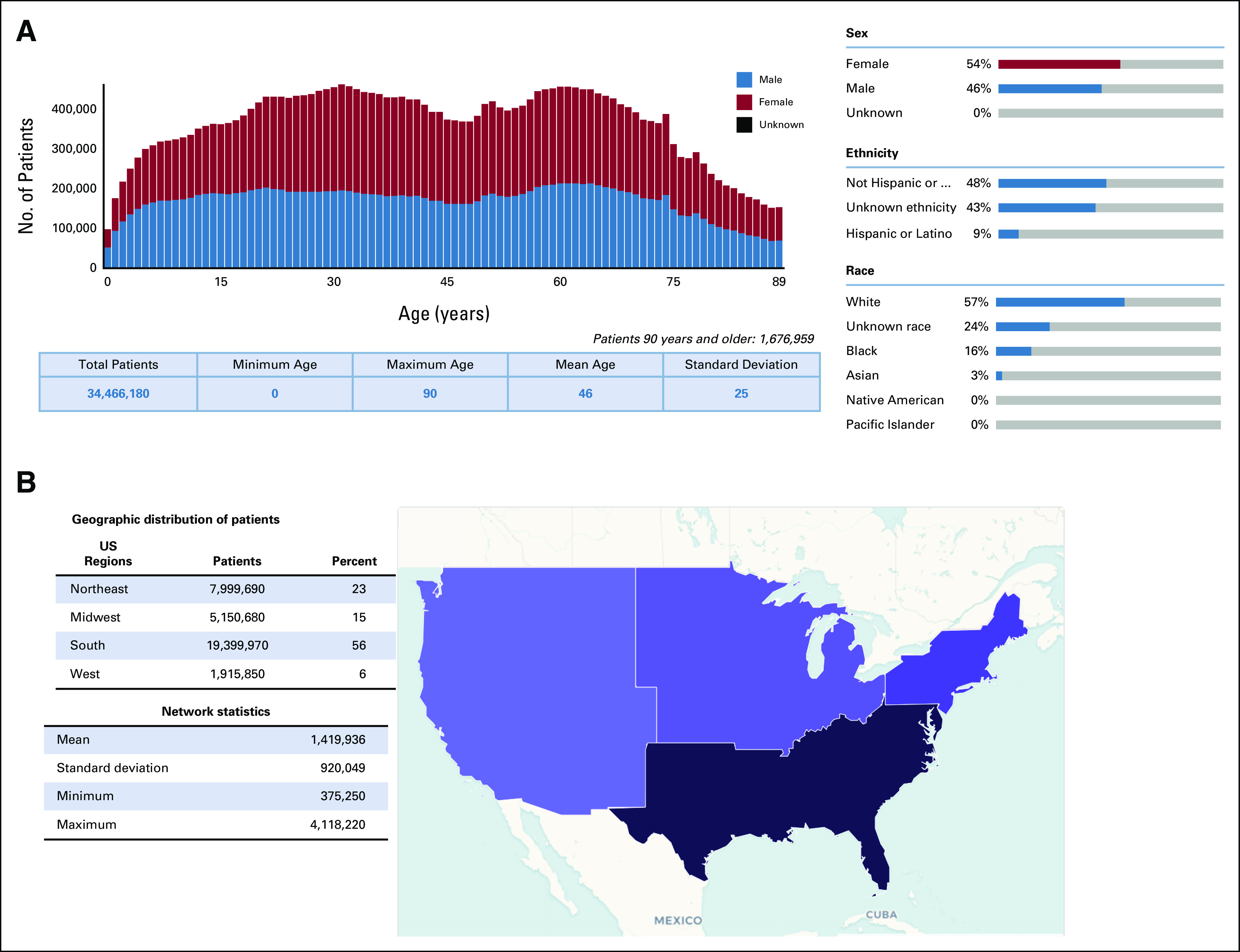
Data were analyzed from 22 US health care organizations (members of the TriNetX global network) having relevant, up-to-date encounter data. Although the original study compared encounter data pre-COVID-19 (January-April 2019) with the corresponding months in 2020, this update considers data through April 2021. As before, cohorts were generated for all neoplasm patients (malignant, benign, in situ, and of unspecified behavior), all new incidence neoplasm patients, exclusively malignant neoplasm patients, and new incidence malignant neoplasm patients. Data on the initial cancer stage were available for calendar year 2020 from about one third of the study's organizations.
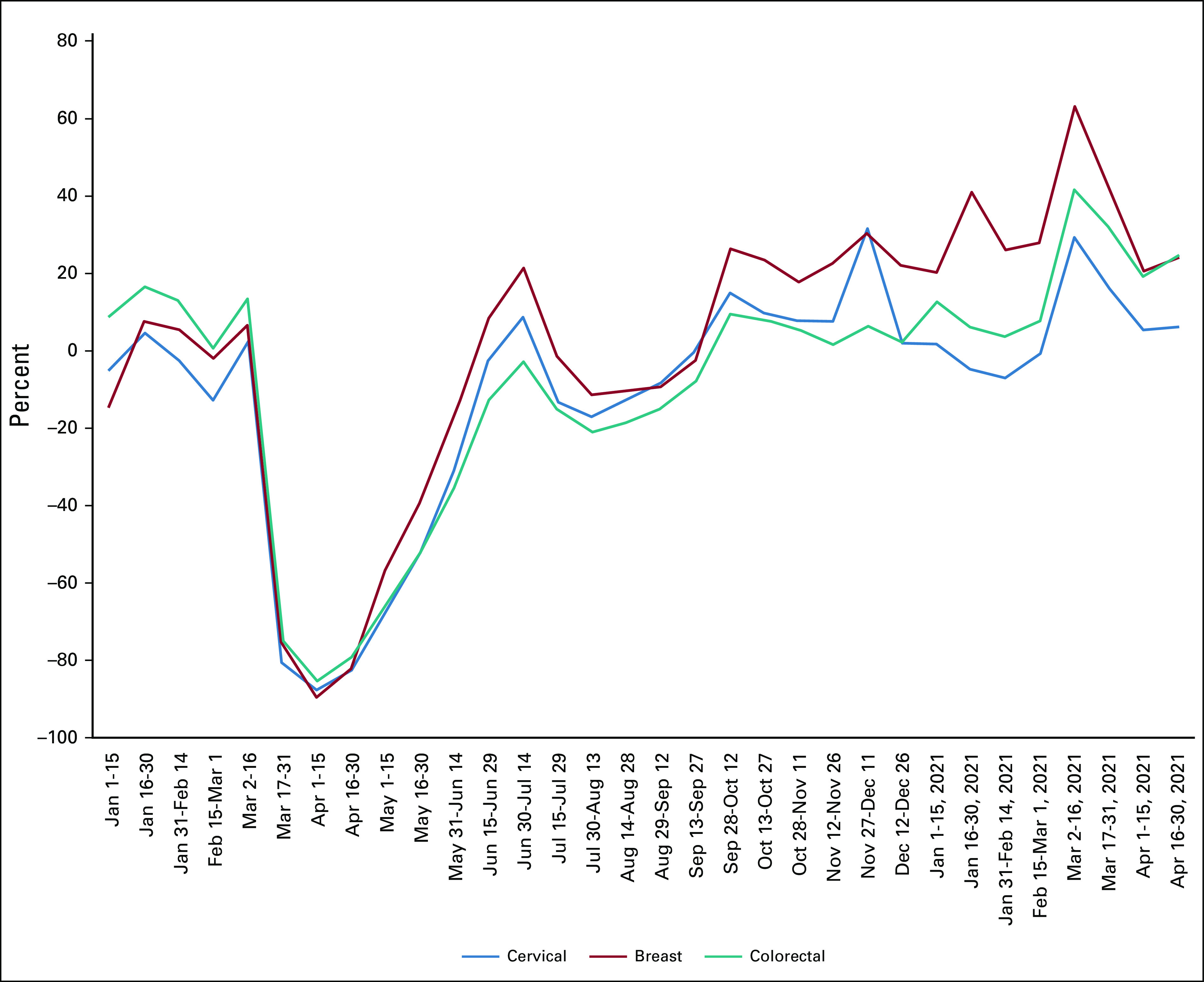
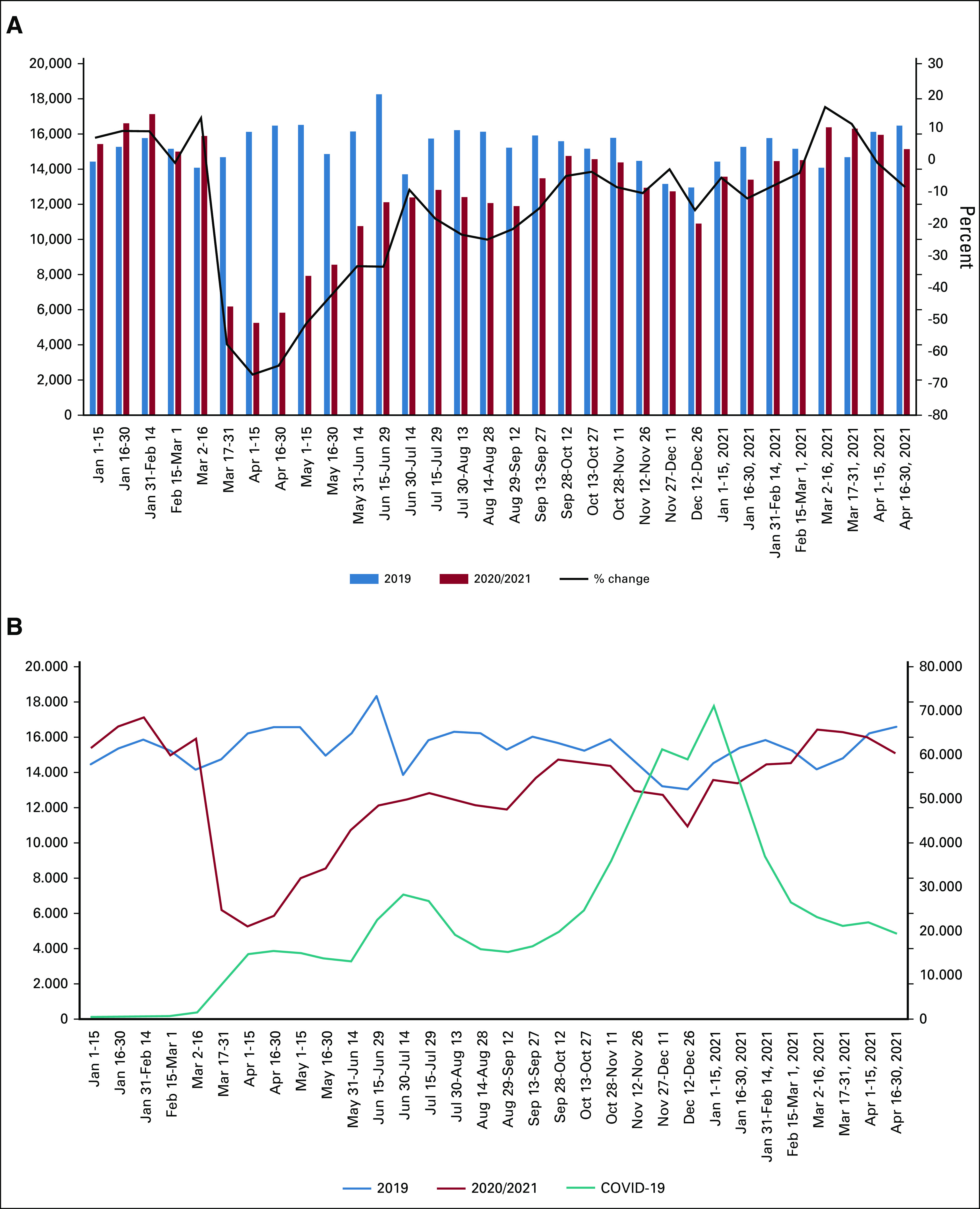
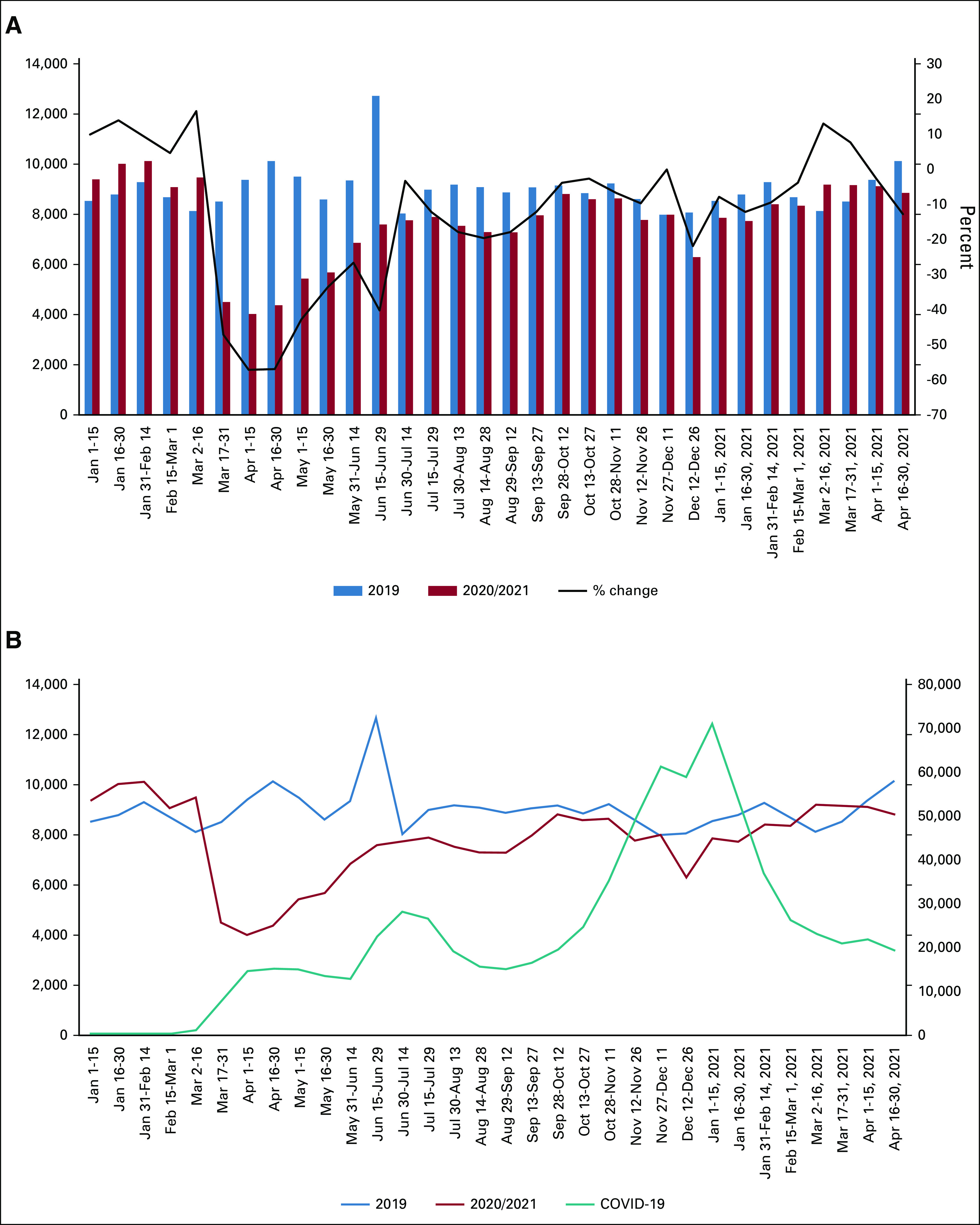
Although COVID-19 cases fluctuated through 2021, newly diagnosed cancers closely paralleled the prepandemic base year 2019. Similarly, screening for breast, colorectal, and cervical cancers quickly recovered beginning in May 2020 to prepandemic numbers. Preliminary data for the initial cancer stage showed no significant difference ( > .10) in distribution for breast or colon cancers between 2019 and 2020.
Although the number of COVID-19 cases fluctuated, the steep declines observed during March and April 2020 in screening for breast and colon cancer and patients with newly diagnosed cancer did not continue through the rest of 2020 and into April 2021. Screening and new incidence cancer numbers quickly rose compared with prepandemic levels. The concern that more patients with advanced-stage cancer would be seen in the months following the drastic dips of March-April 2020 was not realized as the major disruption to normal cancer care was limited to these 2 months.
本研究是对先前发表的报告的更新,该报告描述了控制 COVID-19 大流行的努力对癌症相关就诊的正常进程产生的影响。
本研究分析了来自 22 家美国医疗机构(TrinetX 全球网络成员)的相关最新就诊数据。虽然原始研究比较了 COVID-19 之前(2019 年 1 月至 4 月)和 2020 年同期的就诊数据,但本次更新考虑了截至 2021 年 4 月的数据。与之前一样,为所有肿瘤患者(恶性、良性、原位和行为不确定)、所有新发肿瘤患者、单纯恶性肿瘤患者和新发恶性肿瘤患者生成了队列。约三分之一的研究机构提供了 2020 年日历年度的初始癌症分期数据。
尽管 2021 年期间 COVID-19 病例波动,但新诊断癌症与大流行前的基年 2019 年基本一致。同样,从 2020 年 5 月开始,乳腺癌、结直肠癌和宫颈癌的筛查迅速恢复到大流行前的水平。初始癌症分期的初步数据显示,2019 年和 2020 年之间乳腺癌或结肠癌的初始癌症分期分布无显著差异(>0.10)。
尽管 COVID-19 病例数量波动,但 2020 年 3 月和 4 月乳腺癌和结肠癌筛查以及新发癌症患者数量的急剧下降并未持续到 2020 年剩余时间和 2021 年 4 月。与大流行前水平相比,筛查和新发癌症数量迅速上升。人们曾担心在 2020 年 3 月至 4 月急剧下降后的几个月中会看到更多晚期癌症患者,但这种情况并未出现,因为对癌症常规护理的重大干扰仅限于这 2 个月。