• 文献检索
  • 文档翻译
  • 深度研究
  • 学术资讯
  • Suppr Zotero 插件Zotero 插件
  • 邀请有礼
  • 套餐&价格
  • 历史记录
应用&插件
Suppr Zotero 插件Zotero 插件浏览器插件Mac 客户端Windows 客户端微信小程序
定价
高级版会员购买积分包购买API积分包
服务
文献检索文档翻译深度研究API 文档MCP 服务
关于我们
关于 Suppr公司介绍联系我们用户协议隐私条款
关注我们

Suppr 超能文献

核心技术专利:CN118964589B侵权必究
粤ICP备2023148730 号-1Suppr @ 2026

文献检索

告别复杂PubMed语法,用中文像聊天一样搜索,搜遍4000万医学文献。AI智能推荐,让科研检索更轻松。

立即免费搜索

文件翻译

保留排版,准确专业,支持PDF/Word/PPT等文件格式,支持 12+语言互译。

免费翻译文档

深度研究

AI帮你快速写综述,25分钟生成高质量综述,智能提取关键信息,辅助科研写作。

立即免费体验

针对 SARS-CoV-2 起源的未知原因进行的荟萃分析。

Meta-analysis to explain unknown causes of the origins of SARS-COV-2.

机构信息

CNR -- National Research Council of Italy, Collegio Carlo Alberto, Via Real Collegio, N. 30, 10024, Moncalieri, TO, Italy.

出版信息

Environ Res. 2022 Aug;211:113062. doi: 10.1016/j.envres.2022.113062. Epub 2022 Mar 5.

DOI:10.1016/j.envres.2022.113062
PMID:35259407
原文链接:https://pmc.ncbi.nlm.nih.gov/articles/PMC8897286/
Abstract

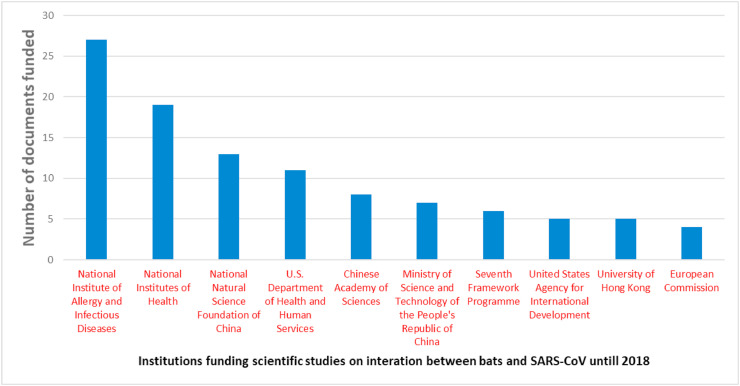
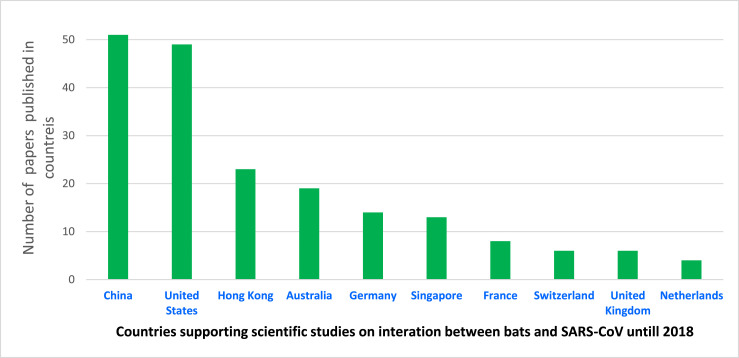
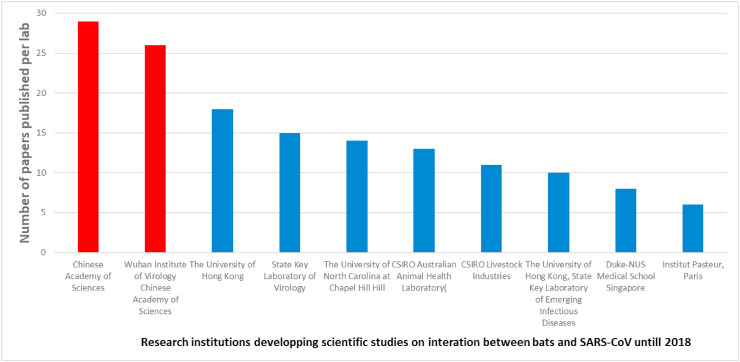
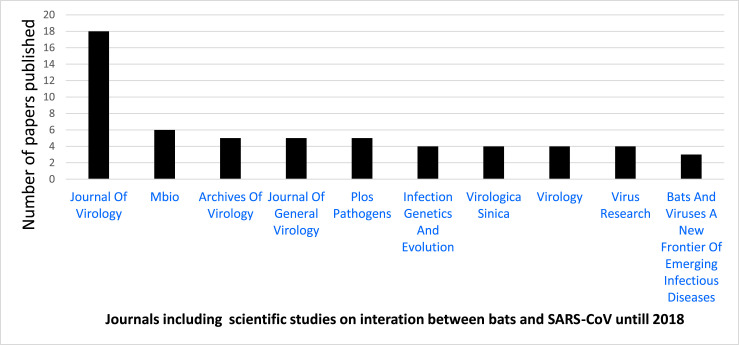
New Severe Acute Respiratory Syndrome Coronavirus 2 (SARS-CoV-2) causes the Coronavirus Disease 2019 (COVID-19), an infectious illness that has generated a pandemic crisis worldwide. One of the fundamental questions in science and society is how SARS-CoV-2 has been originated to design best practices directed to prevent and/or to cope with future hazardous pathogens. The study confronts this question here developing a meta-analysis, which endeavors to explain, whenever possible, unknown sources of the SARS-CoV-2. Findings suggest that the natural spillover of novel viral agents that generate more than 6.00 M deaths worldwide in about two years (such as, SARS-CoV-2 from February 2020 to March 2022) has a remote probability of occurrence (using an analogy with the probability of natural disasters generating a lot of fatalities), whereas science advances on hazardous viral agents and consequential lab accident have a (higher) probability of occurrence (about 13-20% like in manifold lab accidents). The findings of this meta-analysis suggest the vital role of improving the technical guidelines of biosafety at all levels in laboratories during the development of scientific research of experimental virology on hazardous pathogens to minimize risks of pandemic threats in environment and human society.

摘要

新型严重急性呼吸系统综合症冠状病毒 2(SARS-CoV-2)引起 2019 年冠状病毒病(COVID-19),这是一种传染病,在全球范围内引发了大流行危机。科学界和社会的基本问题之一是 SARS-CoV-2 是如何产生的,以便制定最佳实践来预防和/或应对未来的有害病原体。本研究通过进行荟萃分析来解决这个问题,该分析努力解释 SARS-CoV-2 的未知来源。研究结果表明,在大约两年内(例如,2020 年 2 月至 2022 年 3 月的 SARS-CoV-2),造成全球超过 600 万人死亡的新型病毒自然溢出的可能性较小(与造成大量死亡的自然灾害的可能性类似),而科学对有害病毒的研究和随之而来的实验室事故的可能性较大(约 13-20%,如在多次实验室事故中)。这项荟萃分析的结果表明,在开展有关危险病原体的实验病毒学科学研究时,必须改进实验室各个层面的生物安全技术指南,以最大程度地降低环境和人类社会中流行威胁的风险。
https://cdn.ncbi.nlm.nih.gov/pmc/blobs/a37a/8897286/5c7e291dbf44/fx2_lrg.jpg
https://cdn.ncbi.nlm.nih.gov/pmc/blobs/a37a/8897286/5966cf0efc6d/gr1_lrg.jpg
https://cdn.ncbi.nlm.nih.gov/pmc/blobs/a37a/8897286/881591f0e018/gr2_lrg.jpg
https://cdn.ncbi.nlm.nih.gov/pmc/blobs/a37a/8897286/9780ed95e219/fx1_lrg.jpg
https://cdn.ncbi.nlm.nih.gov/pmc/blobs/a37a/8897286/5c7e291dbf44/fx2_lrg.jpg
https://cdn.ncbi.nlm.nih.gov/pmc/blobs/a37a/8897286/5966cf0efc6d/gr1_lrg.jpg
https://cdn.ncbi.nlm.nih.gov/pmc/blobs/a37a/8897286/881591f0e018/gr2_lrg.jpg
https://cdn.ncbi.nlm.nih.gov/pmc/blobs/a37a/8897286/9780ed95e219/fx1_lrg.jpg
https://cdn.ncbi.nlm.nih.gov/pmc/blobs/a37a/8897286/5c7e291dbf44/fx2_lrg.jpg

相似文献

1
Meta-analysis to explain unknown causes of the origins of SARS-COV-2.针对 SARS-CoV-2 起源的未知原因进行的荟萃分析。
Environ Res. 2022 Aug;211:113062. doi: 10.1016/j.envres.2022.113062. Epub 2022 Mar 5.
2
Procedures for Flow Cytometry-Based Sorting of Unfixed Severe Acute Respiratory Syndrome Coronavirus 2 (SARS-CoV-2) Infected Cells and Other Infectious Agents.基于流式细胞术的未固定严重急性呼吸综合征冠状病毒 2(SARS-CoV-2)感染细胞和其他传染性病原体的分选程序。
Cytometry A. 2020 Jul;97(7):674-680. doi: 10.1002/cyto.a.24040. Epub 2020 Jun 3.
3
Biosafety measures for preventing infection from COVID-19 in clinical laboratories: IFCC Taskforce Recommendations.临床实验室预防 COVID-19 感染的生物安全措施:IFCC 工作组建议。
Clin Chem Lab Med. 2020 Jun 25;58(7):1053-1062. doi: 10.1515/cclm-2020-0633.
4
General biosafety measures for laboratory environments, outpatient clinics, medical centers, and veterinary hospitals during the SARS-CoV-2 pandemic.SARS-CoV-2 大流行期间实验室环境、门诊、医疗中心和兽医医院的一般生物安全措施。
Braz J Microbiol. 2022 Sep;53(3):1715-1721. doi: 10.1007/s42770-022-00734-0. Epub 2022 Mar 29.
5
Screening High-Risk Groups and the General Population for SARS-CoV-2 Nucleic Acids in a Mobile Biosafety Laboratory.移动生物安全实验室对高风险人群和普通人群进行 SARS-CoV-2 核酸筛查。
Front Public Health. 2021 Aug 13;9:708476. doi: 10.3389/fpubh.2021.708476. eCollection 2021.
6
Challenges in the establishment of a biosafety testing laboratory for COVID-19 in Bangladesh.孟加拉国建立 COVID-19 生物安全检测实验室面临的挑战。
J Infect Dev Ctries. 2021 Dec 31;15(12):1833-1837. doi: 10.3855/jidc.14415.
7
Laboratory Biosafety Considerations of SARS-CoV-2 at Biosafety Level 2.实验室生物安全考虑 SARS-CoV-2 在生物安全级别 2 下的情况。
Health Secur. 2020 May/Jun;18(3):232-236. doi: 10.1089/hs.2020.0021. Epub 2020 Jun 9.
8
Biorisk Management for SARS-CoV-2 Research in a Biosafety Level-3 Core Facility.生物安全三级实验室中 SARS-CoV-2 研究的生物风险管理。
Methods Mol Biol. 2022;2452:441-464. doi: 10.1007/978-1-0716-2111-0_24.
9
Selection and application of biological safety cabinets in diagnostic and research laboratories with special emphasis on COVID-19.诊断和研究实验室中生物安全柜的选择和应用,特别强调 COVID-19。
Rev Sci Instrum. 2021 Aug 1;92(8):081401. doi: 10.1063/5.0047716.
10
Guidelines for various laboratory sections in view of COVID-19: Recommendations from the Indian Association of Pathologists and Microbiologists.鉴于新型冠状病毒肺炎的各实验室部门指南:印度病理学家和微生物学家协会的建议
Indian J Pathol Microbiol. 2020 Jul-Sep;63(3):350-357. doi: 10.4103/IJPM.IJPM_857_20.

引用本文的文献

1
Oscillating spatiotemporal patterns of COVID-19 in the United States.美国新冠肺炎的振荡时空模式。
Sci Rep. 2024 Sep 16;14(1):21562. doi: 10.1038/s41598-024-72517-6.
2
Negative effects of high public debt on health systems facing pandemic crisis: Lessons from COVID-19 in Europe to prepare for future emergencies.高公共债务对面临大流行危机的卫生系统的负面影响:欧洲新冠疫情的教训,为未来紧急情况做准备。
AIMS Public Health. 2024 Apr 11;11(2):477-498. doi: 10.3934/publichealth.2024024. eCollection 2024.
3
Sources, diffusion and prediction in COVID-19 pandemic: lessons learned to face next health emergency.
新冠疫情中的信息源、传播与预测:应对下一次卫生紧急事件的经验教训
AIMS Public Health. 2023 Mar 2;10(1):145-168. doi: 10.3934/publichealth.2023012. eCollection 2023.
4
Scientific evidence on the origin of SARS-CoV-2.关于 SARS-CoV-2 起源的科学证据。
Environ Res. 2023 Jan 1;216(Pt 2):114631. doi: 10.1016/j.envres.2022.114631. Epub 2022 Oct 19.
5
The effect of selective serotonin and norepinephrine reuptake inhibitors on clinical outcome of COVID-19 patients: A systematic review and meta-analysis.选择性5-羟色胺和去甲肾上腺素再摄取抑制剂对新型冠状病毒肺炎患者临床结局的影响:一项系统评价和荟萃分析
Health Sci Rep. 2022 Oct 17;5(6):e892. doi: 10.1002/hsr2.892. eCollection 2022 Nov.
6
Are mega-events super spreaders of infectious diseases similar to COVID-19? A look into Tokyo 2020 Olympics and Paralympics to improve preparedness of next international events.大型活动是否会像 COVID-19 一样成为传染病的超级传播者?审视东京 2020 年奥运会和残奥会,以提高下一届国际赛事的准备水平。
Environ Sci Pollut Res Int. 2023 Jan;30(4):10099-10109. doi: 10.1007/s11356-022-22660-2. Epub 2022 Sep 6.
7
An updated review of the scientific literature on the origin of SARS-CoV-2.关于 SARS-CoV-2 起源的科学文献的最新综述。
Environ Res. 2022 Dec;215(Pt 1):114131. doi: 10.1016/j.envres.2022.114131. Epub 2022 Aug 28.
8
Tracing the origin of Severe acute respiratory syndrome coronavirus-2 (SARS-CoV-2): A systematic review and narrative synthesis.追溯严重急性呼吸综合征冠状病毒 2(SARS-CoV-2)的起源:系统评价和叙述性综合。
J Med Virol. 2022 Dec;94(12):5766-5779. doi: 10.1002/jmv.28060. Epub 2022 Sep 7.
9
Improving preparedness for next pandemics: Max level of COVID-19 vaccinations without social impositions to design effective health policy and avoid flawed democracies.提高应对下一次大流行的准备水平:在不施加社会限制的情况下最大限度地接种 COVID-19 疫苗,以制定有效的卫生政策并避免有缺陷的民主。
Environ Res. 2022 Oct;213:113566. doi: 10.1016/j.envres.2022.113566. Epub 2022 May 31.
10
The effects of COVID-19 transmission on environmental sustainability and human health: Paving the way to ensure its sustainable management.新冠疫情传播对环境可持续性和人类健康的影响:为确保其可持续管理铺平道路。
Sci Total Environ. 2022 Sep 10;838(Pt 2):156039. doi: 10.1016/j.scitotenv.2022.156039. Epub 2022 May 18.