Latypov Rais, Chistyakova Sofya, Barnes Stephen J, Godel Belinda, Delaney Gary W, Cleary Paul W, Radermacher Viktor J, Campbell Ian, Jakata Kudakwashe
School of Geosciences, University of the Witwatersrand, Johannesburg, South Africa.
CSIRO Mineral Resources, Kensington, Perth, WA, 6151, Australia.
Sci Rep. 2022 Mar 8;12(1):4092. doi: 10.1038/s41598-022-08110-6.
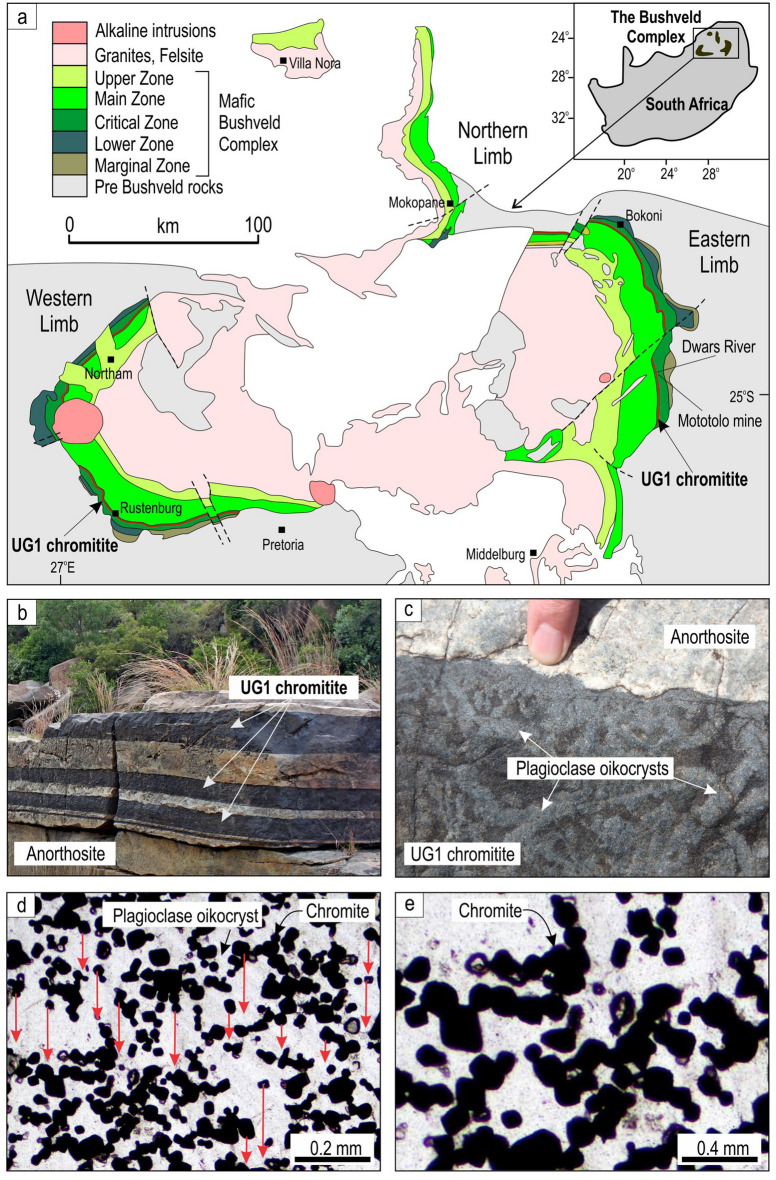
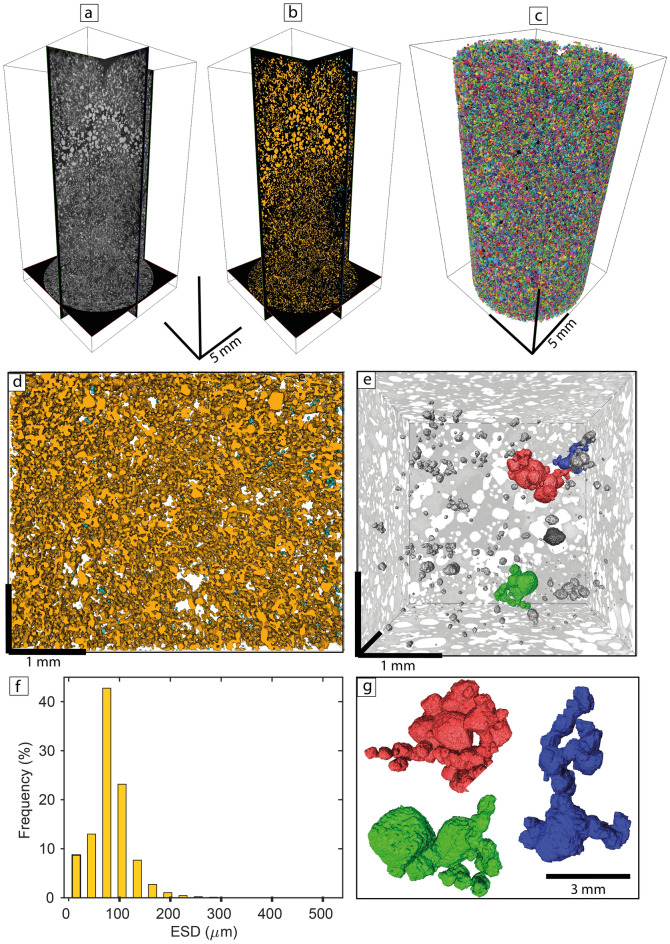
The classical paradigm of the 'big magma tank' chambers in which the melt differentiates, is replenished, and occasionally feeds the overlying volcanos has recently been challenged on various grounds. An alternative school of thought is that such large, long-lived and largely molten magma chambers are transient to non-existent in Earth's history. Our study of stratiform chromitites in the Bushveld Complex-the largest magmatic body in the Earth's continental crust-tells, however, a different story. Several chromitites in this complex occur as layers up to 2 m in thickness and more than 400 kms in lateral extent, implying that chromitite-forming events were chamber-wide phenomena. Field relations and microtextural data, specifically the relationship of 3D coordination number, porosity and grain size, indicate that the chromitites grew as a 3D framework of touching chromite grains directly at the chamber floor from a basaltic melt saturated in chromite only. Mass-balance estimates imply that a few km thick column of this melt is required to form each of these chromitite layers. Therefore, an enormous volume of melt appears to have been involved in the generation of all the Bushveld chromitite layers, with half of this melt being expelled from the magma chamber. We suggest that the existence of thick and laterally extensive chromitite layers in the Bushveld and other layered intrusions supports the classical paradigm of big, albeit rare, 'magma tank' chambers.
熔体在其中进行分异、补给并偶尔为上覆火山提供岩浆的“大型岩浆房”这一经典范式,近来受到了多方面的质疑。另一种观点认为,这种大型、长期存在且大部分处于熔融状态的岩浆房在地球历史上是短暂存在甚至不存在的。然而,我们对布什维尔德杂岩体(地球大陆地壳中最大的岩浆体)中的层状铬铁矿的研究却讲述了一个不同的故事。该杂岩体中的几个铬铁矿层厚度达2米,横向延伸超过400公里,这意味着铬铁矿形成事件是整个岩浆房范围的现象。野外关系和微观结构数据,特别是三维配位数、孔隙率和粒度之间的关系,表明这些铬铁矿是在岩浆房底部由仅饱和铬铁矿的玄武质熔体直接形成相互接触的铬铁矿颗粒的三维框架而生长的。质量平衡估算表明,形成每一层这样的铬铁矿需要几公里厚的熔体柱。因此,似乎大量的熔体参与了布什维尔德所有铬铁矿层的形成,其中一半的熔体从岩浆房中排出。我们认为,布什维尔德和其他层状侵入体中厚且横向延伸的铬铁矿层的存在,支持了大型(尽管罕见)“岩浆房”的经典范式。