Mishra Dinesh, Zhou Rufan, Hassan Md Mehadi, Hu Jinguang, Gates Ian, Mahinpey Nader, Lu Qingye
Department of Chemical and Petroleum Engineering, University of Calgary, Calgary, AB, T2N 1N4, Canada.
Sci Rep. 2022 Mar 8;12(1):4095. doi: 10.1038/s41598-022-08159-3.
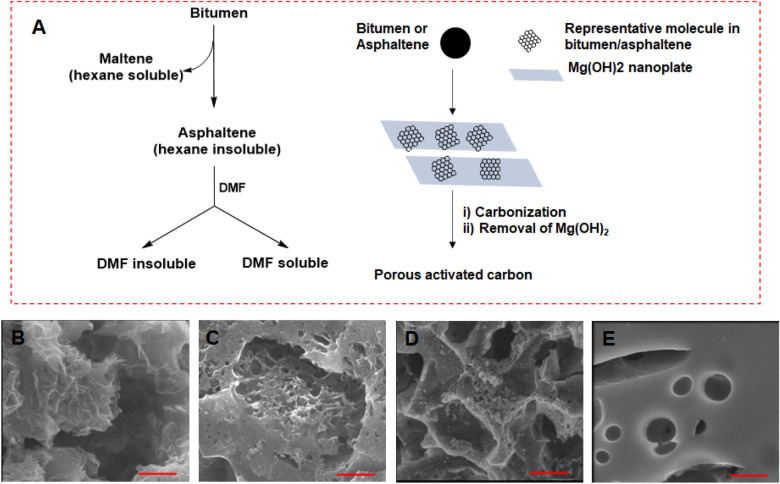
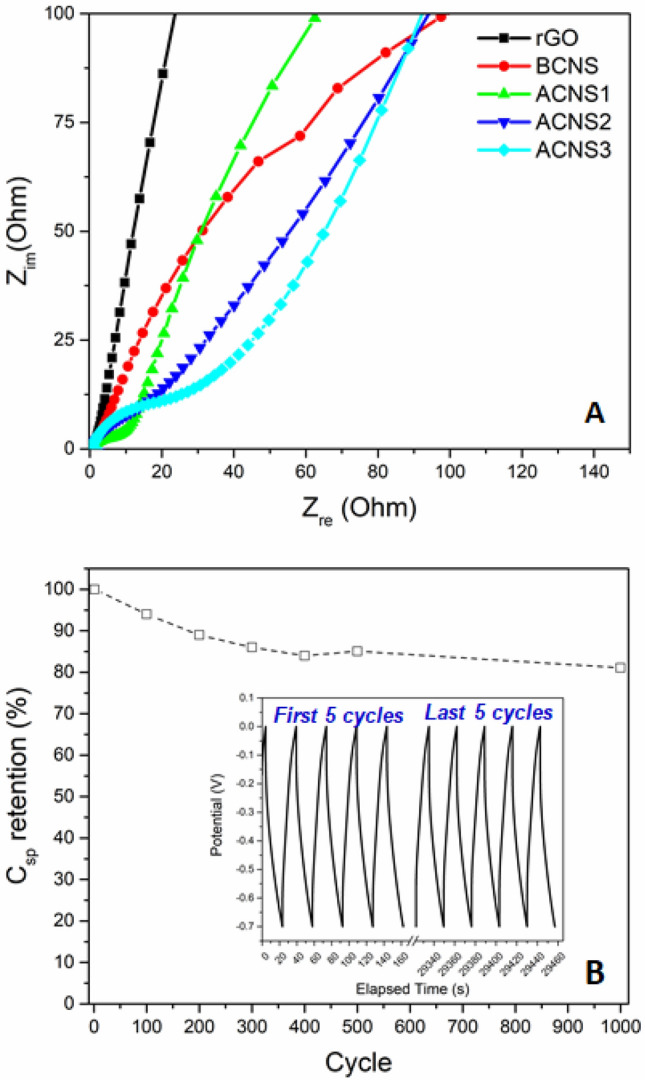
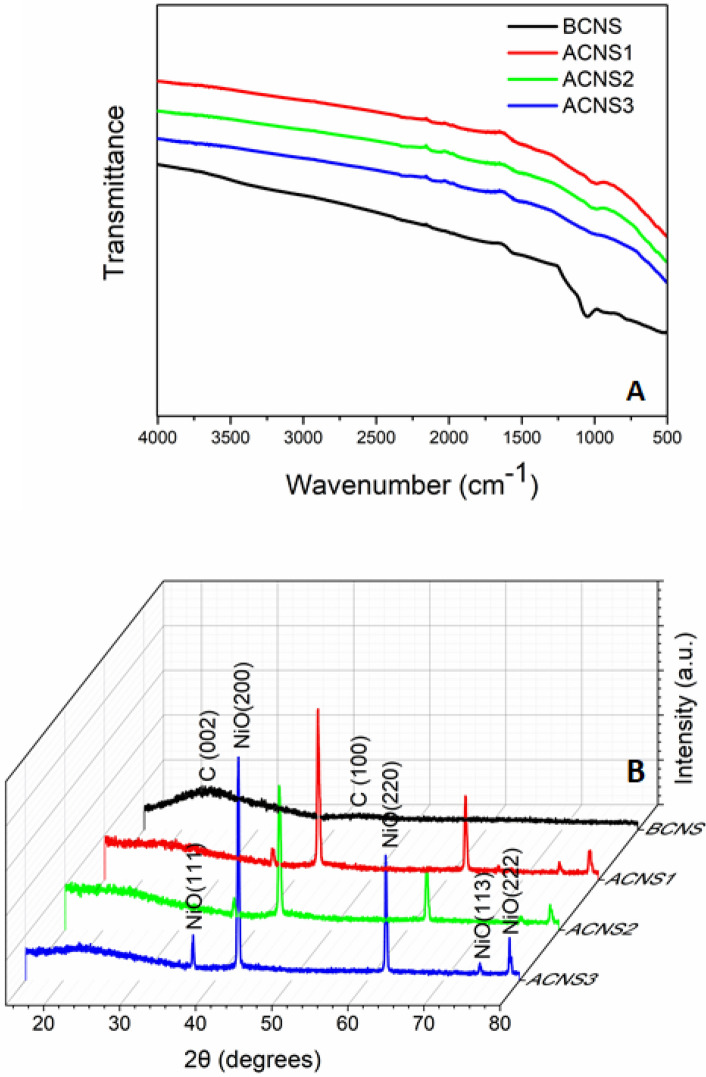
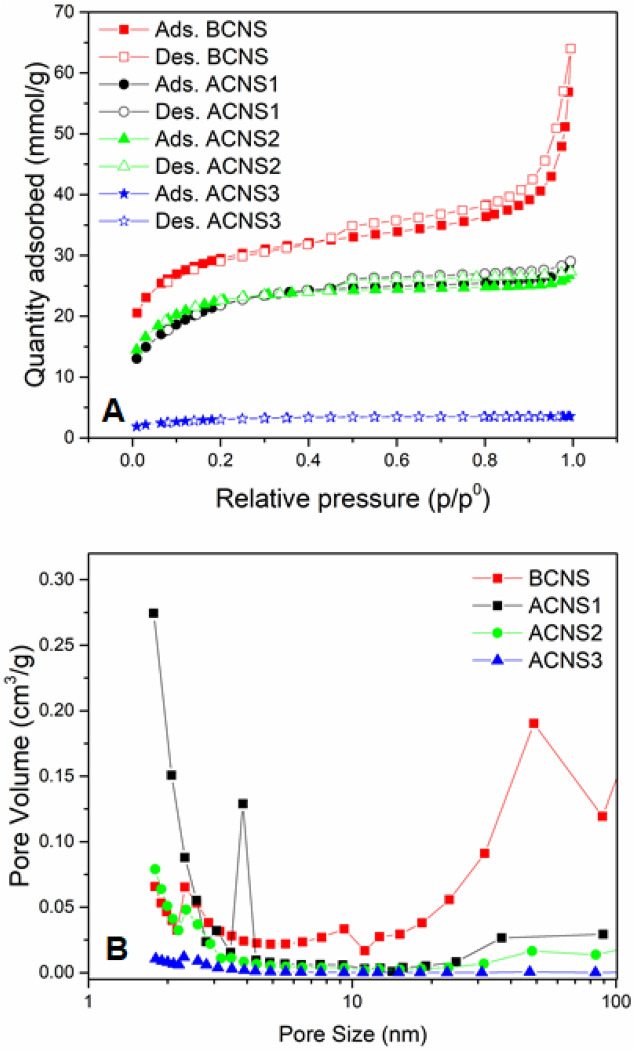
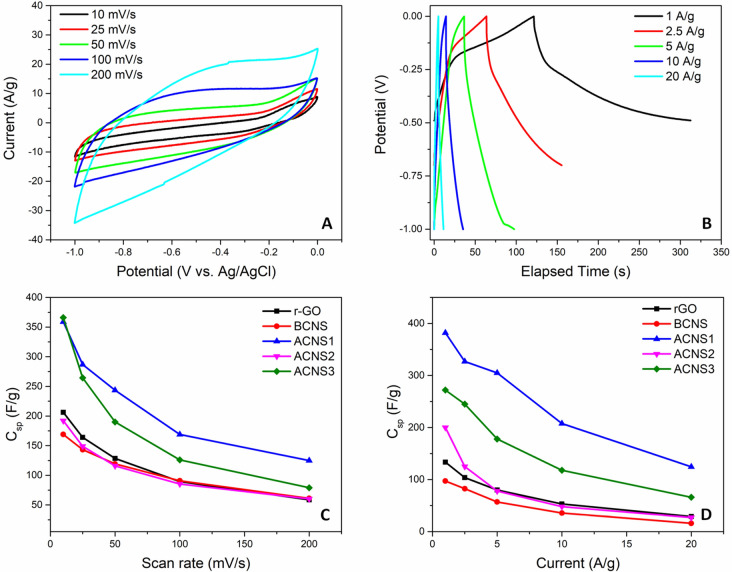
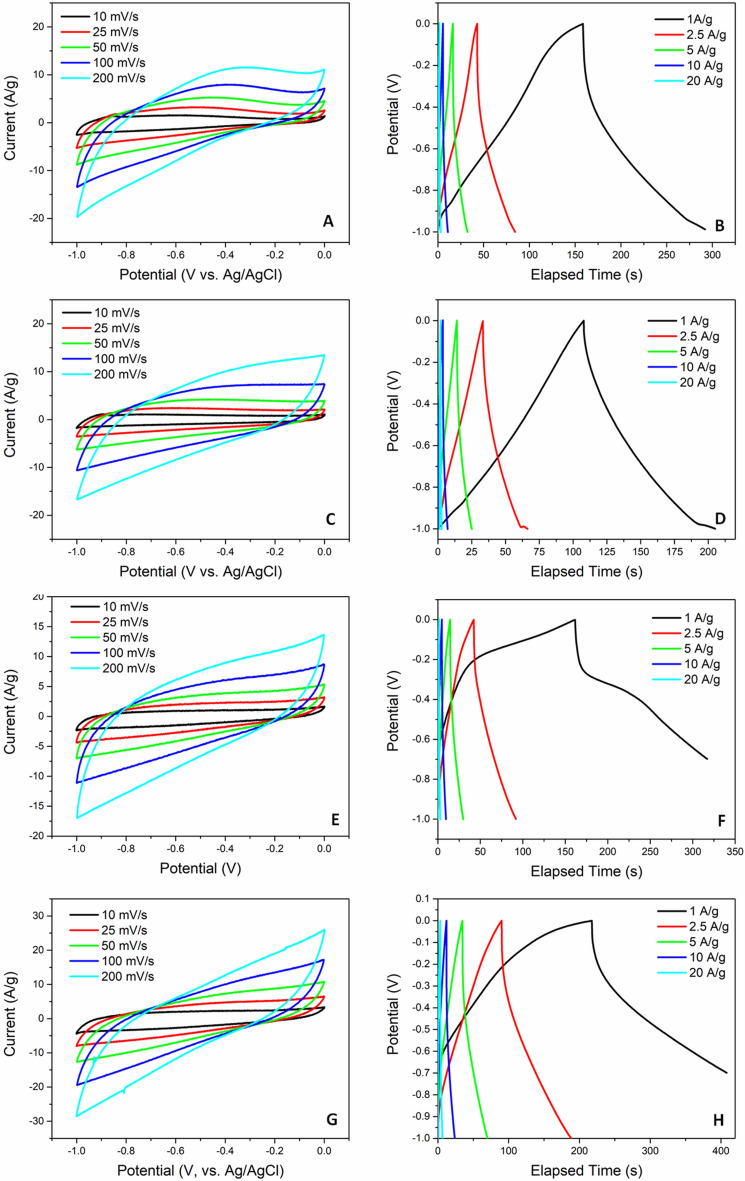
Asphaltenes from bitumen are abundant resource to be transformed into carbon as promising supercapacitor electrodes, while there is a lack of understanding the impact from different fractions of bitumen and asphaltenes, as well as the presence of transition metals. Here, nanoporous carbon was synthesized from bitumen, hexane-insoluble asphaltenes and N,N-dimethylformamide (DMF)-fractionated asphaltenes by using Mg(OH) nanoplates as the template with in-situ KOH activation, and used as an supercapacitor electrode material. All of the carbon exhibited large surface area (1500-2200 m g) with a distribution of micro and mesopores except for that derived from the DMF-soluble asphaltenes. The pyrolysis of asphaltenes resulted in the formation of nickel oxide/carbon composite (NiO/C), which demonstrated high capacitance of 380 F g at 1 A g discharge current resulting from the pseudocapacitance of NiO and the electrochemical double layer capacitance of the carbon. The NiO/C composite obtained from the DMF-insoluble portion had low NiO content which led to lower capacitance. Meanwhile, the specific capacitance of NiO/C composite from the DMF-soluble part was lower than the unfractionated asphaltene due to the higher NiO content resulting in lower conductivity. Therefore asphaltenes derived from nickel-rich crude bitumen is suitable for the synthesis of nanoporous NiO/C composite material with high capacitance.
来自沥青的沥青质是一种丰富的资源,有望被转化为碳作为超级电容器电极,但目前对于沥青和沥青质不同馏分的影响以及过渡金属的存在缺乏了解。在此,以氢氧化镁纳米片为模板,通过原位氢氧化钾活化,从沥青、己烷不溶沥青质和N,N-二甲基甲酰胺(DMF)分级沥青质中合成了纳米多孔碳,并将其用作超级电容器电极材料。除了源自DMF可溶沥青质的碳外,所有碳都表现出较大的表面积(1500 - 2200 m²/g),且具有微孔和介孔分布。沥青质的热解导致形成氧化镍/碳复合材料(NiO/C),在1 A/g放电电流下表现出380 F/g的高电容,这是由于NiO的赝电容和碳的电化学双层电容所致。从DMF不溶部分获得的NiO/C复合材料中NiO含量较低,导致电容较低。同时,由于较高的NiO含量导致导电性降低,DMF可溶部分的NiO/C复合材料的比电容低于未分级的沥青质。因此,源自富镍原油沥青的沥青质适合用于合成具有高电容的纳米多孔NiO/C复合材料。