Department of Respiratory and Critical Care Medicine, The First Affiliated Hospital of Anhui Medical University, Hefei, Anhui, China.
Bioengineered. 2022 Mar;13(3):7622-7634. doi: 10.1080/21655979.2022.2049473.
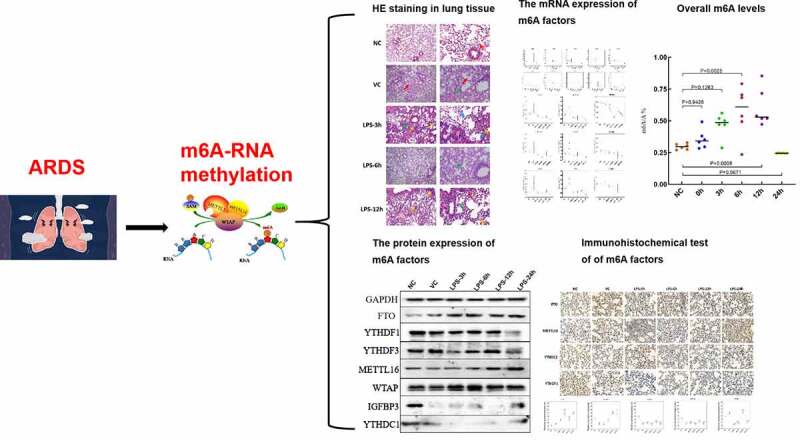
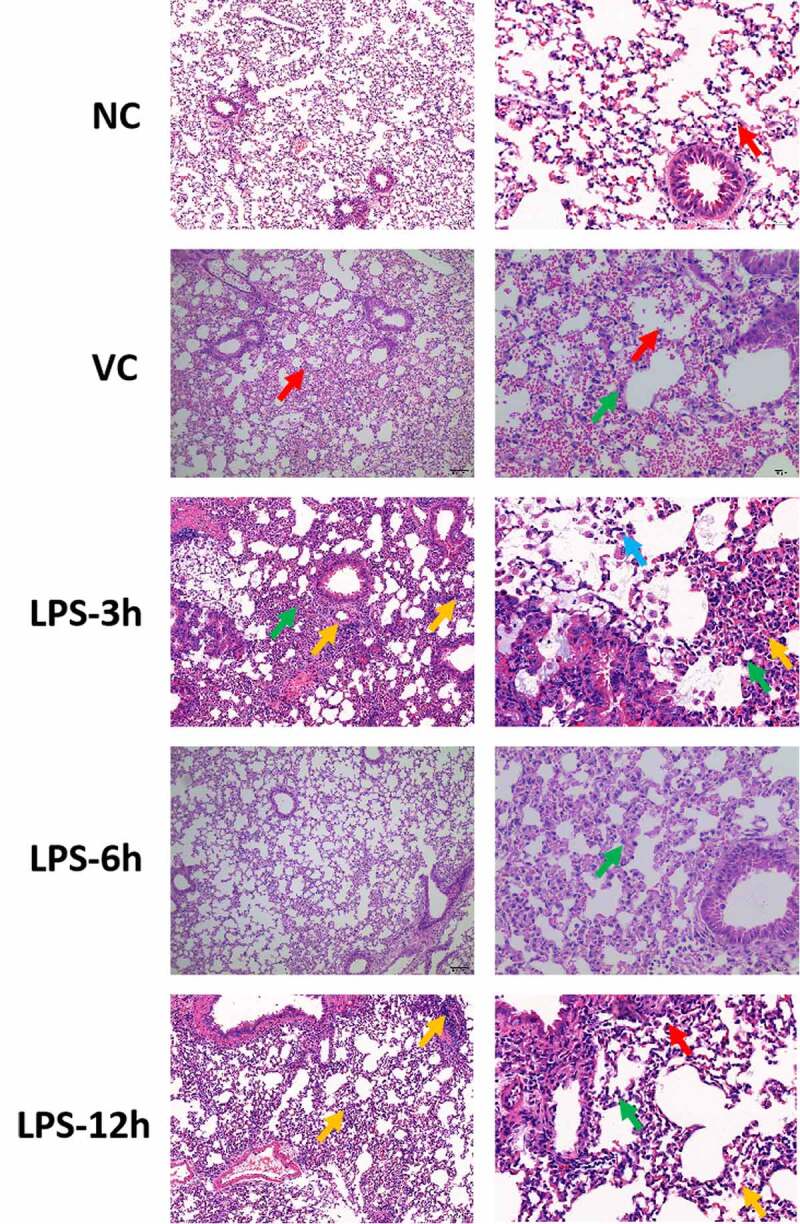
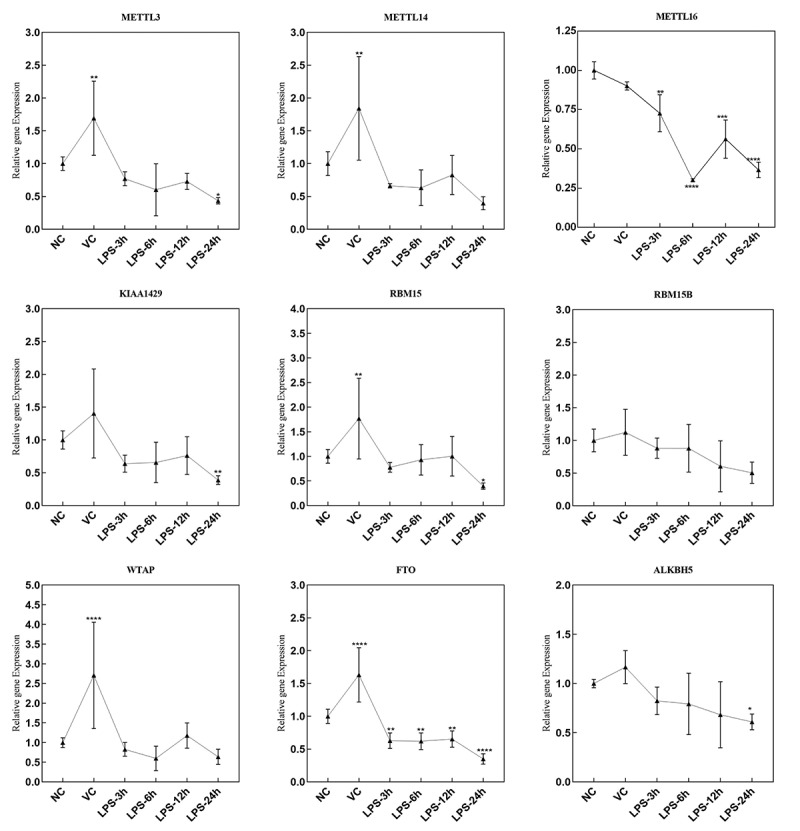
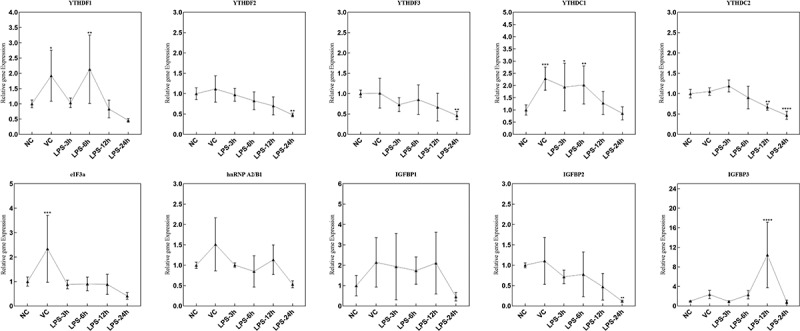
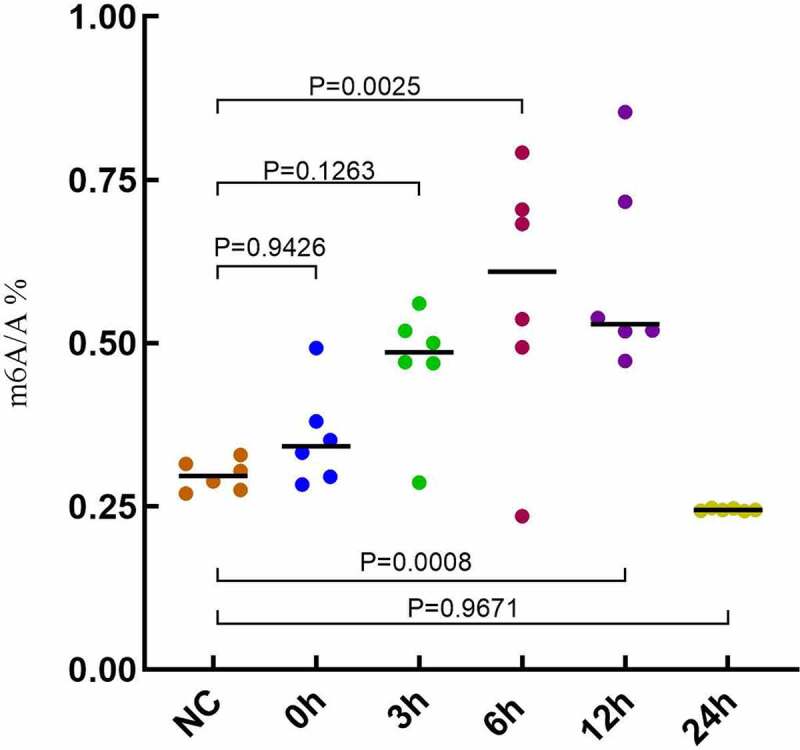
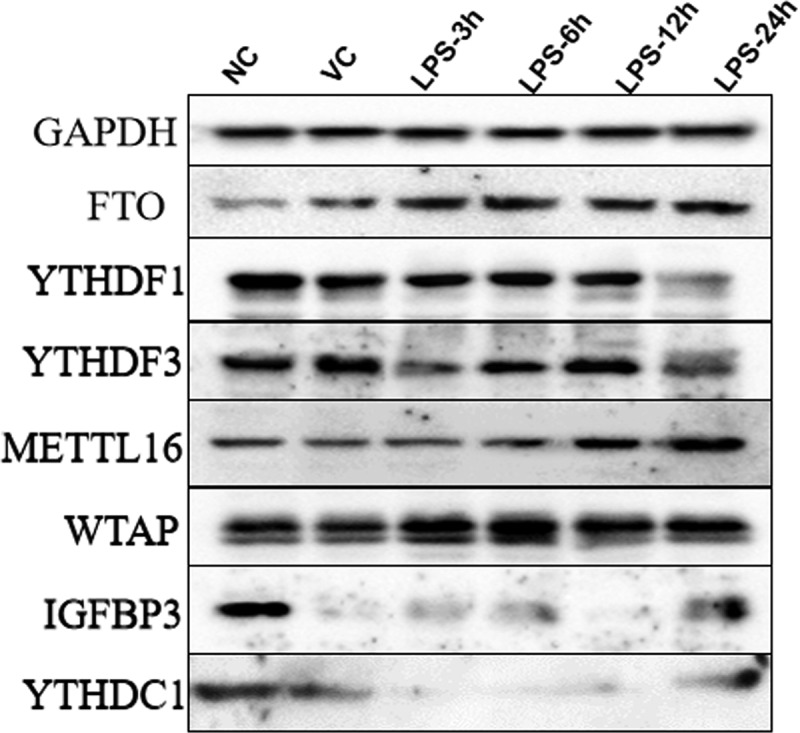
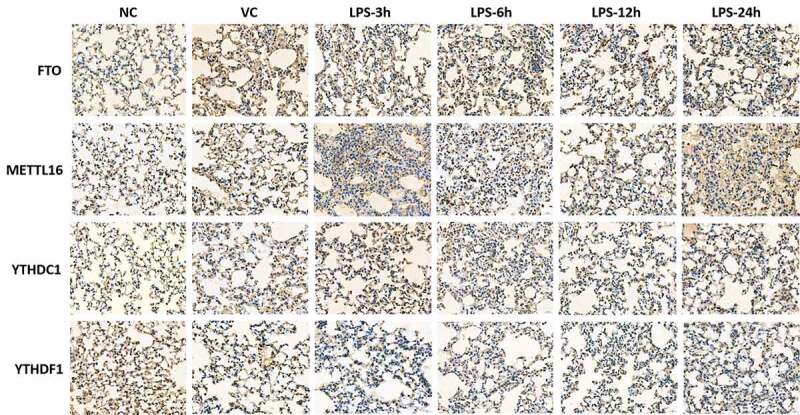
Acute respiratory distress syndrome (ARDS) can cause loss of alveolar-capillary membrane integrity and life-threatening immune responses. The underlying molecular mechanisms of ARDS remain unclear. N6-methyladenosine (m6A)-RNA modification plays an important part in many biological processes. However, it is not clear whether ARDS alters RNA methylation in lung tissue. We tried to investigate the changes of m6A-RNA methylation in lung tissues of lipopolysaccharide (LPS)-induced ARDS mice. Lung tissue samples were collected to detect the expression of m6A factors through hematoxylin and eosin (HE) staining, quantitative reverse transcriptase-polymerase chain reaction (qRT-PCR), immunohistochemical analysis and western blot. The overall m6A levels in lung tissue of ARDS in mouse were detected by UPLC-UV-MS. HE staining showed that the degree of the inflammatory response was more severe in the LPS-3 h group. The mRNA expression of YTHDF1, YTHDC1 and IGFBP3 was remarkably up-regulated at, respectively, 6, 6 and 12 h after LPS treatment. The mRNA expression of METTL16, FTO, METTL3, KIAA1429, RBM15, ALKBH5, YTHDF2, YTHDF3, YTHDC2 and IGFBP2 was significantly down-regulated at 24 h after LPS treatment. The protein expression of METTL16 and FTO increased, YTHDC1, IGFBP3 YTHDF1 and YTHDF3 showed a down-regulation trend after LPS induction. Overall m6A-RNA methylation levels were significantly increased at 6 h after LPS induction. In ARDS mice, LPS-induced m6A methylation may be involved in the expression regulation of inflammatory factors and may play important roles in the occurrence and development of lung tissue. It is suggested that m6A modification may be a promising therapeutic target for ARDS.
急性呼吸窘迫综合征(ARDS)可导致肺泡-毛细血管膜完整性丧失和危及生命的免疫反应。ARDS 的潜在分子机制尚不清楚。N6-甲基腺苷(m6A)-RNA 修饰在许多生物过程中起着重要作用。然而,目前尚不清楚 ARDS 是否会改变肺组织中的 RNA 甲基化。我们试图研究脂多糖(LPS)诱导的 ARDS 小鼠肺组织中 m6A-RNA 修饰的变化。通过苏木精和伊红(HE)染色、定量逆转录-聚合酶链反应(qRT-PCR)、免疫组织化学分析和 Western blot 检测肺组织样本中 m6A 因子的表达。通过 UPLC-UV-MS 检测 ARDS 小鼠肺组织中的整体 m6A 水平。HE 染色显示 LPS-3 h 组的炎症反应程度更严重。LPS 处理后 6、6 和 12 h,YTHDF1、YTHDC1 和 IGFBP3 的 mRNA 表达显著上调。LPS 处理后 24 h,METTL16、FTO、METTL3、KIAA1429、RBM15、ALKBH5、YTHDF2、YTHDF3、YTHDC2 和 IGFBP2 的 mRNA 表达显著下调。LPS 诱导后,METTL16 和 FTO 的蛋白表达增加,YTHDC1、IGFBP3、YTHDF1 和 YTHDF3 呈下调趋势。LPS 诱导后 6 h,整体 m6A-RNA 甲基化水平显著升高。在 ARDS 小鼠中,LPS 诱导的 m6A 甲基化可能参与炎症因子的表达调控,并可能在肺组织的发生和发展中发挥重要作用。提示 m6A 修饰可能成为 ARDS 的有希望的治疗靶点。