Wang Yang, Xu Miaomiao, Yue Peng, Zhang Donghui, Tong Jiyu, Li Yifei
Key Laboratory of Birth Defects and Related Diseases of Women and Children of MOE, Department of Pediatrics, West China Second University Hospital, Sichuan University, Chengdu, China.
Department of Immunology, West China School of Basic Medical Sciences and Forensic Medicine, Sichuan University, Chengdu, China.
Front Cell Dev Biol. 2021 Nov 12;9:772921. doi: 10.3389/fcell.2021.772921. eCollection 2021.
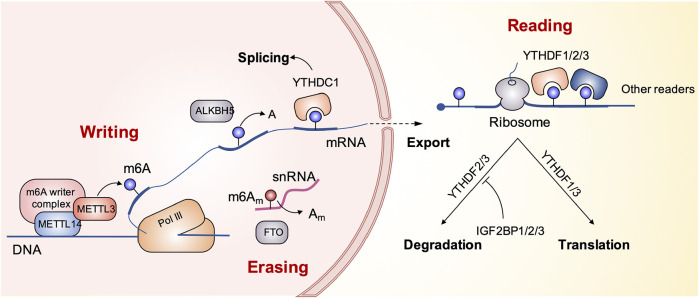
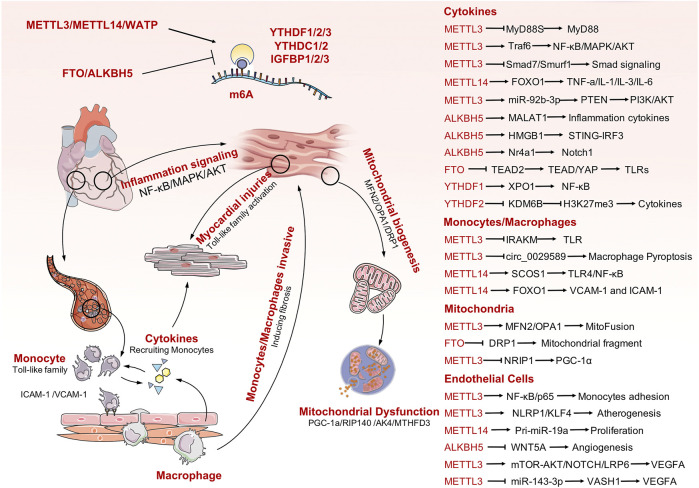
Sepsis is a life-threatening organ dysfunction caused by a host's dysfunctional response to infection. As is known to all, septic heart disease occurs because pathogens invading the blood stimulate the activation of endothelial cells, causing a large number of white blood cells to accumulate and trigger an immune response. However, in severe sepsis, the hematopoietic system is inhibited, and there will also be a decline in white blood cells, at which time the autoimmune system will also be suppressed. During the immune response, a large number of inflammatory factors are released into cells to participate in the inflammatory process, which ultimately damages cardiac myocytes and leads to impaired cardiac function. N6-methyladenosine (m6A) is a common RNA modification in mRNA and non-coding RNA that affects RNA splicing, translation, stability, and epigenetic effects of some non-coding RNAs. A large number of emerging evidences demonstrated m6A modification had been involved in multiple biological processes, especially for sepsis and immune disorders. Unfortunately, there are limited results provided to analyze the association between m6A modification and sepsis-induced cardiovascular dysfunction (SICD). In this review, we firstly summarized current evidences on how m6A mediates the pathophysiological process in cardiac development and cardiomyopathy to emphasize the importance of RNA methylation in maintaining heart biogenesis and homeostasis. Then, we clarified the participants of m6A modification in extended inflammatory responses and immune system activation, which are the dominant and initial changes secondary to sepsis attack. After that, we deeply analyzed the top causes of SICD and identified the activation of inflammatory cytokines, endothelial cell dysfunction, and mitochondrial failure. Thus, the highlight of this review is that we systematically collected all the related potential mechanisms between m6A modification and SICD causes. Although there is lack of direct evidences on SICD, indirect evidences had been demonstrated case by case on every particular molecular mechanism and signal transduction, which require further explorations into the potential links among the listed mechanisms. This provides novel insights into the understanding of SICD.
脓毒症是由宿主对感染的功能失调反应引起的危及生命的器官功能障碍。众所周知,脓毒性心脏病的发生是因为侵入血液的病原体刺激内皮细胞活化,导致大量白细胞积聚并引发免疫反应。然而,在严重脓毒症中,造血系统受到抑制,白细胞也会减少,此时自身免疫系统也会受到抑制。在免疫反应过程中,大量炎症因子释放到细胞中参与炎症过程,最终损害心肌细胞并导致心功能受损。N6-甲基腺苷(m6A)是mRNA和非编码RNA中常见的RNA修饰,它影响RNA剪接、翻译、稳定性以及一些非编码RNA的表观遗传效应。大量新出现的证据表明,m6A修饰参与了多种生物学过程,尤其是脓毒症和免疫紊乱。不幸的是,目前用于分析m6A修饰与脓毒症诱导的心血管功能障碍(SICD)之间关联的结果有限。在本综述中,我们首先总结了目前关于m6A如何介导心脏发育和心肌病病理生理过程的证据,以强调RNA甲基化在维持心脏生物发生和内环境稳定中的重要性。然后,我们阐明了m6A修饰在广泛炎症反应和免疫系统激活中的参与情况,这是脓毒症发作后的主要和初始变化。之后,我们深入分析了SICD的主要原因,并确定了炎症细胞因子的激活、内皮细胞功能障碍和线粒体功能衰竭。因此,本综述的亮点在于我们系统地收集了m6A修饰与SICD病因之间所有相关的潜在机制。尽管缺乏关于SICD的直接证据,但在每个特定的分子机制和信号转导方面都有逐例证明的间接证据,这需要进一步探索所列机制之间的潜在联系。这为理解SICD提供了新的见解。