Addiction Research Center Alternative Georgia, 14A Nutsubidze Street, Office 2, 0177, Tbilisi, Georgia.
School of Natural Sciences and Medicine, Ilia State University, 3/5 Kakutsa Cholokashvili Ave., 0162, Tbilisi, Georgia.
Harm Reduct J. 2022 Mar 9;19(1):25. doi: 10.1186/s12954-022-00601-z.
This study examines the effects of COVID-19 related restrictions on the supply of illicit drugs, drug-use behaviour among people who use drugs (PWUD) regularly (at least weekly), and drug-related service provision in Tbilisi, Georgia.
In this mixed methods study, a cohort of 50 Georgian PWUD recruited through a snow-ball sampling participated in a bi-weekly online survey in April-September, 2020. They also took part in the qualitative telephone interviews at 12- and 24-week follow-up time points. In addition, four key informants (field experts) were interviewed monthly to assess their perceptions of changes in the illicit drug market and drug service delivery.
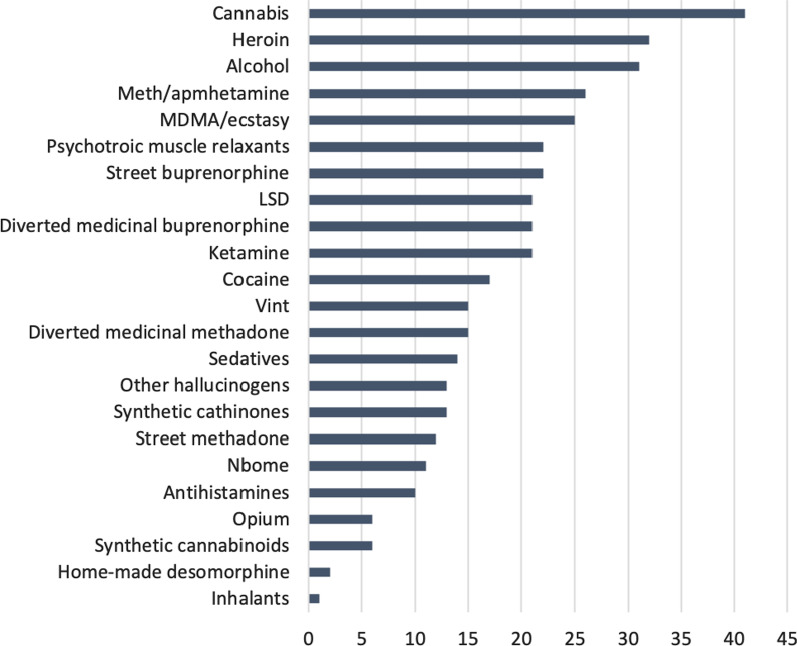
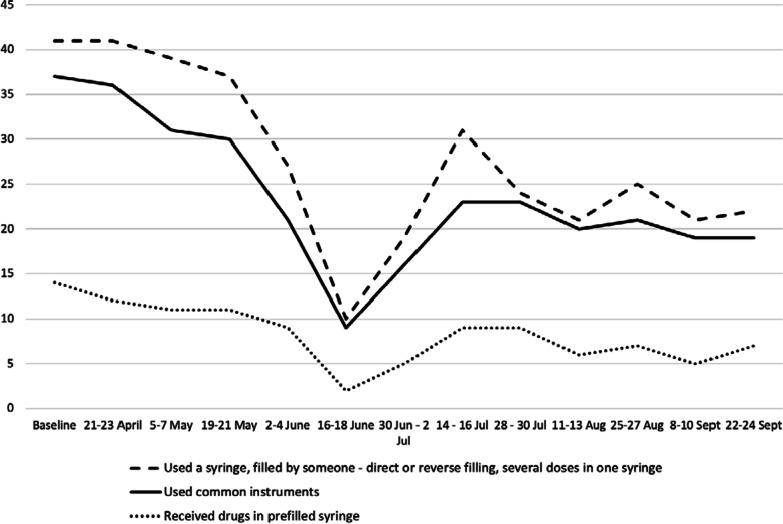
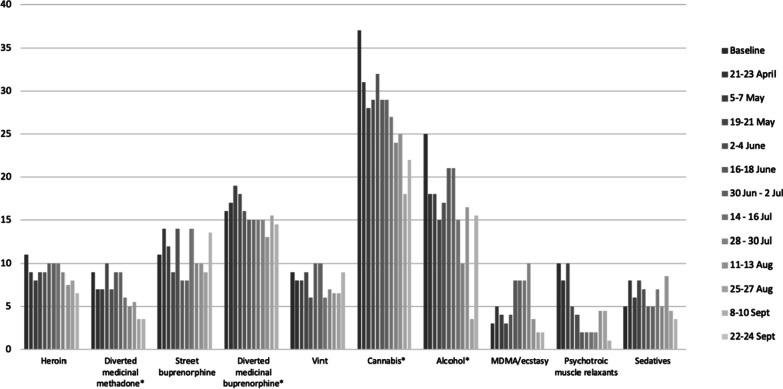
Mean age in the sample was 36 (range 18-60); 39 (78%) were males. Perceived availability of drugs was reduced during the lockdown, and many PWUD switched to alternative substances when preferred drugs were not available. On average, participants used significantly fewer substances over the course of the study, from 3.5 substances in the preceding 14 days to 2.1 (aOR 0.92; 95% CI 0.90-0.94). Consumption of cannabis products declined significantly (aOR 0.89; 95% CI 0.84-0.95), likewise alcohol (aOR 0.94; 95% CI 0.88-1.0), diverted medicinal methadone (aOR 0.85; 95% CI 0.8-0.9) and diverted medicinal buprenorphine (aOR 0.91; 95% CI 0.84-0.99). PWUD cited fewer contacts with drug dealers, the lack of transportation, and the lack of conventional recreational environment as the main reasons for these changes. When access to sterile injection equipment was limited, PWUD exercised risk-containing injection behaviours, such as buying drugs in pre-filled syringes (aOR 0.88; 95% CI 0.80-0.96). Harm reduction and treatment programs managed to adopt flexible strategies to recover services that were affected during the initial stage of the pandemic.
COVID-19-related restrictive measures mediated specific changes in supply models and drug-use behaviours. While adjusting to the new environment, many PWUD would engage in activities that put them under increased risk of overdose and blood-borne infections. Harm reduction and treatment services need to develop and implement protocols for ensuring uninterrupted service delivery during lockdowns, in anticipation of the similar epidemics or other emergency situations.
本研究考察了 COVID-19 相关限制措施对格鲁吉亚第比利斯非法药物供应、经常(至少每周)使用毒品的药物使用者(PWUD)的药物使用行为以及毒品相关服务提供的影响。
在这项混合方法研究中,通过滚雪球抽样招募了 50 名格鲁吉亚 PWUD 参加了 2020 年 4 月至 9 月期间的每两周一次的在线调查。他们还在 12 周和 24 周的随访时间点参加了定性电话访谈。此外,每月采访 4 名关键信息提供者(领域专家),以评估他们对非法毒品市场和毒品服务提供变化的看法。
样本中的平均年龄为 36 岁(18-60 岁);39 人(78%)为男性。在封锁期间,人们认为毒品的可获得性降低了,许多 PWUD 在没有首选毒品时转而使用替代物质。平均而言,参与者在研究过程中使用的物质数量显著减少,从之前 14 天的 3.5 种物质减少到 2.1 种(优势比 0.92;95%置信区间 0.90-0.94)。大麻制品的消费显著下降(优势比 0.89;95%置信区间 0.84-0.95),同样下降的还有酒精(优势比 0.94;95%置信区间 0.88-1.0)、转移药用美沙酮(优势比 0.85;95%置信区间 0.8-0.9)和转移药用丁丙诺啡(优势比 0.91;95%置信区间 0.84-0.99)。PWUD 表示,与毒贩的接触减少、交通不便以及缺乏传统的娱乐环境是导致这些变化的主要原因。当获得无菌注射设备受到限制时,PWUD 会采取风险较高的注射行为,例如购买预填充注射器中的药物(优势比 0.88;95%置信区间 0.80-0.96)。减少伤害和治疗计划设法采取灵活的策略来恢复在大流行初期受到影响的服务。
COVID-19 相关限制措施介导了供应模式和药物使用行为的具体变化。在适应新环境的过程中,许多 PWUD 将从事使他们面临更高药物过量和血液传播感染风险的活动。减少伤害和治疗服务需要制定和实施协议,以确保在封锁期间不间断地提供服务,以应对类似的流行病或其他紧急情况。