Soil Science Department, Urmia University, P.O. Box 165, 57134, Urmia, Islamic Republic of Iran.
Department of Plant Production and Genetics, Faculty of Agriculture, Urmia University, Urmia, Islamic Republic of Iran.
Sci Rep. 2022 Mar 9;12(1):3868. doi: 10.1038/s41598-022-07789-x.
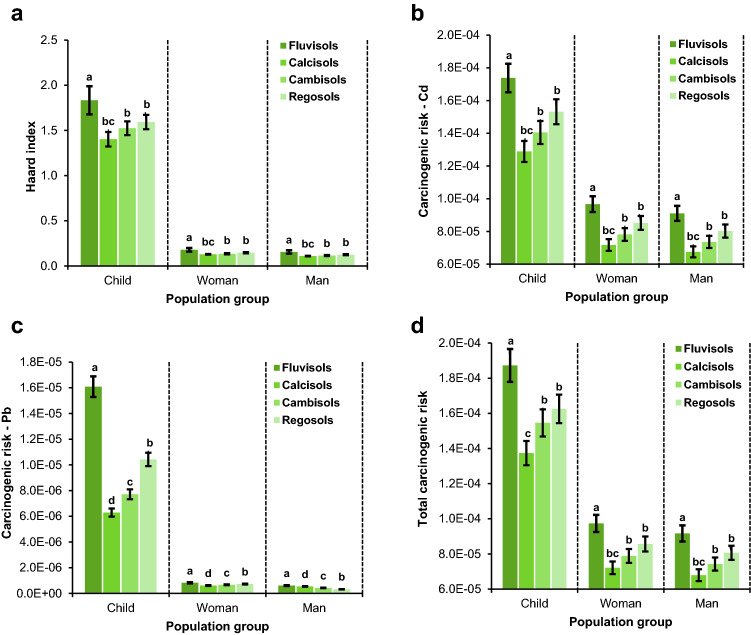
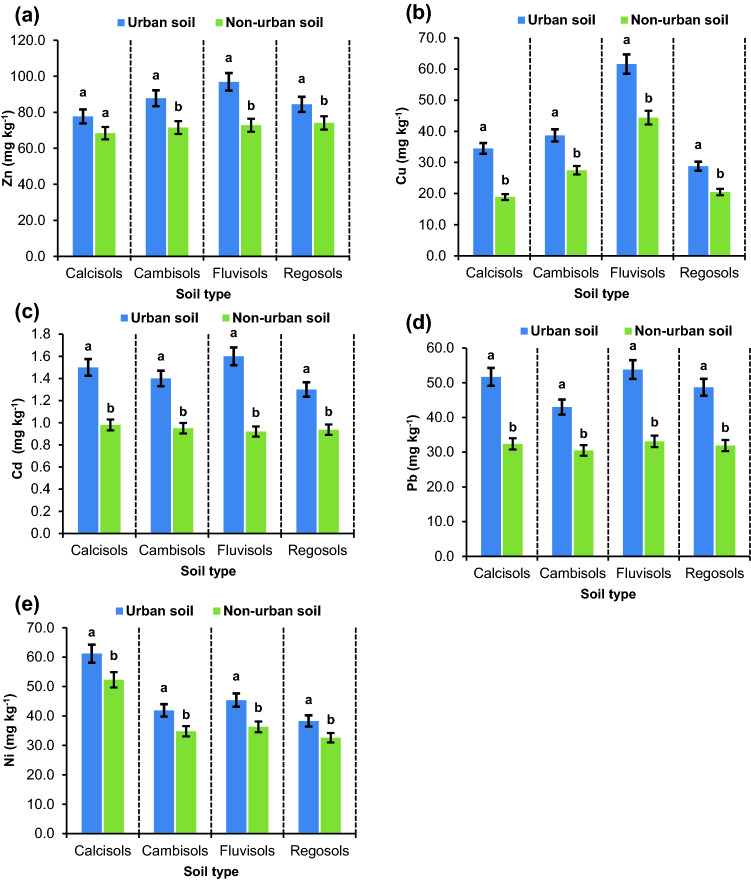
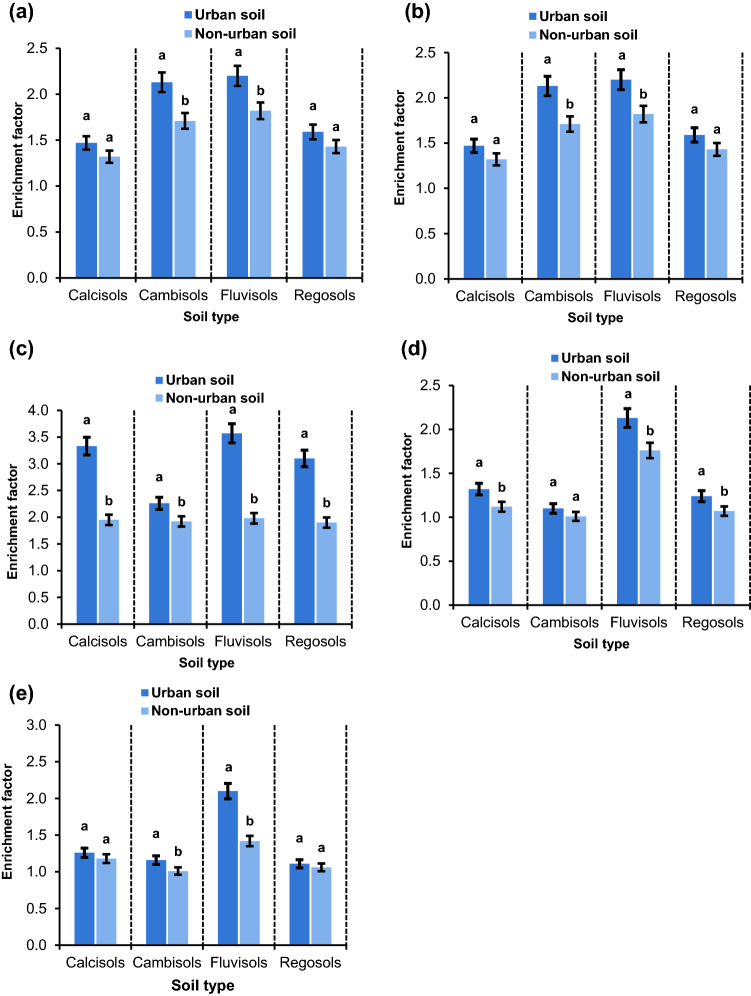
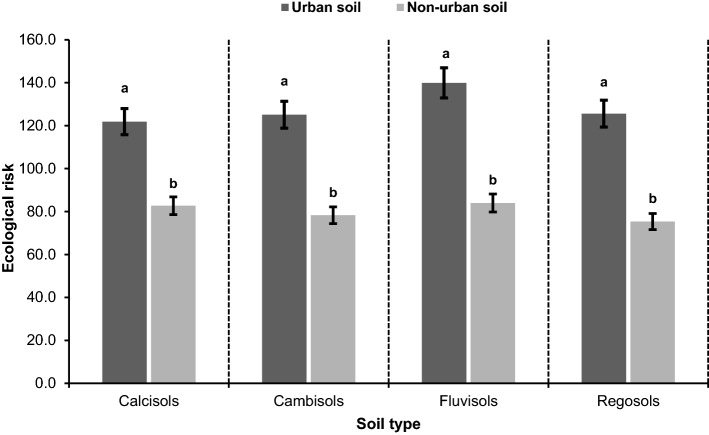
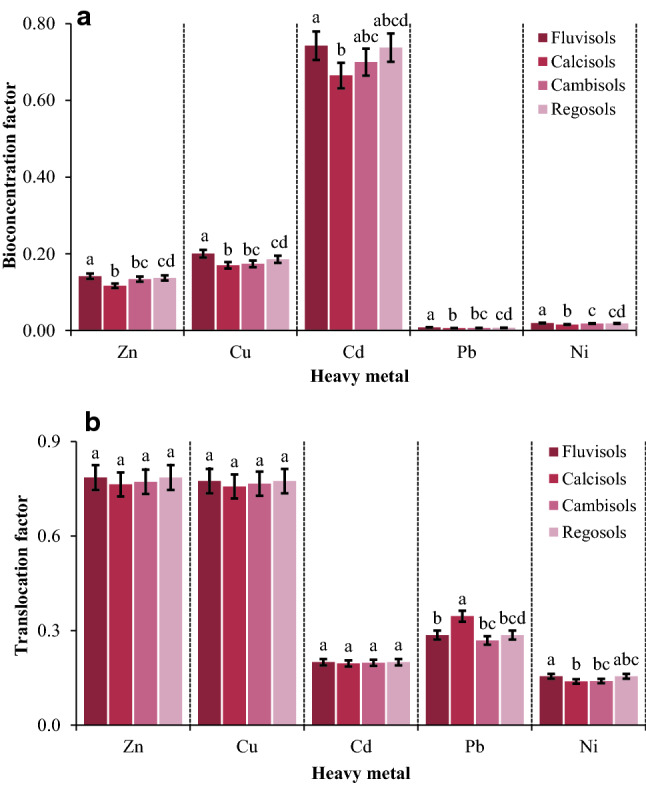
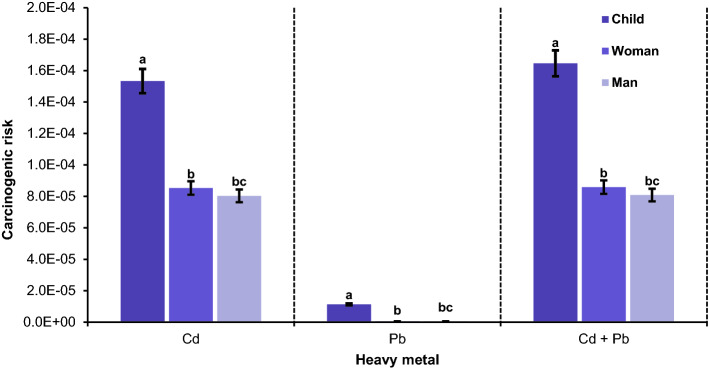
The contamination of urban soils with heavy elements due to the rapid development of urbanization and urban services has become a major environmental and human health challenge. This study provides insight into the urbanization controls on combined pollution severity and health risk potential of heavy metals in corn-cultivated urban versus non-urban soils. A multifaceted assessment was conducted using enrichment factor (EF), ecological risk (ER), bioconcentration factor (BCF), transmission factor (TF), hazard index (HI), and carcinogenic risk (CR). The results indicate a significant increase in the concentration of all metals in urban farmlands. When compared to the non-urban soils, EF implies a significant increase of all metals in the urban soil, downgrading this index from minimal enrichment (EF < 2) in the control soils to moderate enrichment (2 ≤ EF < 5) in the urban soils. Likewise, the average ER value showed an increase in the urban soils than in the control soils in the order of Fluvisols (66.6%) > Regosols (66.1%) > Cambisols (59.8%) > Calcisols (47%). The BCF and TF values for different elements decreased in the order of Cd (0.41-0.92) > Cu (0.1-0.23) > Zn (0.1-0.18) > Ni (0.01-0.03) > Pb (0.005-0.011) and Zn (0.75-0.94) > Cu (0.72-0.85) > Pb (0.09-0.63) > Cd (0.17-0.22) > Ni (0.01-0.21), respectively, which indicates that certain metals were not mobilized to the extent that they had been accumulated in the plant roots. The total carcinogenic risk was ranged from 5.88E-05 to 1.17E-04 for children and from 1.17E-04 to 2.30E-04 for adults, which implies a greater associated health risk for children.
由于城市化和城市服务的快速发展,城市土壤受到重金属的污染,这已成为一个主要的环境和人类健康挑战。本研究深入探讨了城市化对城市与非城市玉米种植土壤中重金属综合污染严重程度和健康风险潜在性的控制作用。本研究采用富集因子(EF)、生态风险(ER)、生物浓缩因子(BCF)、传递因子(TF)、危害指数(HI)和致癌风险(CR)等多方面评估方法。结果表明,所有金属在城市农田土壤中的浓度都有显著增加。与非城市土壤相比,EF 表明城市土壤中所有金属的富集程度明显增加,将这一指数从对照土壤中的轻度富集(EF<2)降级为城市土壤中的中度富集(2≤EF<5)。同样,在城市土壤中,平均 ER 值高于对照土壤,其顺序为:淋溶土(66.6%)>雏形土(66.1%)>始成土(59.8%)>钙层土(47%)。不同元素的 BCF 和 TF 值按 Cd(0.41-0.92)>Cu(0.1-0.23)>Zn(0.1-0.18)>Ni(0.01-0.03)>Pb(0.005-0.011)和 Zn(0.75-0.94)>Cu(0.72-0.85)>Pb(0.09-0.63)>Cd(0.17-0.22)>Ni(0.01-0.21)的顺序依次降低,这表明某些金属没有被迁移到足以被植物根系积累的程度。儿童的总致癌风险范围为 5.88E-05 至 1.17E-04,而成人的总致癌风险范围为 1.17E-04 至 2.30E-04,这表明儿童面临更大的相关健康风险。