Department of Genetics, University of Delhi, New Delhi, India.
Front Immunol. 2022 Feb 21;13:834247. doi: 10.3389/fimmu.2022.834247. eCollection 2022.
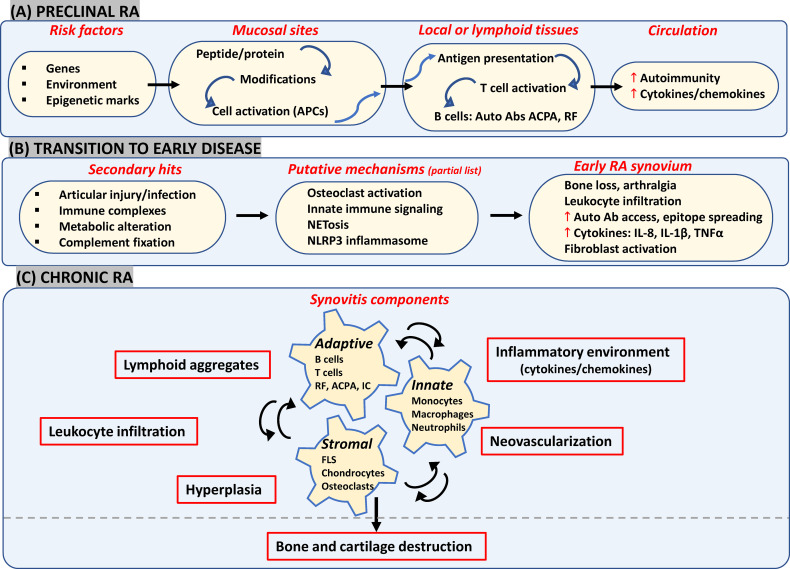
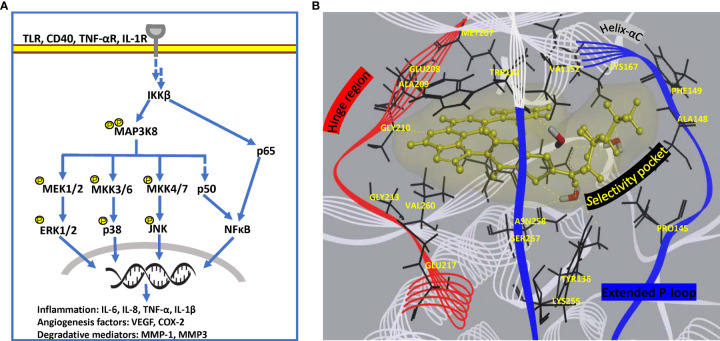
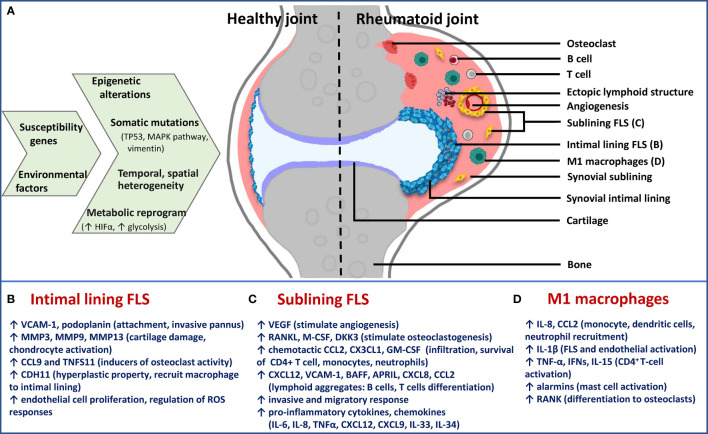
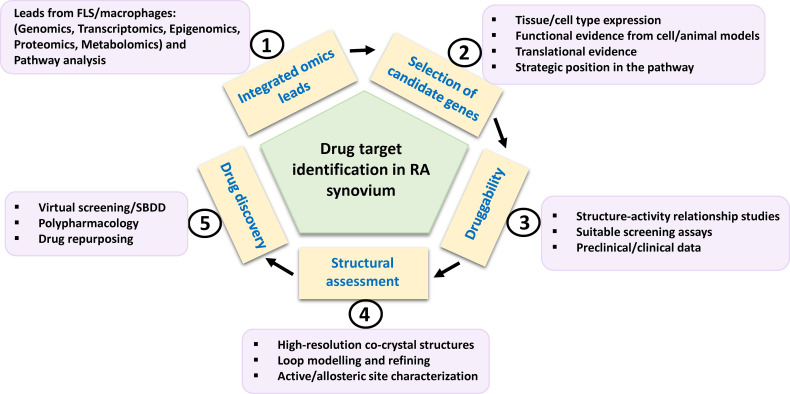
Rheumatoid arthritis (RA) is a multifactorial autoimmune disease characterized by chronic inflammation and destruction of multiple small joints which may lead to systemic complications. Altered immunity pathogenic autoantibodies pre-date clinical symptom development by several years. Incompletely understood range of mechanisms trigger joint-homing, leading to clinically evident articular disease. Advances in therapeutic approaches and understanding pathogenesis have improved prognosis and likely remission. However, partial/non-response to conventional and biologic therapies witnessed in a subset of patients highlights the need for new therapeutics. It is now evident that joint disease chronicity stems from recalcitrant inflammatory synovial environment, majorly maintained by epigenetically and metabolically reprogrammed synoviocytes. Therefore, interference with effector functions of activated cell types seems a rational strategy to reinstate synovial homeostasis and complement existing anti-inflammatory interventions to mitigate chronic RA. Presenting this newer aspect of fibroblast-like synoviocytes and myeloid cells underlying the altered synovial biology in RA and its potential for identification of new druggable targets is attempted in this review. Major leads from i) molecular insights of pathogenic cell types from hypothesis free OMICS approaches; ii) hierarchy of their dysregulated signaling pathways; and iii) knowledge of druggability of molecular nodes in these pathways are highlighted. Development of such synovial biology-directed therapeutics hold promise for an enriched drug repertoire for RA.
类风湿关节炎(RA)是一种多因素自身免疫性疾病,其特征为慢性炎症和多个小关节破坏,可导致全身并发症。异常的免疫、致病性自身抗体在临床症状出现前数年就已存在。发病机制中仍有许多机制尚未完全阐明,这些机制引发了关节归巢,导致临床上明显的关节疾病。治疗方法和发病机制的进步改善了预后并可能实现缓解。然而,部分/非生物治疗反应在一部分患者中观察到,这突显了对新疗法的需求。现在已经很明显,关节疾病的慢性是由顽固的炎症性滑膜环境引起的,主要由表观遗传和代谢重编程的滑膜细胞维持。因此,干扰激活细胞类型的效应功能似乎是恢复滑膜稳态的合理策略,补充现有的抗炎干预措施以减轻慢性 RA。本综述试图探讨 RA 中改变的滑膜生物学中潜在的成纤维样滑膜细胞和髓样细胞的这一新方面及其用于鉴定新的可成药靶点的潜力。从以下方面得出的主要线索:i)无假设的 OMICS 方法对致病细胞类型的分子见解;ii)它们失调信号通路的层次结构;和 iii)这些通路中分子节点的成药性知识。这种基于滑膜生物学的治疗方法的发展有望为 RA 提供更丰富的药物库。