Department of Molecular Biology, Massachusetts General Hospital, Boston, United States.
Department of Neurobiology, Harvard Medical School, Boston, United States.
Elife. 2022 Mar 10;11:e75140. doi: 10.7554/eLife.75140.
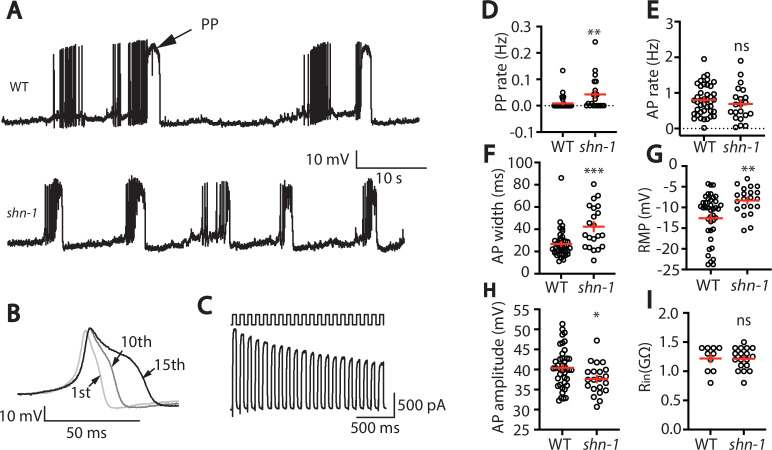
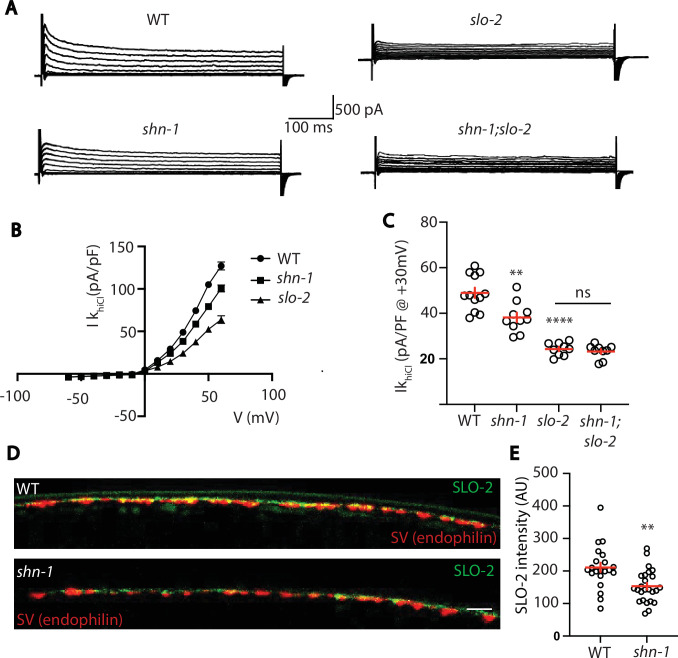
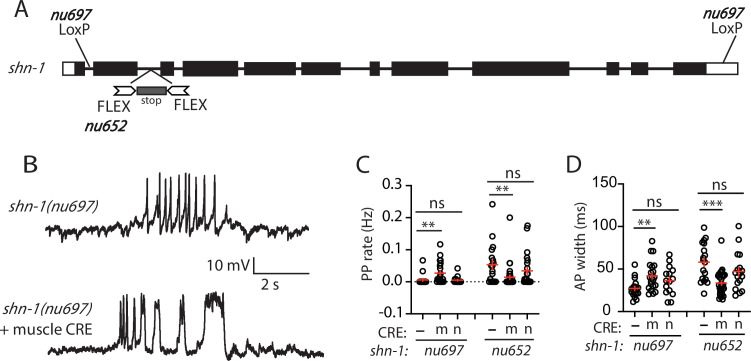
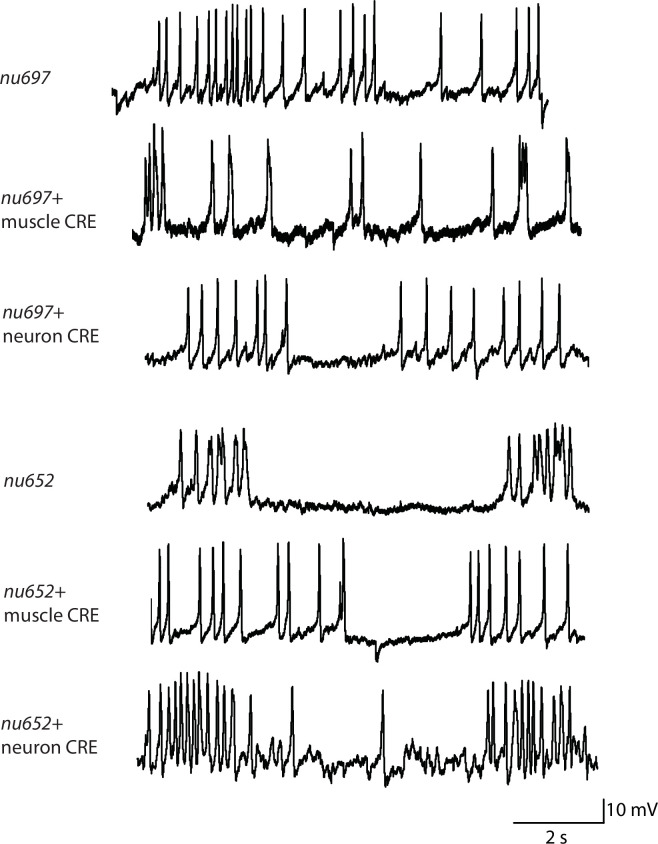
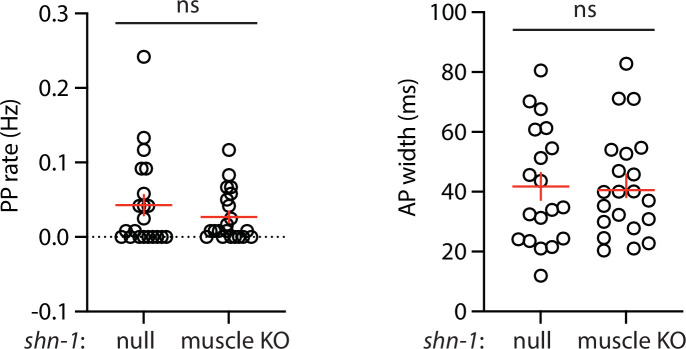
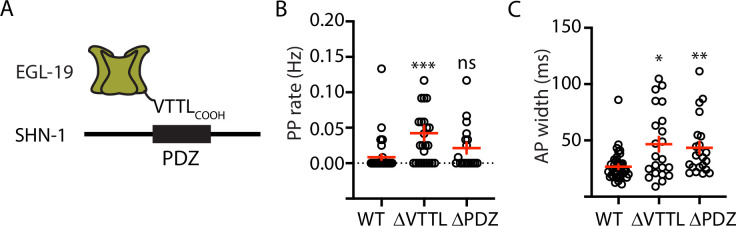
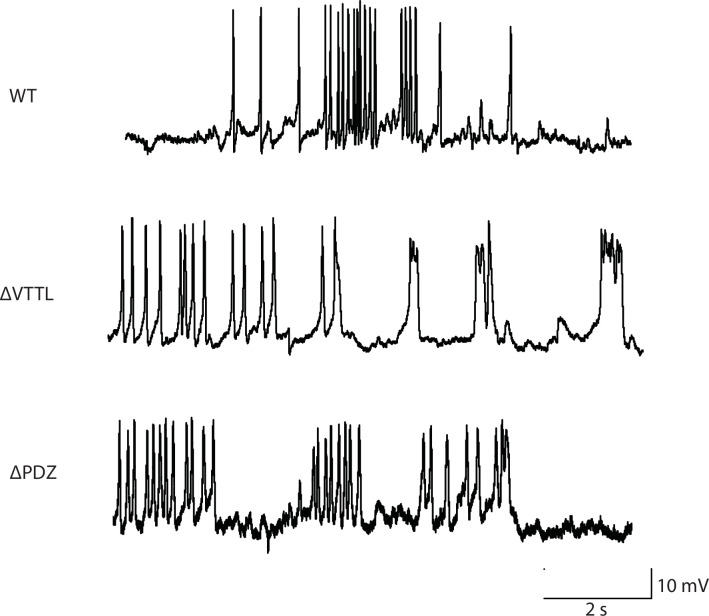
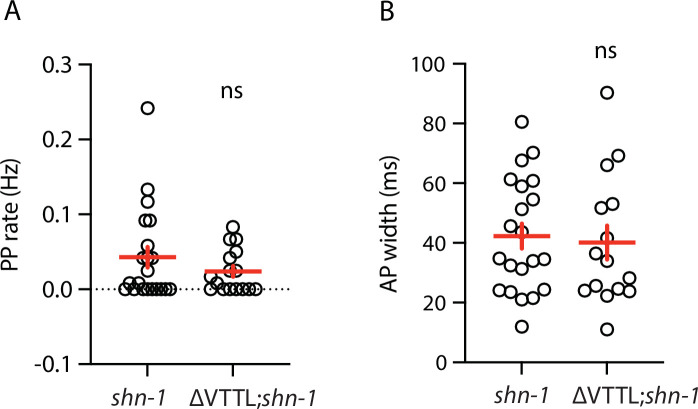
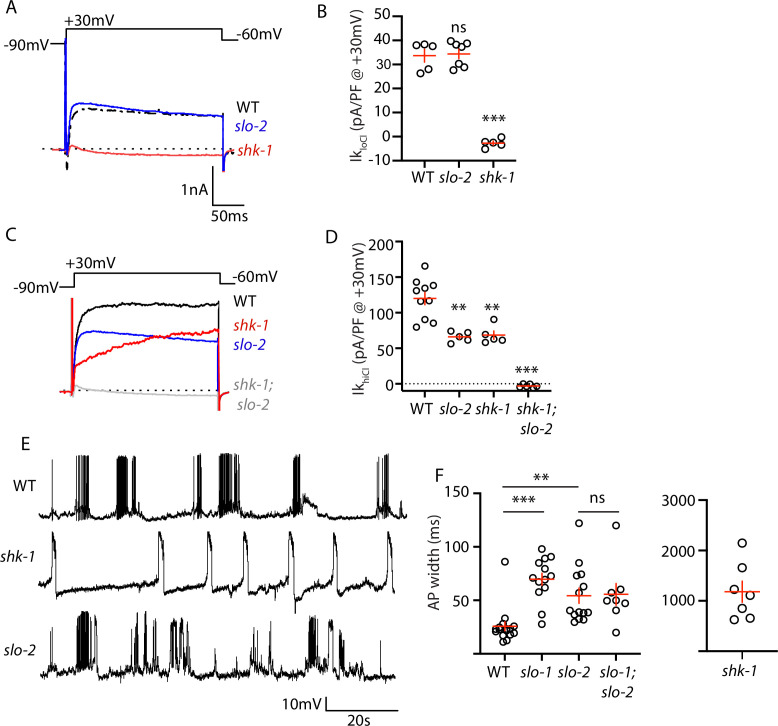
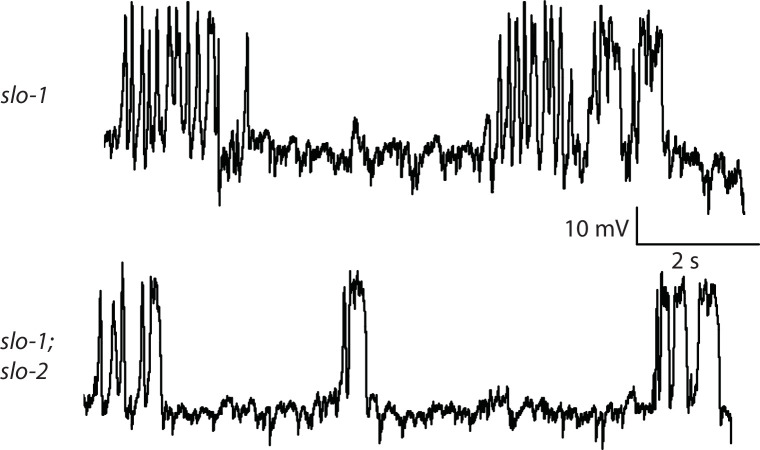
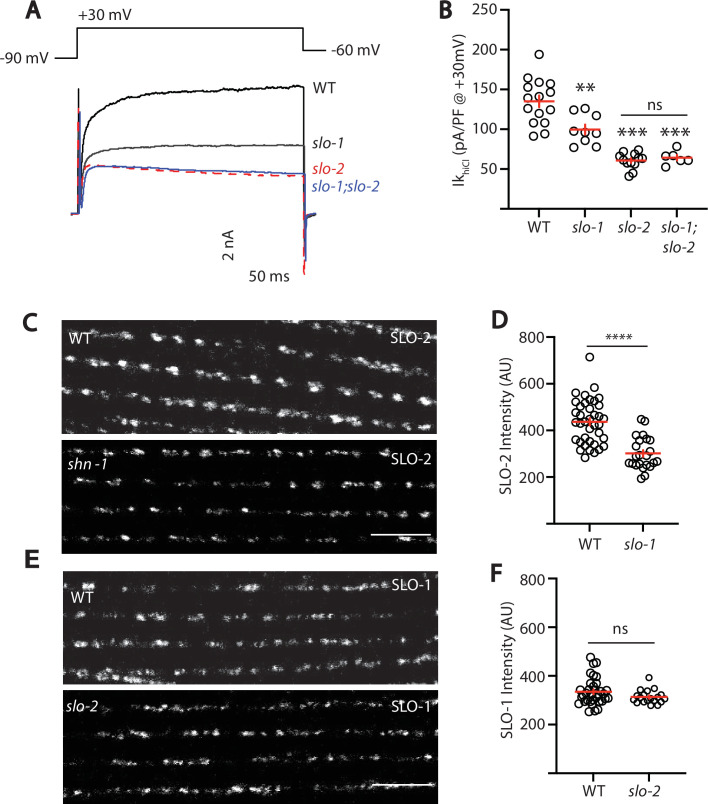
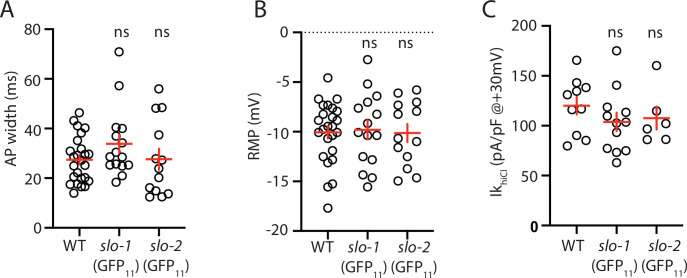
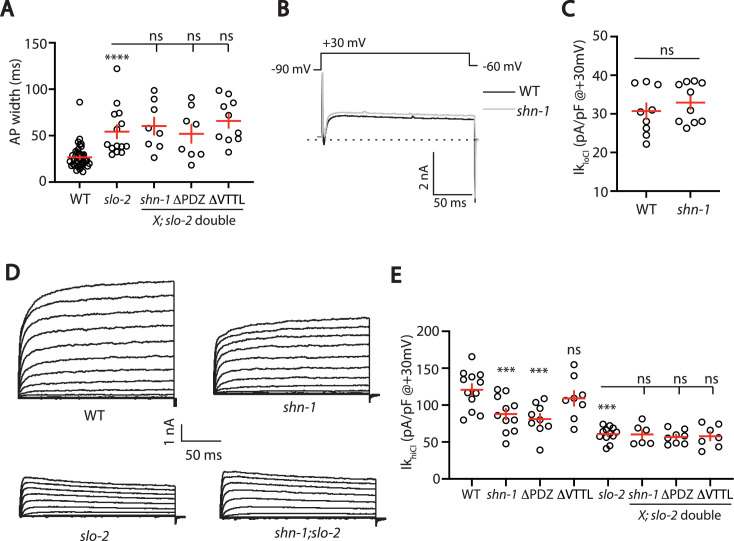
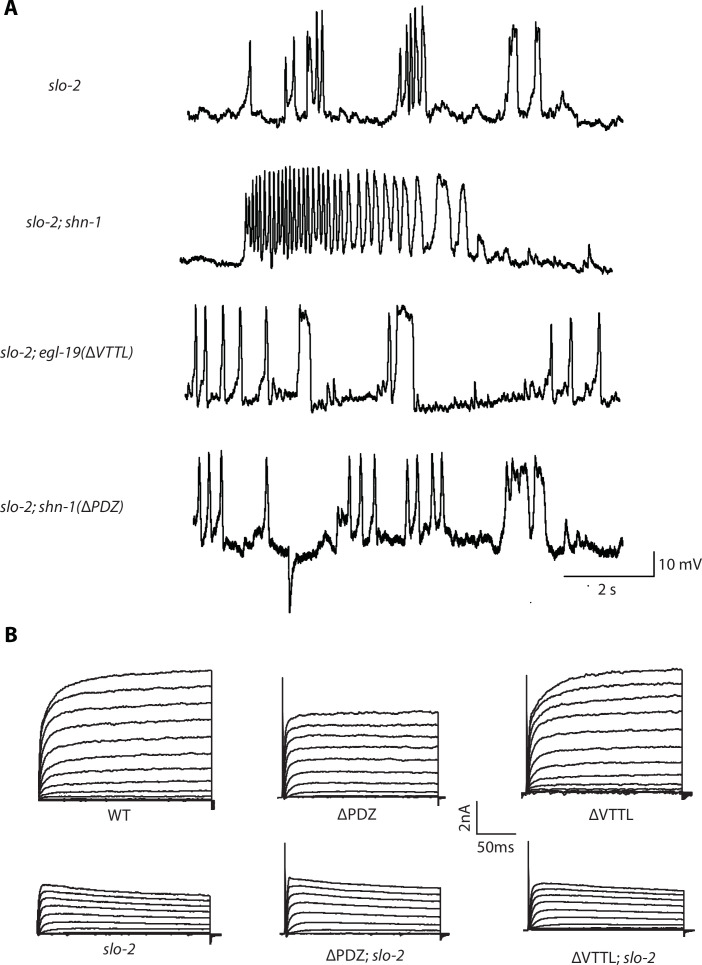
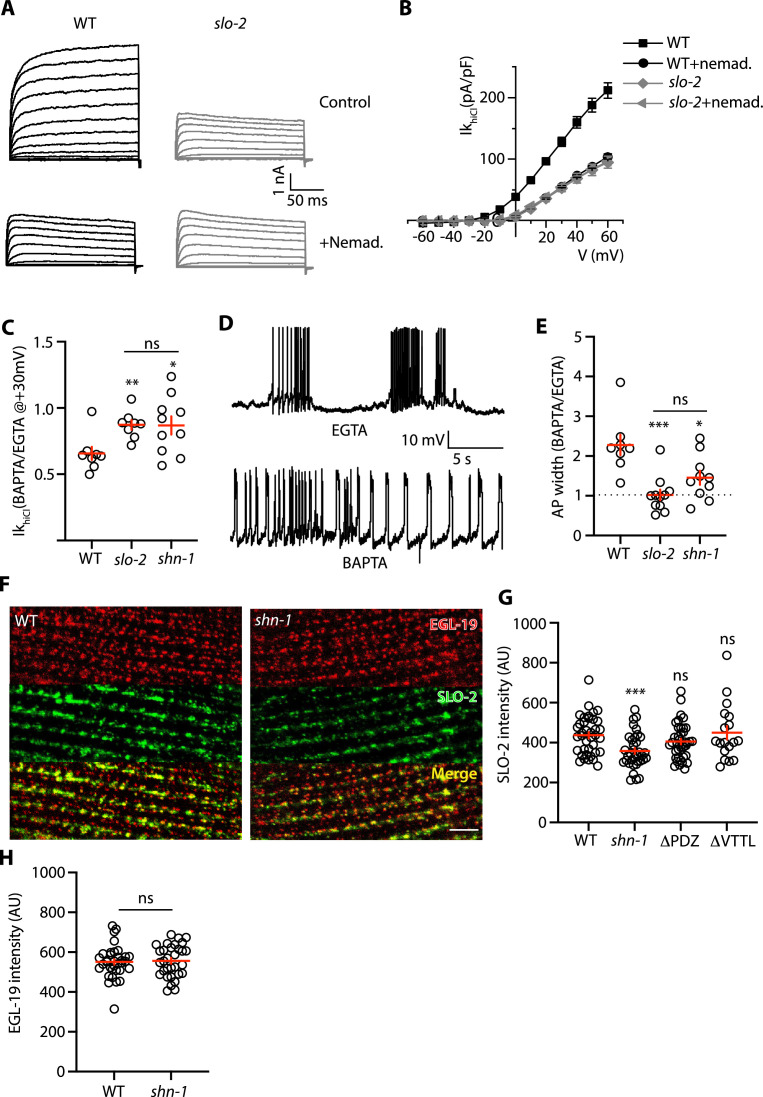
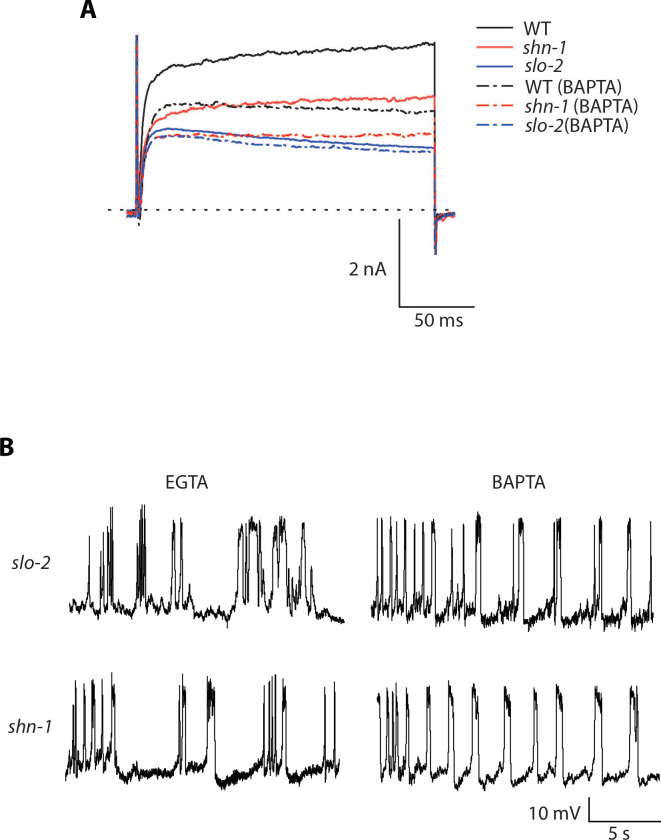
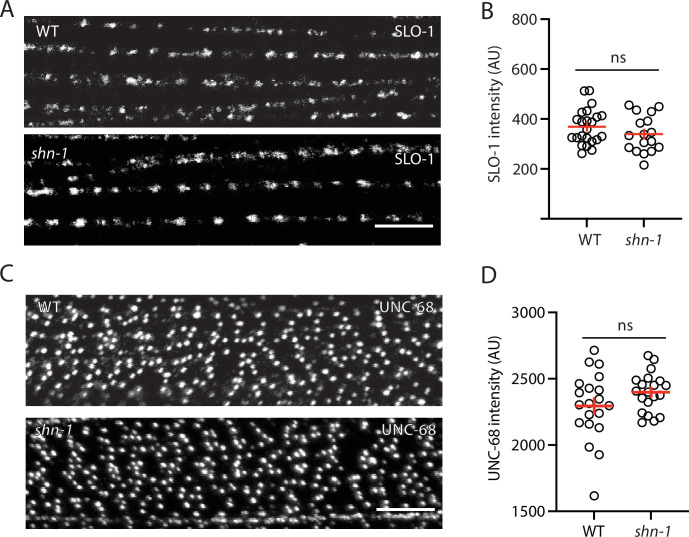
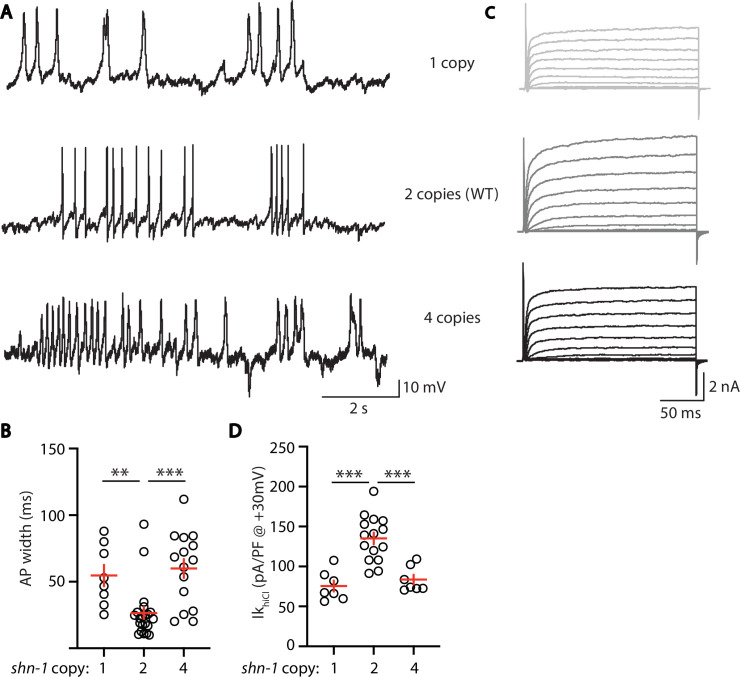
Mutations altering the scaffolding protein Shank are linked to several psychiatric disorders, and to synaptic and behavioral defects in mice. Among its many binding partners, Shank directly binds CaV1 voltage activated calcium channels. Here, we show that the SHN-1/Shank promotes CaV1 coupling to calcium activated potassium channels. Mutations inactivating SHN-1, and those preventing SHN-1 binding to EGL-19/CaV1 all increase action potential durations in body muscles. Action potential repolarization is mediated by two classes of potassium channels: SHK-1/KCNA and SLO-1 and SLO-2 BK channels. BK channels are calcium-dependent, and their activation requires tight coupling to EGL-19/CaV1 channels. SHN-1's effects on AP duration are mediated by changes in BK channels. In mutants, SLO-2 currents and channel clustering are significantly decreased in both body muscles and neurons. Finally, increased and decreased gene copy number produce similar changes in AP width and SLO-2 current. Collectively, these results suggest that an important function of Shank is to promote microdomain coupling of BK with CaV1.
改变支架蛋白 Shank 的突变与几种精神疾病有关,并与小鼠的突触和行为缺陷有关。在其许多结合伴侣中,Shank 直接结合 CaV1 电压激活钙通道。在这里,我们表明 SHN-1/Shank 促进 CaV1 与钙激活钾通道的偶联。使 SHN-1 失活的突变,以及阻止 SHN-1 与 EGL-19/CaV1 结合的突变,都会增加体肌中的动作电位持续时间。动作电位复极化由两类钾通道介导:SHK-1/KCNA 和 SLO-1 和 SLO-2 BK 通道。BK 通道是钙依赖性的,其激活需要与 EGL-19/CaV1 通道紧密偶联。SHN-1 对 AP 持续时间的影响是通过改变 BK 通道介导的。在 突变体中,体肌和神经元中的 SLO-2 电流和通道聚类显著减少。最后,增加和减少 基因拷贝数会导致 AP 宽度和 SLO-2 电流发生相似的变化。总的来说,这些结果表明 Shank 的一个重要功能是促进 BK 与 CaV1 的微区偶联。