Division of Cardiology, State Key Laboratory for Oncogenes and Related Genes, Renji Hospital, School of Medicine, Shanghai Jiao Tong University, Shanghai Cancer Institute, Shanghai, China.
Institute of Interdisciplinary Integrative Medicine Research, Shanghai University of Traditional Medicine, Shanghai, China.
Eur Heart J. 2022 Jun 21;43(24):2317-2334. doi: 10.1093/eurheartj/ehac109.
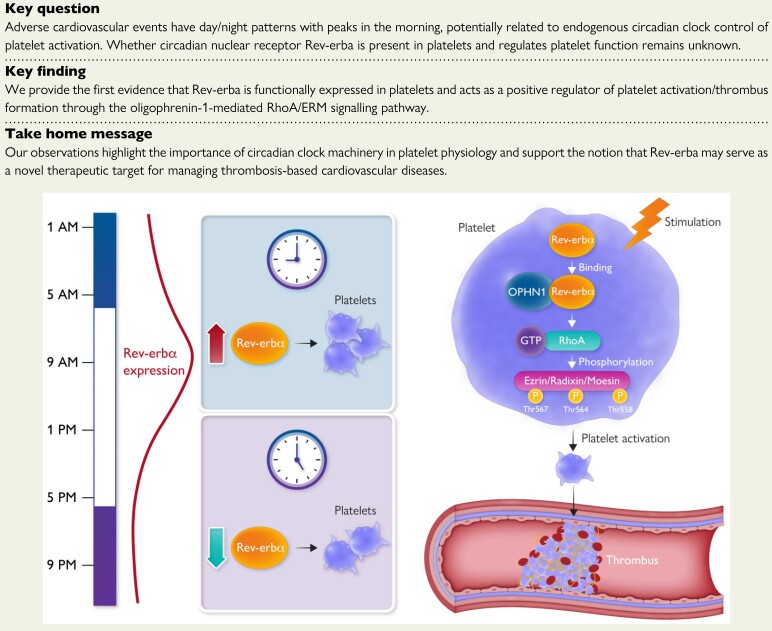
Adverse cardiovascular events have day/night patterns with peaks in the morning, potentially related to endogenous circadian clock control of platelet activation. Circadian nuclear receptor Rev-erbα is an essential and negative component of the circadian clock. To date, the expression profile and biological function of Rev-erbα in platelets have never been reported.
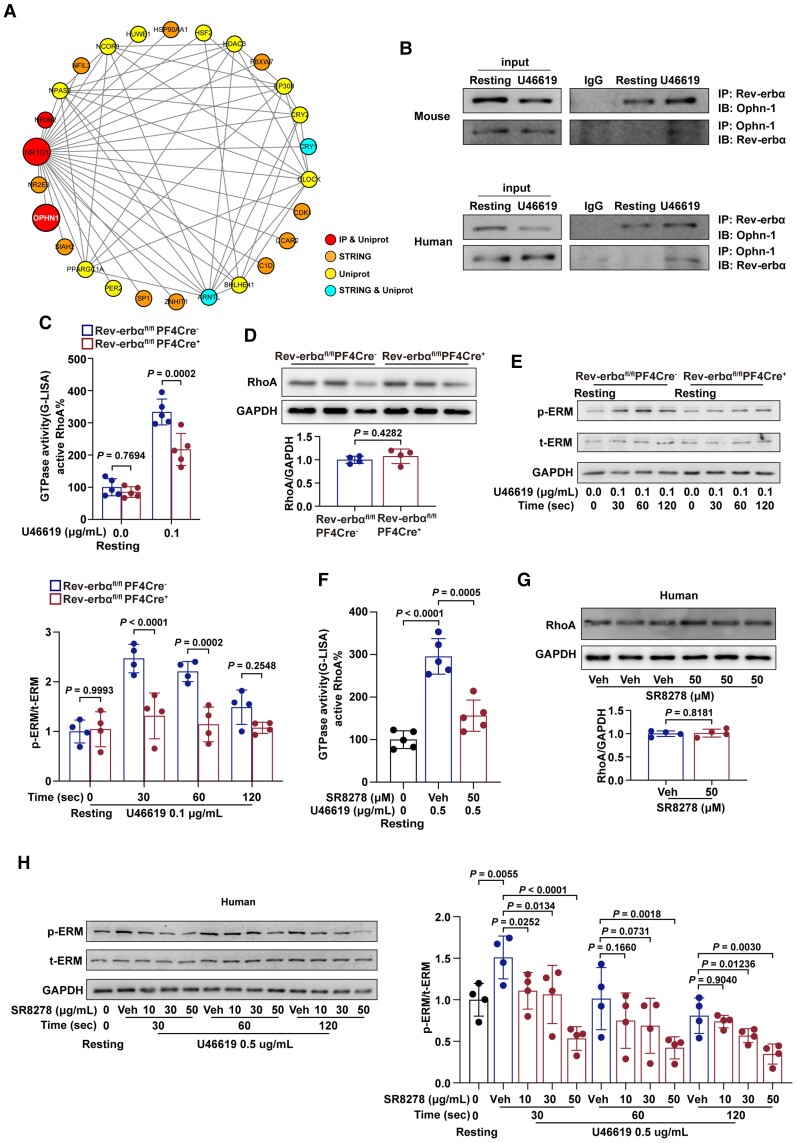
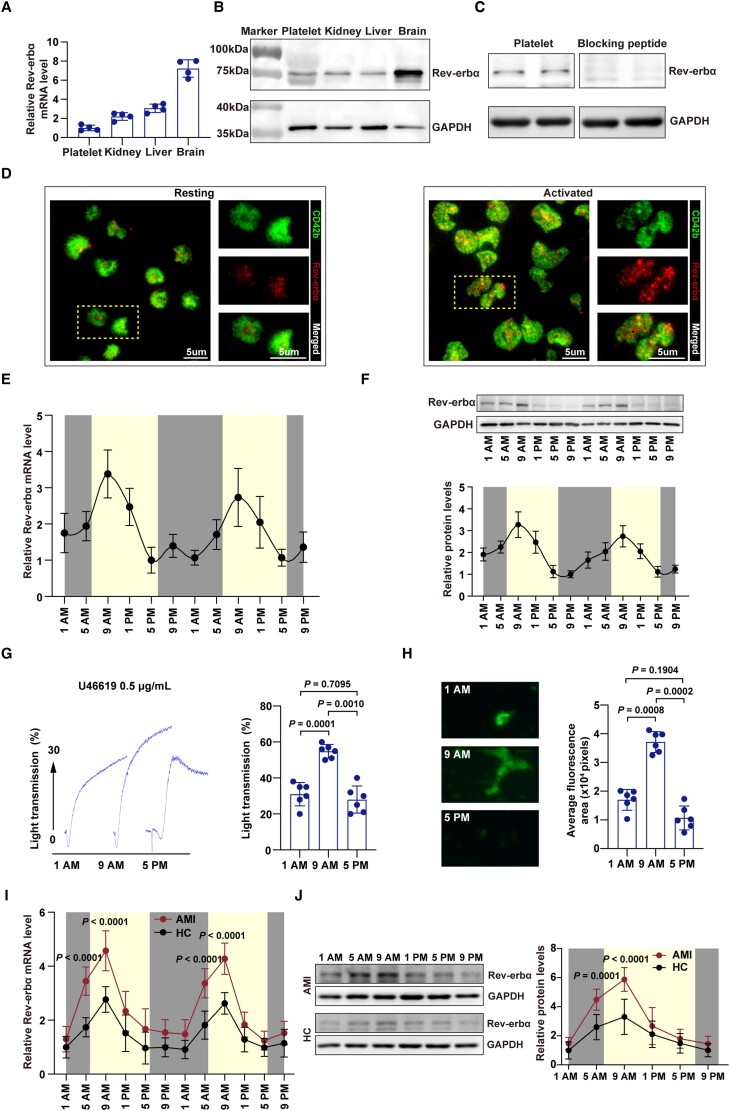
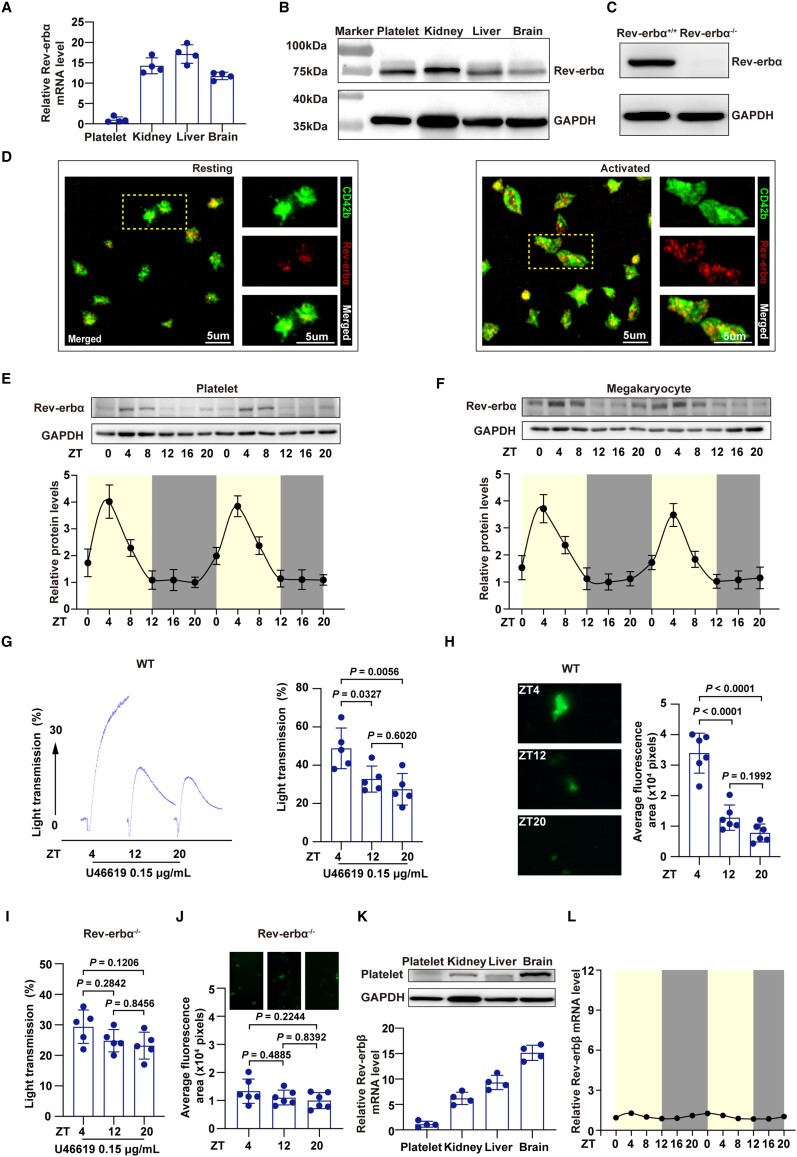
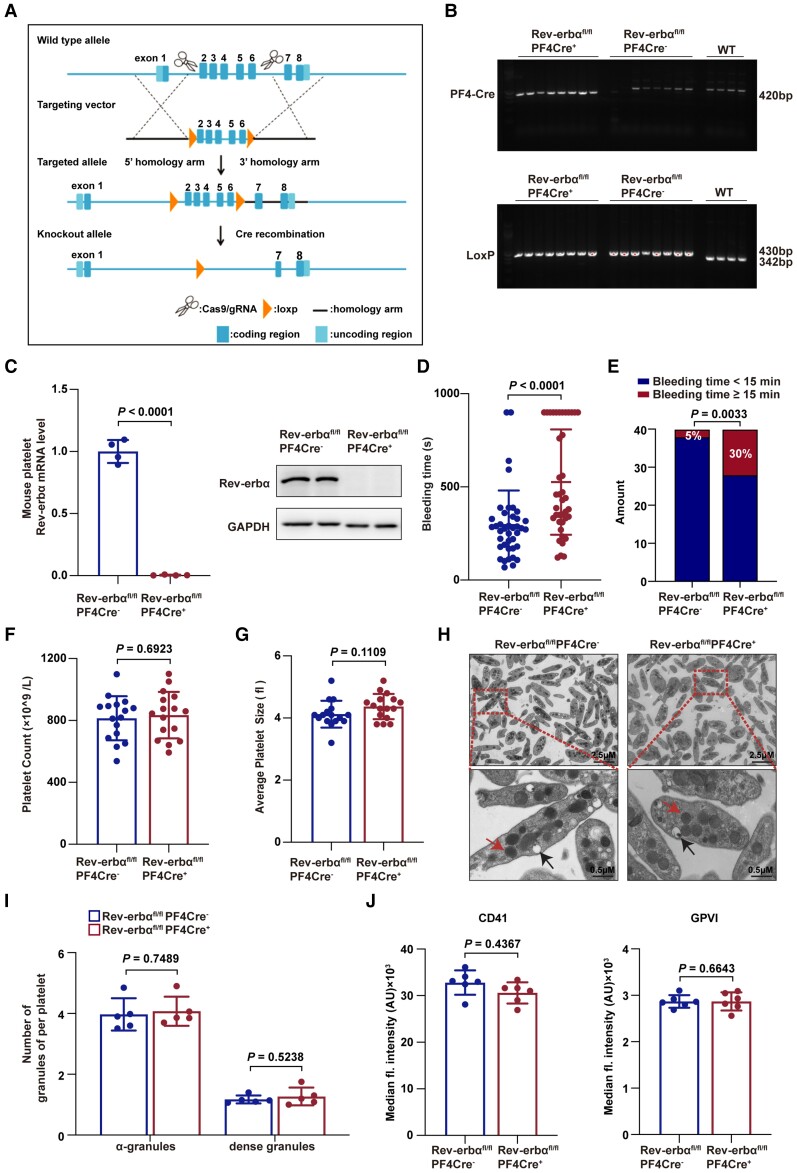
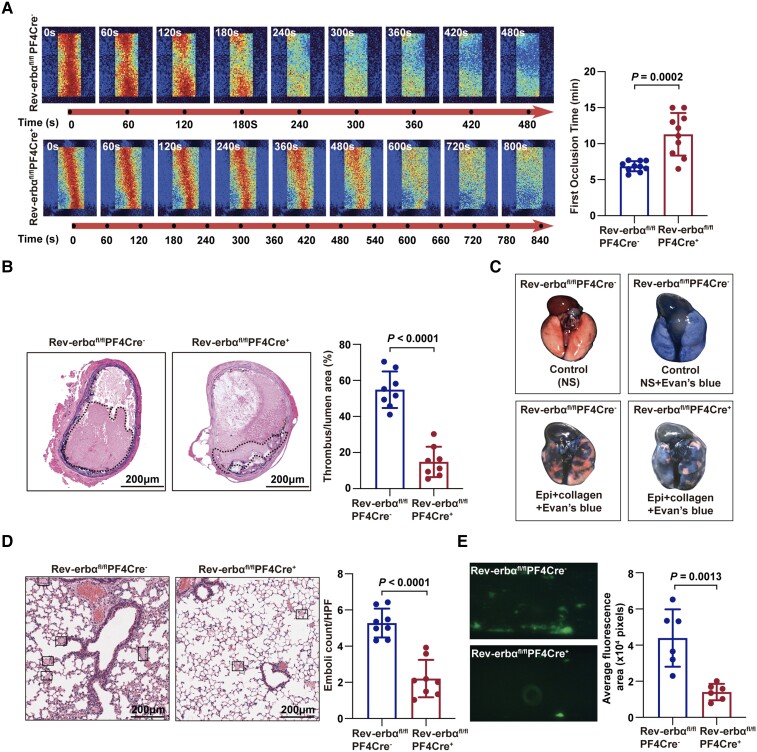
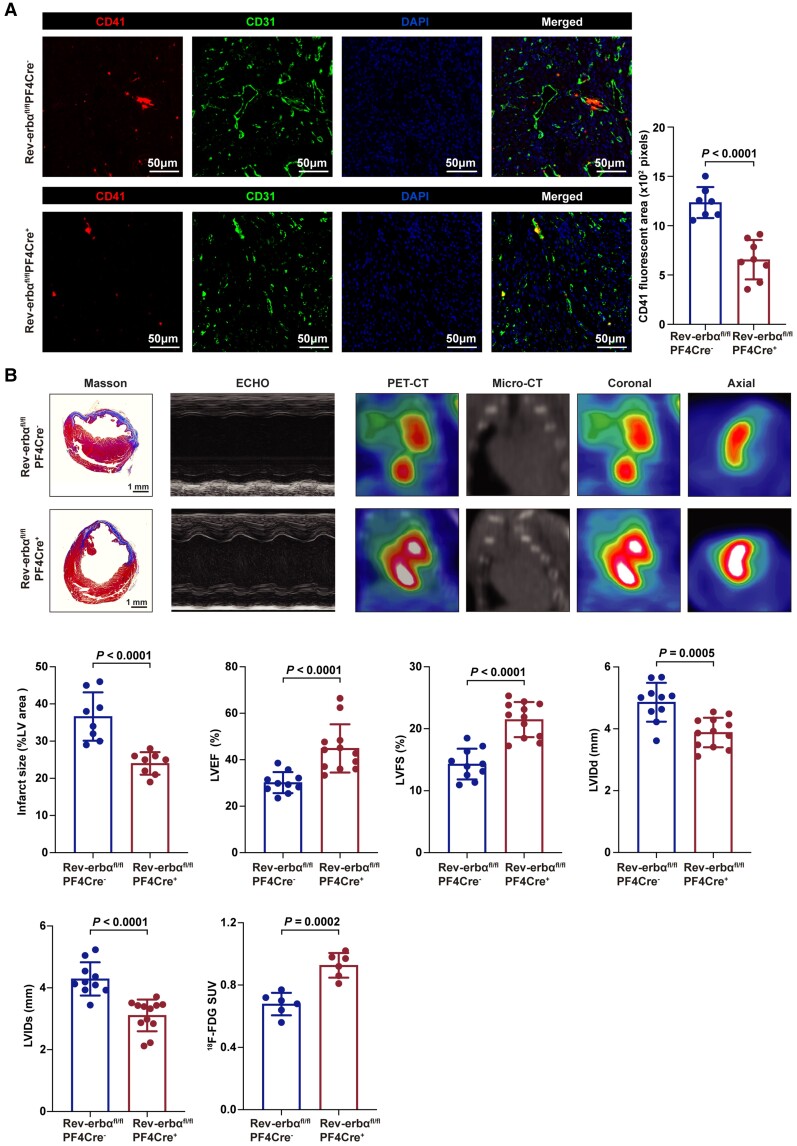
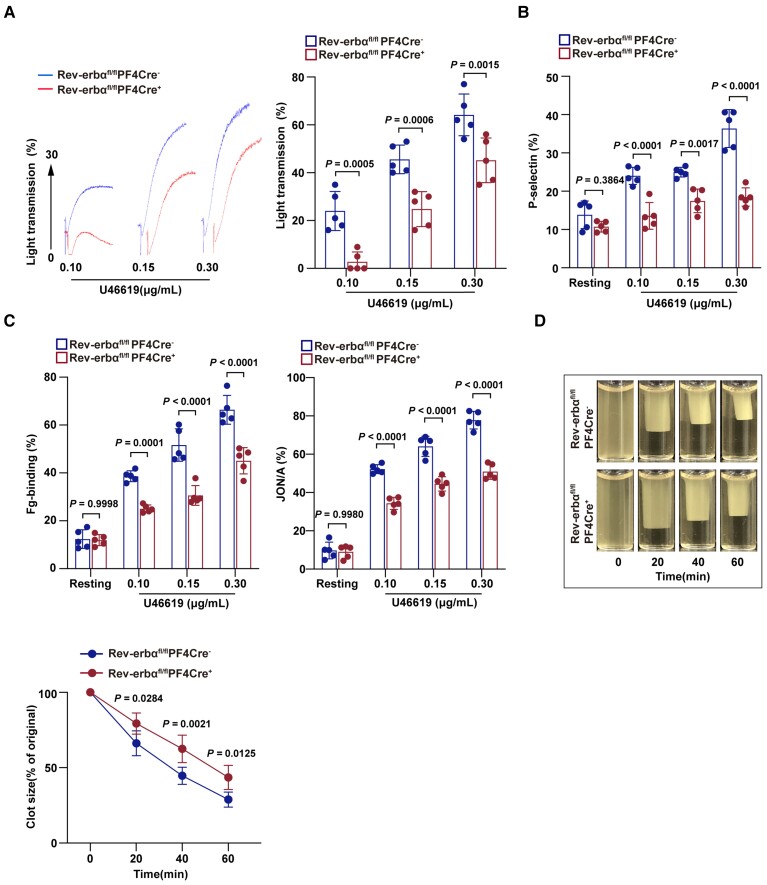
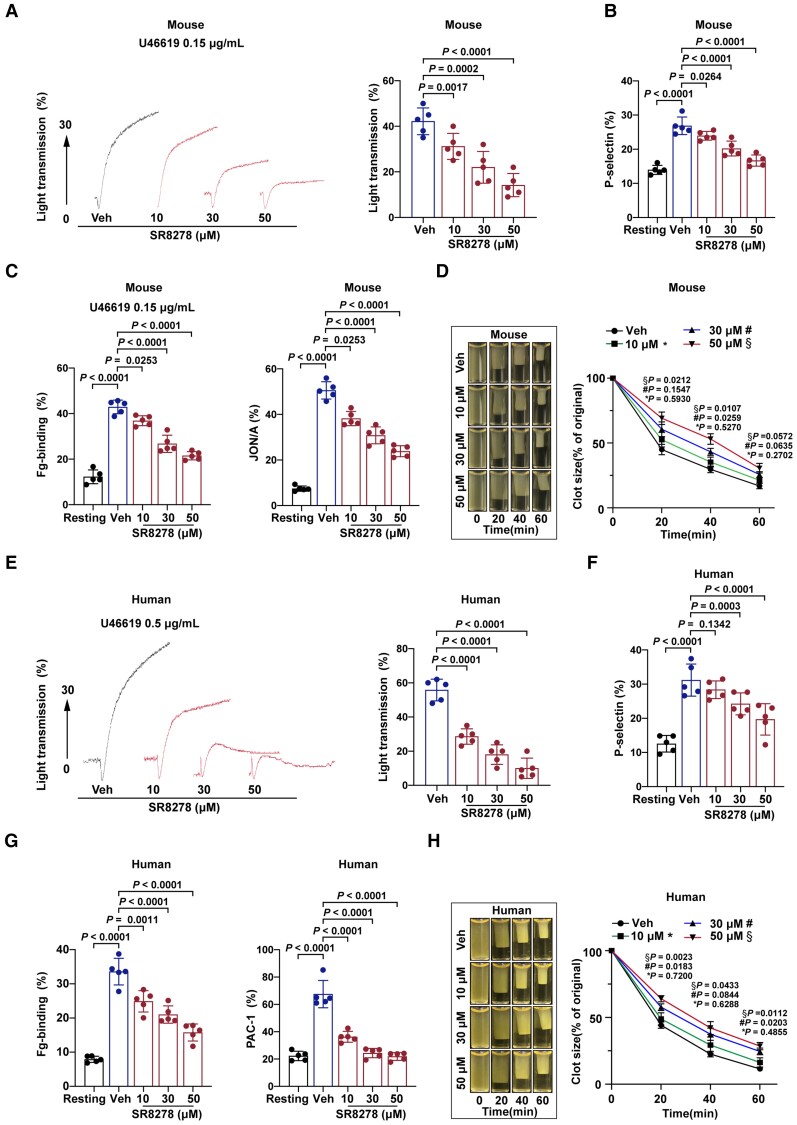
Here, we report the presence and functions of circadian nuclear receptor Rev-erbα in human and mouse platelets. Both human and mouse platelet Rev-erbα showed a circadian rhythm that positively correlated with platelet aggregation. Global Rev-erbα knockout and platelet-specific Rev-erbα knockout mice exhibited defective in haemostasis as assessed by prolonged tail-bleeding times. Rev-erbα deletion also reduced ferric chloride-induced carotid arterial occlusive thrombosis, prevented collagen/epinephrine-induced pulmonary thromboembolism, and protected against microvascular microthrombi obstruction and infarct expansion in an acute myocardial infarction model. In vitro thrombus formation assessed by CD41-labelled platelet fluorescence intensity was significantly reduced in Rev-erbα knockout mouse blood. Platelets from Rev-erbα knockout mice exhibited impaired agonist-induced aggregation responses, integrin αIIbβ3 activation, and α-granule release. Consistently, pharmacological inhibition of Rev-erbα by specific antagonists decreased platelet activation markers in both mouse and human platelets. Mechanistically, mass spectrometry and co-immunoprecipitation analyses revealed that Rev-erbα potentiated platelet activation via oligophrenin-1-mediated RhoA/ERM (ezrin/radixin/moesin) pathway.
We provided the first evidence that circadian protein Rev-erbα is functionally expressed in platelets and potentiates platelet activation and thrombus formation. Rev-erbα may serve as a novel therapeutic target for managing thrombosis-based cardiovascular disease.
心血管不良事件存在昼夜节律模式,早晨时达到高峰,这可能与血小板激活的内源性生物钟控制有关。生物钟核受体 Rev-erbα 是生物钟的一个必要的负调控因子。迄今为止,Rev-erbα 在血小板中的表达谱和生物学功能尚未见报道。
本研究报告了人源和鼠源血小板中存在昼夜核受体 Rev-erbα 及其功能。人源和鼠源血小板 Rev-erbα 均表现出昼夜节律,与血小板聚集呈正相关。全局 Rev-erbα 敲除和血小板特异性 Rev-erbα 敲除小鼠的止血功能受损,表现为尾部出血时间延长。Rev-erbα 缺失还减少了三氯化铁诱导的颈动脉闭塞性血栓形成,防止了胶原/肾上腺素诱导的肺血栓栓塞,以及在急性心肌梗死模型中保护微血管微血栓阻塞和梗死扩张。通过 CD41 标记的血小板荧光强度评估的体外血栓形成在 Rev-erbα 敲除小鼠血液中显著减少。Rev-erbα 敲除小鼠的血小板表现出激动剂诱导的聚集反应、整合素 αIIbβ3 激活和α-颗粒释放受损。同样,特异性拮抗剂对 Rev-erbα 的药理学抑制降低了小鼠和人血小板中血小板激活标志物的水平。通过质谱分析和共免疫沉淀分析发现,Rev-erbα 通过寡脑啡肽-1 介导的 RhoA/ERM(ezrin/radixin/moesin)通路增强血小板激活。
本研究首次提供了证据表明,昼夜节律蛋白 Rev-erbα在血小板中具有功能性表达,并增强了血小板激活和血栓形成。Rev-erbα 可能成为治疗基于血栓的心血管疾病的新靶点。