Aicardi Stefano, Bozzo Matteo, Amaroli Andrea, Gallus Lorenzo, Risso Beatrice, Carlig Erica, Di Blasi Davide, Vacchi Marino, Ghigliotti Laura, Ferrando Sara
Laboratory of Comparative Anatomy, Department of Earth, Environmental, and Life Sciences (DISTAV), University of Genoa, 16132 Genoa, Italy.
Laboratory of Developmental Neurobiology, Department of Earth, Environmental, and Life Sciences (DISTAV), University of Genoa, 16132 Genoa, Italy.
Animals (Basel). 2022 Mar 6;12(5):663. doi: 10.3390/ani12050663.
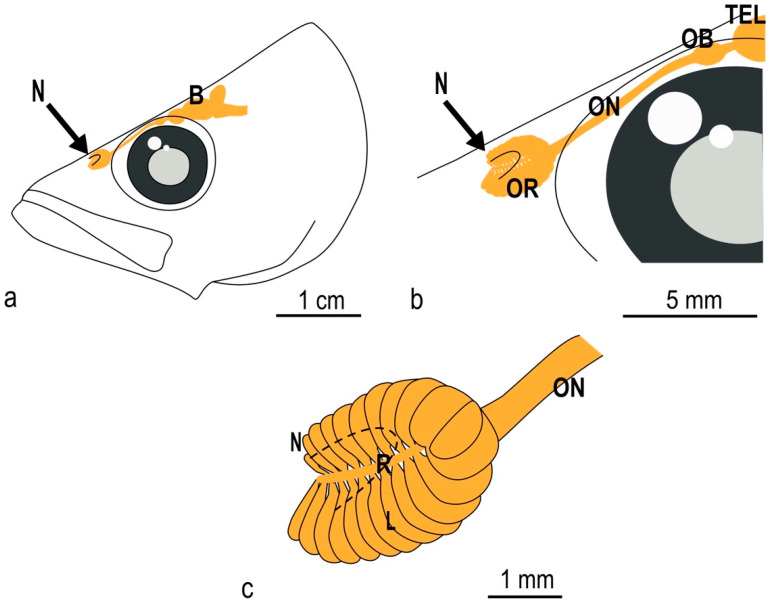
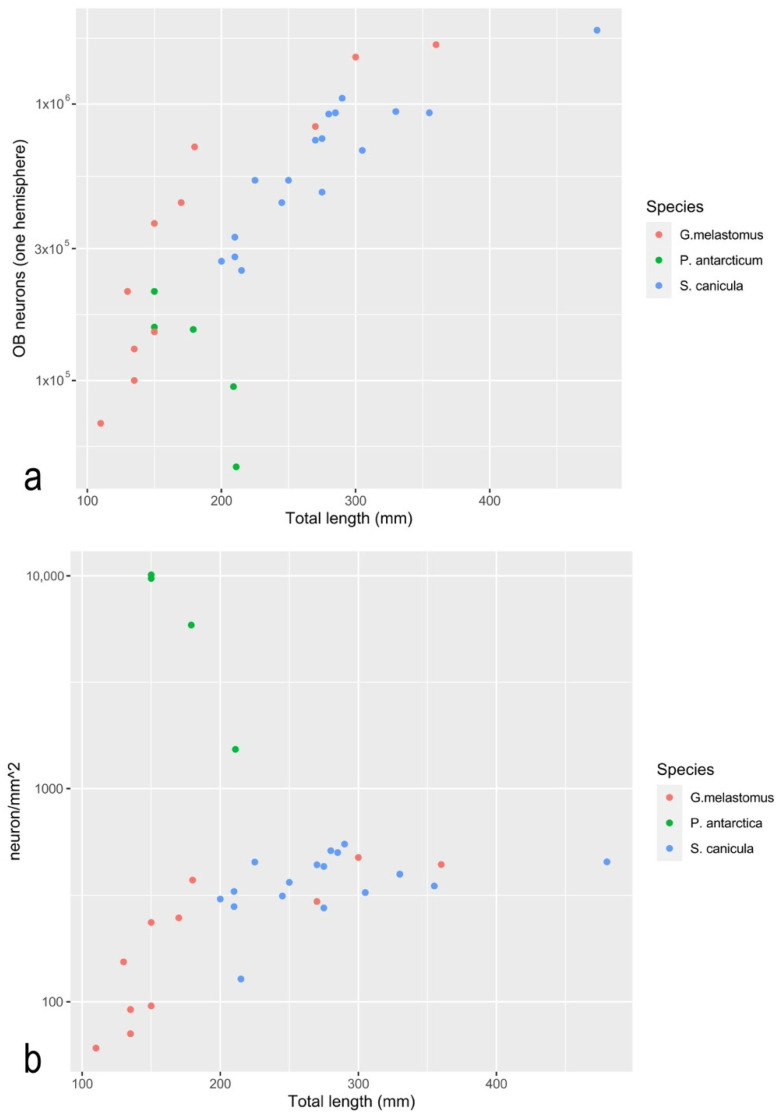
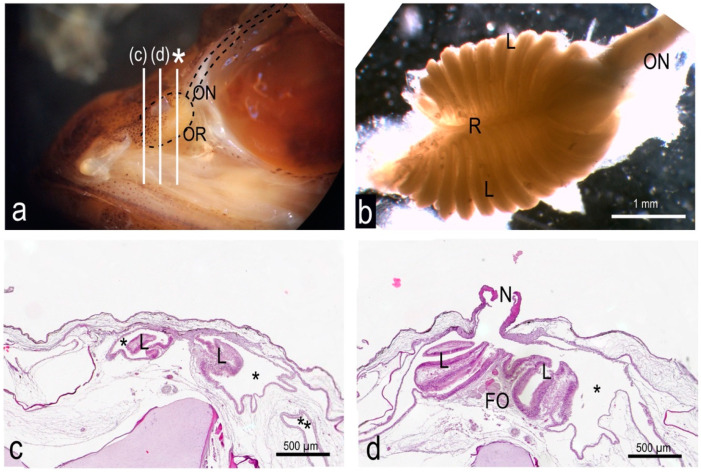
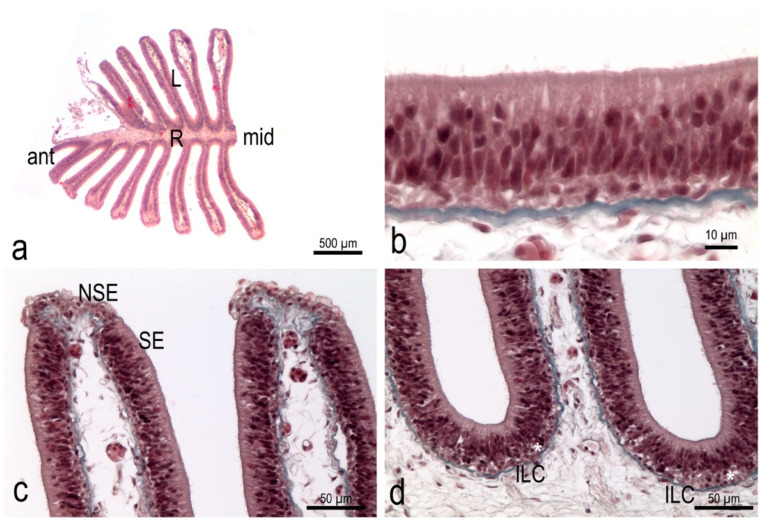
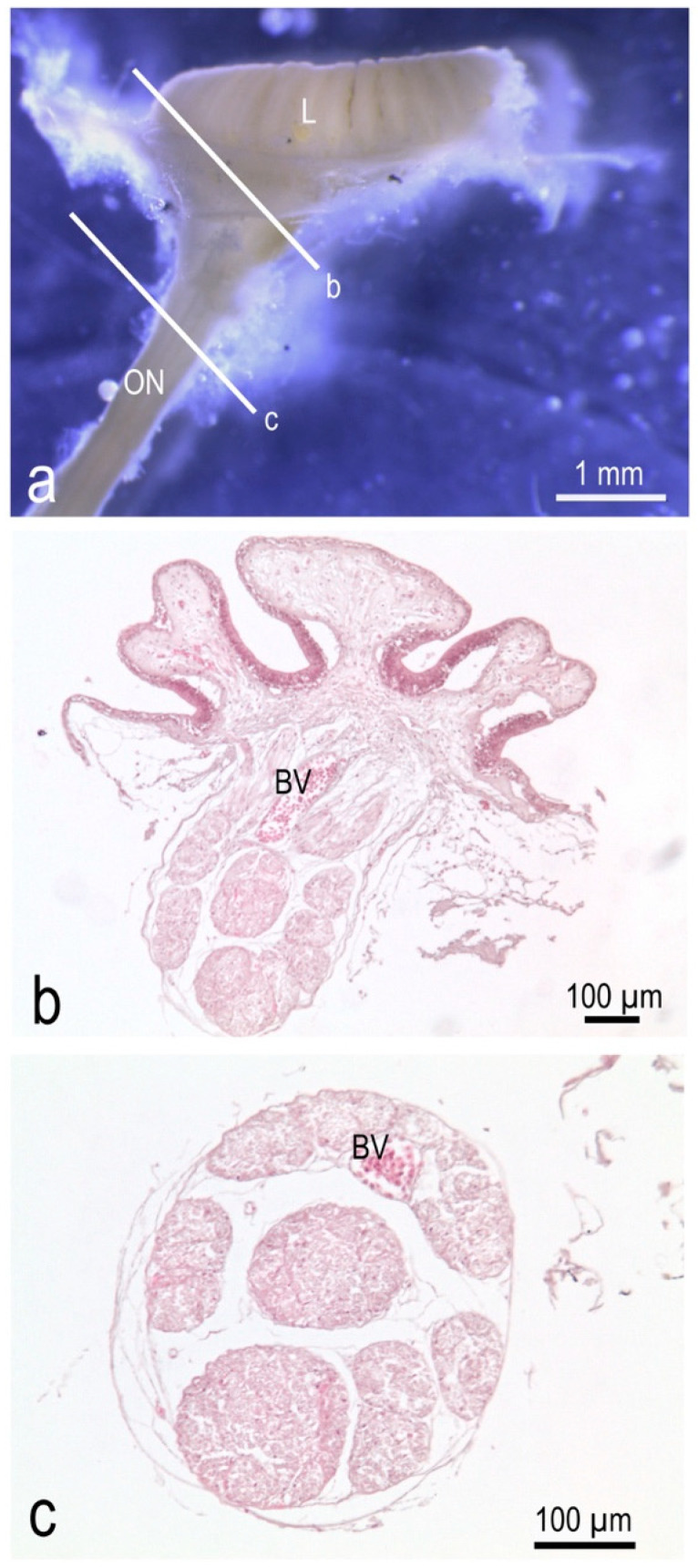
The olfactory system is constituted in a consistent way across vertebrates. Nasal structures allow water/air to enter an olfactory cavity, conveying the odorants to a sensory surface. There, the olfactory neurons form, with their axons, a sensory nerve projecting to the telencephalic zone-named the olfactory bulb. This organization comes with many different arrangements, whose meaning is still a matter of debate. A morphological description of the olfactory system of many teleost species is present in the literature; nevertheless, morphological investigations rarely provide a quantitative approach that would help to provide a deeper understanding of the structures where sensory and elaborating events happen. In this study, the peripheral olfactory system of the Antarctic silverfish, which is a keystone species in coastal Antarctica ecosystems, has also been described, employing some quantitative methods. The olfactory chamber of this species is connected to accessory nasal sacs, which probably aid water movements in the chamber; thus, the head of the Antarctic silverfish is specialized to assure that the olfactory organ keeps in contact with a large volume of water-even when the fish is not actively swimming. Each olfactory organ, shaped like an asymmetric rosette, has, in adult fish, a sensory surface area of about 25 mm, while each olfactory bulb contains about 100,000 neurons. The sensory surface area and the number of neurons in the primary olfactory brain region show that this fish invests energy in the detection and elaboration of olfactory signals and allow comparisons among different species. The mouse, for example-which is considered a macrosmatic vertebrate-has a sensory surface area of the same order of magnitude as that of the Antarctic silverfish, but ten times more neurons in the olfactory bulb. Catsharks, on the other hand, have a sensory surface area that is two orders of magnitude higher than that of the Antarctic silverfish, while the number of neurons has the same order of magnitude. The Antarctic silverfish is therefore likely to rely considerably on olfaction.
整个脊椎动物的嗅觉系统构成方式一致。鼻腔结构使水/空气进入嗅腔,将气味分子传递到感觉表面。在那里,嗅觉神经元与其轴突形成一条投射到端脑区域(即嗅球)的感觉神经。这种结构有许多不同的排列方式,其意义仍存在争议。文献中有许多硬骨鱼物种嗅觉系统的形态学描述;然而,形态学研究很少提供定量方法,而这种方法有助于更深入地理解发生感觉和处理过程的结构。在本研究中,还采用了一些定量方法描述了南极银鱼的外周嗅觉系统,南极银鱼是南极沿海生态系统中的关键物种。该物种的嗅腔与副鼻窦相连,副鼻窦可能有助于嗅腔内的水流动;因此,南极银鱼的头部经过特殊进化,以确保即使鱼不主动游动时,嗅觉器官也能与大量的水接触。成年鱼的每个嗅觉器官形状像不对称的玫瑰花结,感觉表面积约为25平方毫米,而每个嗅球包含约10万个神经元。初级嗅觉脑区的感觉表面积和神经元数量表明,这种鱼在嗅觉信号的检测和处理上投入了能量,并且可以用于不同物种之间的比较。例如,被认为是嗅觉灵敏的脊椎动物的小鼠,其感觉表面积与南极银鱼处于同一数量级,但嗅球中的神经元数量是南极银鱼的十倍。另一方面,猫鲨的感觉表面积比南极银鱼高两个数量级,而神经元数量处于同一数量级。因此,南极银鱼可能相当依赖嗅觉。