Kim Hyun-Tae
Department of Science Education, Jeonju National University of Education, Jeonju, 55101, Republic of Korea.
Appl Microsc. 2024 Dec 17;54(1):12. doi: 10.1186/s42649-024-00105-z.
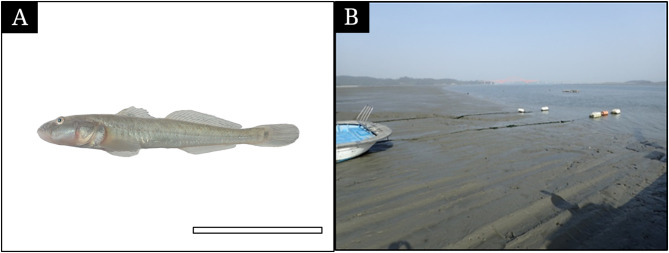
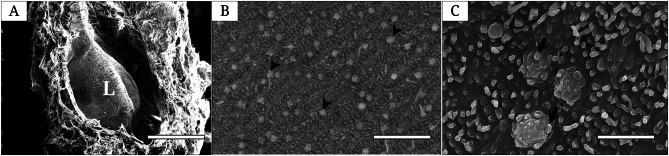
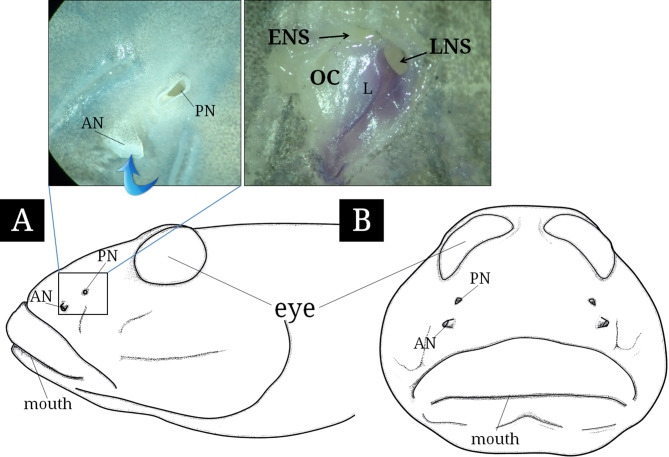
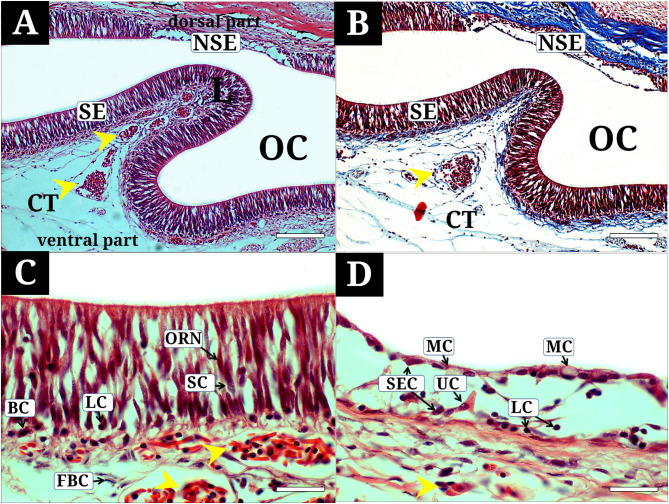
The olfactory organ of Synechogobius hasta was investigated with a focus on its environmental adaptation, using stereo microscopy and light microscopy. This research revealed the following anatomical and histological characteristics: (i) tubular anterior nostril, (ii) one longitudinal lamella, (iii) two accessory nasal sacs, (iv) lymphatic cells in the lower part of the sensory epithelium, (v) four to five villi of olfactory receptor neurons, (vi) abundant blood capillaries beneath the sensory epithelium, and (vii) rod-shaped erythrocytes. These findings hint that the olfactory organ of S. hasta has anatomical and histological adaptations to intertidal pools that undergo periodic hypoxia and increased temperature under stagnant water conditions due to the tidal cycle.
利用体视显微镜和光学显微镜,对矛尾复虾虎鱼的嗅觉器官进行了研究,重点关注其对环境的适应性。该研究揭示了以下解剖学和组织学特征:(i) 管状前鼻孔,(ii) 一条纵向薄片,(iii) 两个副鼻囊,(iv) 感觉上皮下部的淋巴细胞,(v) 四到五根嗅觉受体神经元的绒毛,(vi) 感觉上皮下方丰富的毛细血管,以及 (vii) 杆状红细胞。这些发现表明,由于潮汐周期,矛尾复虾虎鱼的嗅觉器官在解剖学和组织学上适应了潮间带水池,这些水池在静水条件下会经历周期性缺氧和温度升高。