Institute of Applied Health Sciences, University of Aberdeen & Aberdeen Royal Infirmary, Aberdeen AB25 2ZN, UK.
Aberdeen Fertility Centre, NHS Grampian and University of Aberdeen, Aberdeen AB25 2ZN, UK.
Int J Mol Sci. 2022 Feb 28;23(5):2653. doi: 10.3390/ijms23052653.
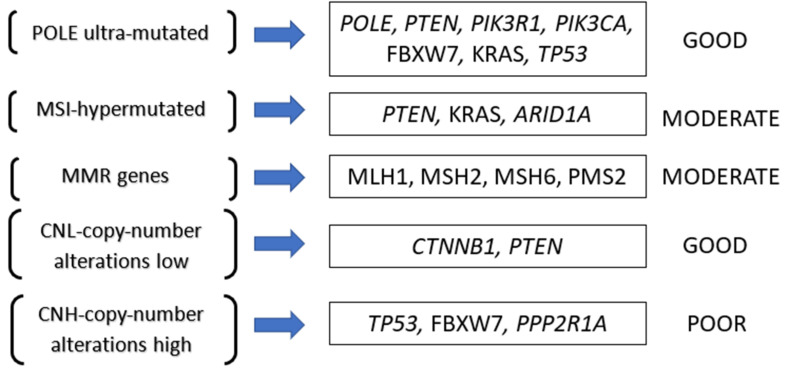
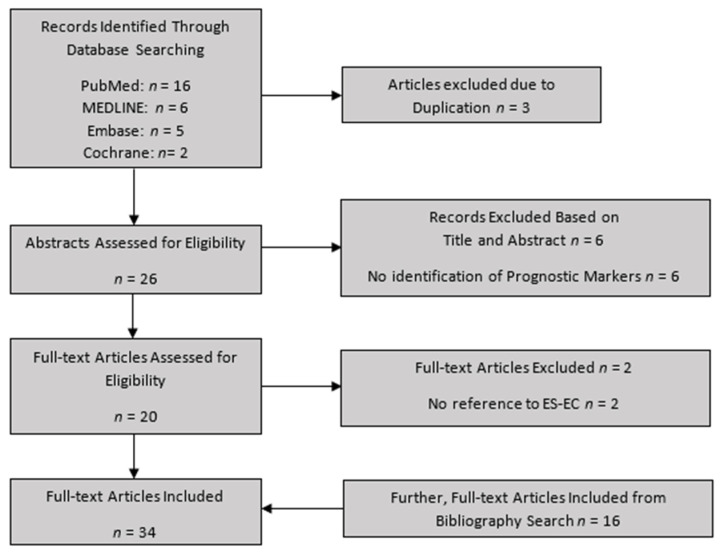
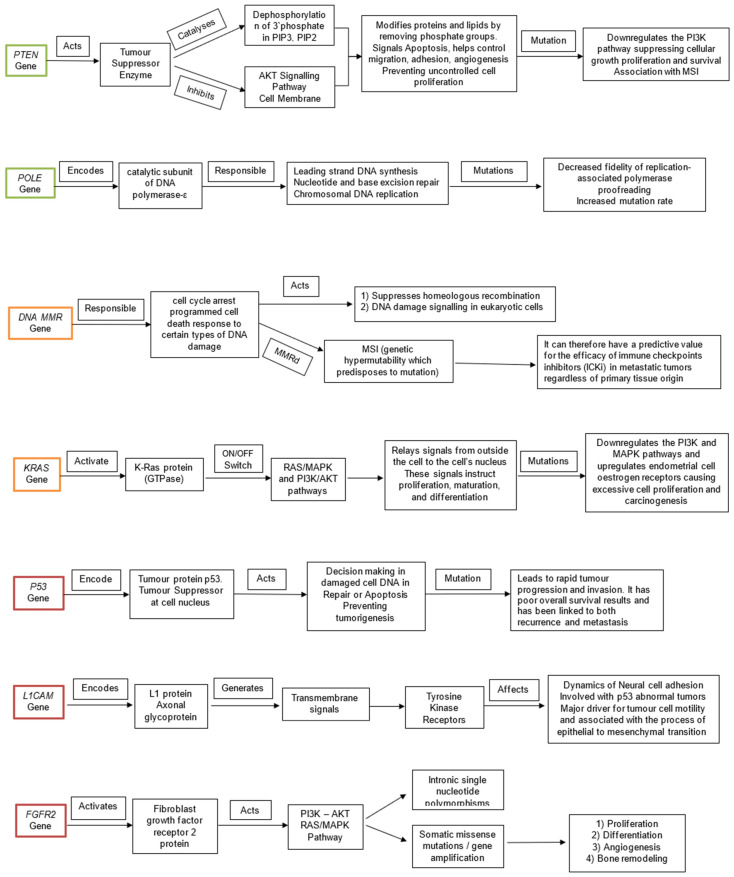
Endometrial cancer occurs in up to 29% of women before 40 years of age. Seventy percent of these patients are nulliparous at the time. Decision making regarding fertility preservation in early stage endometrial cancer (ES-EC) is, therefore, a big challenge since the decision between the risk of cancer progression and a chance to parenthood needs to be made. Sixty-two percent of women with complete remission of ES-EC after fertility-sparing treatment (FST) report to have a pregnancy wish which, if not for FST, they would not be able to fulfil. The aim of this review was to identify and summarise the currently established biomolecular and genetic prognostic factors that can facilitate decision making for FST in ES-EC. A comprehensive search strategy was carried out across four databases; Cochrane, Embase, MEDLINE, and PubMed; they were searched between March 1946 and 22nd December 2022. Thirty-four studies were included in this study which was conducted in line with the PRISMA criteria checklist. The final 34 articles encompassed 9165 patients. The studies were assessed using the Critical Appraisal Skills Program (CASP). and alterations we found to be good prognostic factors of ES-EC, favouring FST. MSI, , and alterations were found to be fair prognostic factors of ES-EC, favouring FST but carrying a risk of recurrence. , , , , , and were found to be poor prognostic factors of ES-EC and therefore do not favour FST. Clinical trials with bigger cohorts are needed to further validate the fair genetic prognostic factors. Using the aforementioned good and poor genetic prognostic factors, we can make more confident decisions on FST in ES-EC.
子宫内膜癌在 40 岁之前的女性中发生率高达 29%。其中 70%的患者为初产妇。因此,早期子宫内膜癌(ES-EC)的生育保存决策极具挑战性,因为需要在癌症进展风险和生育机会之间做出选择。62%接受生育保留治疗(FST)后完全缓解的 ES-EC 患者报告有生育愿望,如果没有 FST,她们将无法实现这一愿望。本综述的目的是确定并总结目前已建立的有助于 ES-EC 中 FST 决策的生物分子和遗传预后因素。我们在 Cochrane、Embase、MEDLINE 和 PubMed 这四个数据库中进行了全面的检索策略,检索时间为 1946 年 3 月至 2022 年 12 月 22 日。本研究共纳入了 34 项研究,这些研究均符合 PRISMA 标准检查表。最终的 34 篇文章共纳入了 9165 名患者。使用关键评估技能计划(CASP)对研究进行了评估。我们发现 、 和 改变是 ES-EC 的良好预后因素,有利于 FST。MSI、 、和 改变被认为是 ES-EC 的中等预后因素,有利于 FST,但存在复发风险。 、 、 、 、和 改变被认为是 ES-EC 的不良预后因素,因此不支持 FST。需要更大样本量的临床试验来进一步验证中等遗传预后因素。使用上述良好和不良的遗传预后因素,我们可以更有信心地决定在 ES-EC 中进行 FST。